翻刻
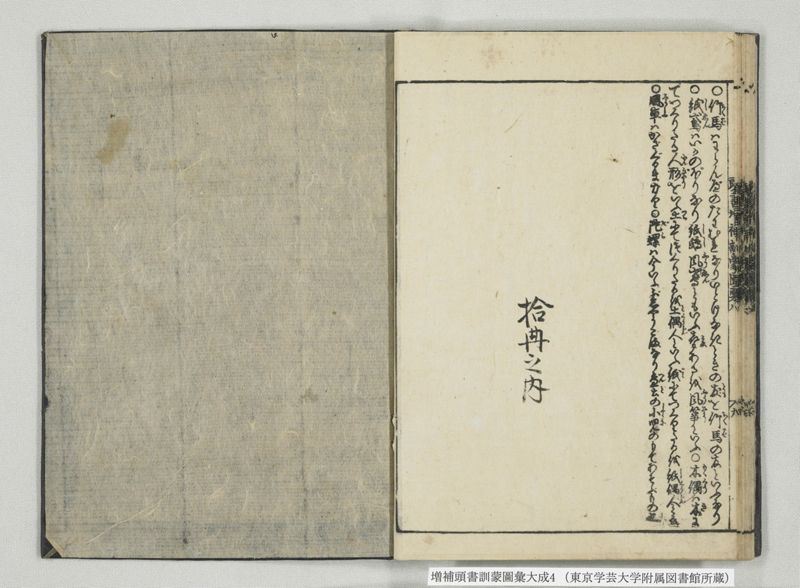
【右丁】
○竹馬(ちくば)はわらんべのたわむれなりいとけなきときの友(とも)を竹馬(ちくば)の友といふなり
○紙鳶(しゑん)はいかのぼりなり紙鴟(しし)風鳶(ふうゑん)ともいふ声(こゑ)あるを風箏(ふうさう)といふ○木偶(もくくう)は木(き)に
てつくりたる人形(にんぎやう)をいふ土(つち)にてつくりたるを土偶人(とくうじん)といふ紙(かみ)にてつくりたるを紙偶人(しくうじん)と云
○風車(ふうしや)はかざぐるまなり○陀螺(だら)は今いふぶしやうごまなり辺土(へんど)の小児(しやうに)のもてあそぶもの也
拾冊之内
【見返し 文字無】
現代語訳
【右丁】
○竹馬は子どもの遊びである。幼い頃の友人を竹馬の友という。
○紙鳶は凧揚げのことである。紙鴟、風鳶ともいう。音が出るものを風箏という。○木偶は木で作った人形をいう。土で作ったものを土偶人といい、紙で作ったものを紙偶人という。
○風車は風車(かざぐるま)である。○陀螺は今でいう武蔵独楽である。地方の子どもが遊ぶものである。
十冊のうち
【見返し 文字なし】
英語訳
【Right Page】
○Chikuba (bamboo stilts) are children's play. Childhood friends are called "friends of the bamboo horse."
○Shien (paper kites) refer to kite flying. They are also called shishi or fūen. Those that make sounds are called fūsō. ○Mokugū refers to dolls made of wood. Those made of clay are called dogūjin, and those made of paper are called shigūjin.
○Fūsha are pinwheels (kazaguruma). ○Dara are what we now call bushō-goma (warrior tops). They are playthings for children in rural areas.
Ten volumes in total
【Blank endpaper - no text】