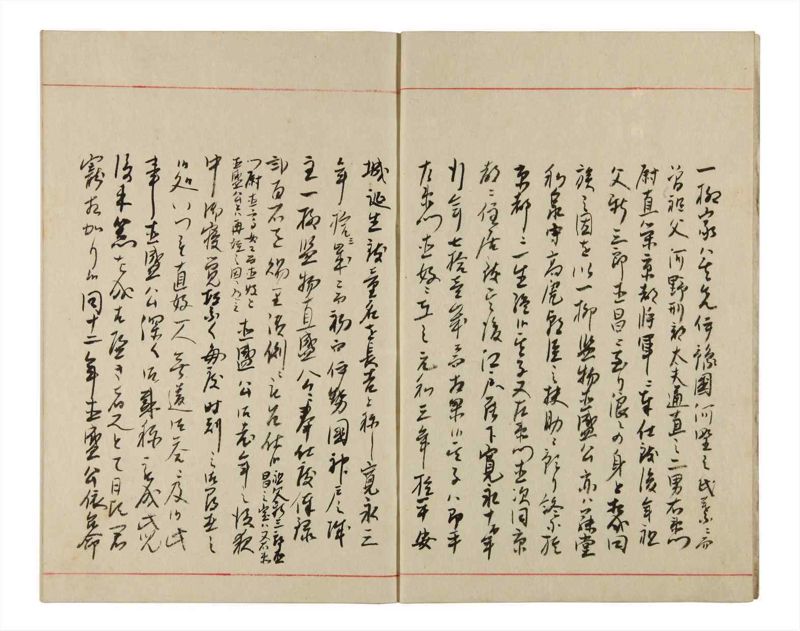
翻刻
一柳家ハ其先伊予国河野之氏葉ニ而
曽祖父河野刑部太夫通直之二男右衛門
尉直栄京都将軍ニ奉仕致後年祖
父新三郎直昌ニ至り浪々の身と相成同
族之因を以一柳監物直盛公亦は藤堂
和泉守高虎朝臣之扶助ニ預り終に於
京都ニ一生終候其子又左衛門直次同京
都ニ住居致其後江戸へ罷下寛永十酉年
行年七拾壱歳ニ而相果候其子ハ即平
左衛門直好ニ在之元和三年権平安
城誕生致童名を長吉と称し寛永三
年拾三歳ニ而初而伊勢国神戸之城
主一柳監物直盛公ニ奉仕致俸録【禄】
弐百石を賜り御側ニ被召仕候《割書:祖父新三郎直
|昌之室ハ又右衛》
《割書:門尉直高女ニ而直好と|直盛公とハ再姪之因ニ有之》直盛公御老年之後夜
中御寝覚繁く毎度時刻之御尋在之
候処いつも直好一人無違御答に及候此
事直盛公深く御感称被成此児
後来器を成すへき者也とて日頃君
寵相加り候同十二年直盛公依台命
現代語訳
一柳家はその先祖が伊予国河野氏の一族であり、曽祖父・河野刑部太夫通直の次男、右衛門尉直栄が京都の将軍家に仕えた。その後の年月を経て、祖父・新三郎直昌の代に至り浪々の身となったが、同族の縁をもって一柳監物直盛公、あるいは藤堂和泉守高虎朝臣の扶助を受け、ついに京都にてその一生を終えた。その子・又左衛門直次も同じく京都に居住し、その後江戸へ下り、寛永十年(1633)、行年七十一歳にて亡くなった。その子こそ平左衛門直好であり、元和三年(1617)に摂津(?)の安城にて誕生し、童名を長吉と称した。寛永三年(1626)、十三歳にして初めて伊勢国神戸城主・一柳監物直盛公に仕え、俸禄二百石を賜り、御側に召し仕えられた。【割書:祖父・新三郎直昌の室は又右衛門尉直高の女であり、直好と直盛公とは再姪の縁にあった。】直盛公がご高齢になられてからは、夜中にお目覚めになることが多く、そのたびに時刻をお尋ねになったが、いつも直好一人が間違いなくお答え申し上げた。このことを直盛公はたいへん感心され、「この子は将来大器となるべき者である」と言われ、日頃からご寵愛がいっそう深まった。同十二年(1635)、直盛公は台命によって〔以下次頁へ続く〕
英語訳
The Hitotsuyagi family traces its origins to the Kōno clan of Iyo Province. The great-grandfather, Kōno Gyōbu-tayū Michináo's second son, Uemon-no-jō Naoyoshi, entered the service of the shogun in Kyoto. In later years, the grandfather Shinzaburō Naomasa fell into a state of rōnin (masterless samurai), but through ties of kinship received the support of Hitotsuyagi Kemotsu Naomori and/or Tōdō Izumi-no-kami Takatora, and ultimately spent the rest of his life in Kyoto. His son, Matazaemon Naotsugi, also resided in Kyoto, and later traveled down to Edo, where he died in the tenth year of Kan'ei (1633) at the age of seventy-one. His son was none other than Heiazaemon Naoyoshi, who was born in Anjō in the third year of Genna (1617) and was given the childhood name Nagakichi. In the third year of Kan'ei (1626), at the age of thirteen, he first entered the service of Hitotsuyagi Kemotsu Naomori, lord of Kando Castle in Ise Province, was granted a stipend of two hundred koku, and was appointed to personal attendance upon his lord. [Marginal note: The wife of grandfather Shinzaburō Naomasa was the daughter of Uemon-no-jō Naotaka, and thus Naoyoshi and Lord Naomori were related as great-nephew and great-uncle.] After Lord Naomori had grown old, he frequently awoke during the night and repeatedly inquired about the time, and it was always Naoyoshi alone who answered him without fail. Lord Naomori was deeply moved by this, saying, "This child will surely become a person of great talent in the future," and his favor toward Naoyoshi grew ever greater day by day. In the twelfth year of the same era (1635), Lord Naomori, by order of the shogunate [continued on next page]...