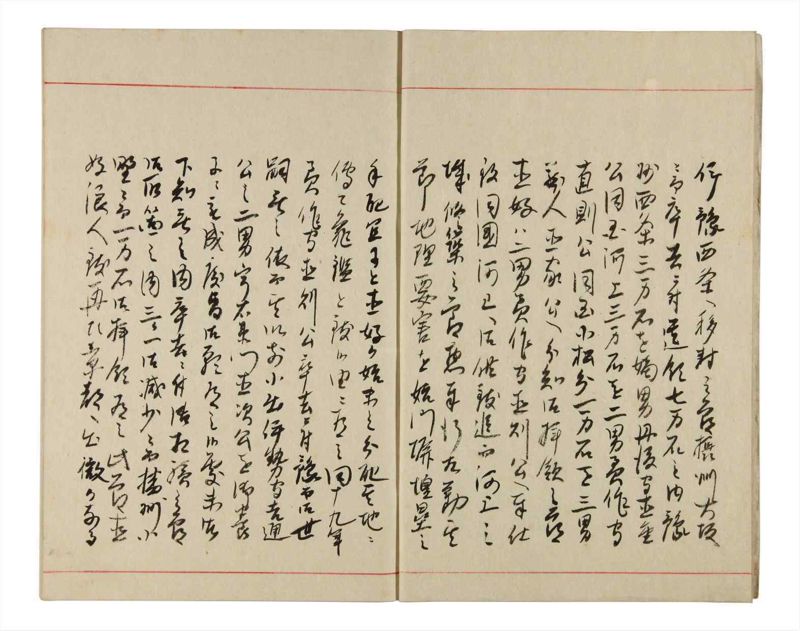
翻刻
伊予西条へ移封之節摂州大坂
ニ而卒去ニ付遺領七万石之内予
州西条三万石を嫡男丹後守直重
公同国河上三万石を二男美作守
直則公同国小松分一万石を三男
蔵人直家公へ分知御拝領之節
直好ハ二男美作守直則公へ奉仕
致同国河上へ御供致追而河上之
城修築之節惣奉行相勤其
節地理要害を始門塀堭塁之
手配宜にと直好か始末之分配其地ニ
伝て亀鑑と致候由ニ有之同十九年
美作守直則公卒去ニ付予而御世
嗣無之依而其以前小出伊勢守吉通
公之二男宇右衛門直次公を御養
子ニ被成度旨御願有之候処未御
下知無之内卒去ニ付御相続之節
御取箇之内三ケ一御減少ニ而播州小
野ニ而一万石御拝領有之此節直
好浪人致再ひ京都へ出微かなる
現代語訳
(直盛公は)伊予西条へ移封される途上、摂州大坂にて卒去された。そのため、遺領七万石のうち、伊予国西条三万石を嫡男・丹後守直重公へ、同国河上三万石を二男・美作守直則公へ、同国小松分一万石を三男・蔵人直家公へそれぞれ分知・拝領となった。その際、直好は二男・美作守直則公に仕え、同国河上へお供した。やがて河上の城の修築に際して惣奉行を勤め、その折に地理・要害をはじめ、門・塀・土塁の手配が適切であったとして、直好の采配・分配ぶりはその地に伝わり、亀鑑(規範・手本)とされたと伝えられている。同十九年(1642)、美作守直則公が卒去されたが、あらかじめ世継ぎがなかったため、それ以前に小出伊勢守吉通公の二男・宇右衛門直次公を養子に迎えたい旨のご願いがあったものの、まだご下知(許可)がないうちに卒去されたため、御相続に際して御取箇(石高)のうち三分の一が減少され、播州小野にて一万石を拝領することとなった。この時、直好は浪人となり、再び京都へ出て、わずかな〔以下次頁へ続く〕
英語訳
[Lord Naomori] passed away in Ōsaka in Settsu Province while en route to his transfer to Iyo Saijō. As a result, of his inherited domain of 70,000 koku, 30,000 koku in Saijō in Iyo Province were granted to his eldest son, Tango-no-kami Naoshige; 30,000 koku in Kawakami in the same province to his second son, Mimasaka-no-kami Naonori; and 10,000 koku in the Komatsu portion of the same province to his third son, Kurōdo Naie. At this time, Naoyoshi entered the service of the second son, Mimasaka-no-kami Naonori, and accompanied him to Kawakami. In due course, during the construction of Kawakami Castle, Naoyoshi served as the overall superintendent (sōbugyō), and his arrangements regarding the terrain, strategic fortifications, gates, walls, and earthworks were so well executed that his methods and allocations became celebrated in that region and were regarded as a model worthy of emulation. In the nineteenth year of the same era (Kan'ei 19, 1642), Mimasaka-no-kami Naonori passed away without an heir. Prior to his death, a petition had been made to adopt Uemon Naotsugi, the second son of Koide Ise-no-kami Yoshimichi, but as Naonori died before receiving official approval, the succession resulted in a reduction of one-third of the domain's assessed yield, leaving a domain of 10,000 koku in Ono in Harima Province. At this juncture, Naoyoshi became a rōnin and returned to Kyoto, where he lived in modest [continued on next page]...