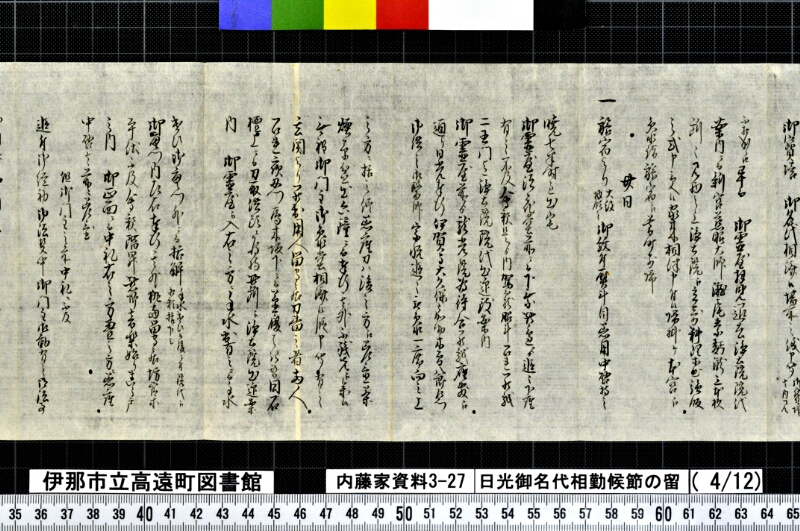
翻刻
御宝塔 御名代相済候場所の儀申聞《割書:御宝塔|者内見》
不相成候由畢而 御霊屋拝見退去浄土院代
案内ニ而新宮慈眼大師瀧尾素麪瀧三本杉
所々見物之上浄土院江立寄料理等出強飯
之式申受候家来相伴申付候帰掛ケ本宮江
貞水詣旅宿江暮時前帰
廿日
一旅宿より《割書:大紋|拝領之》御紋付熨斗目着用中啓
持之
暁七半時過出宅
御霊屋法花堂前ニ而下乗此辺ゟ追々下座
有之不及会釈是ゟ内駕籠脇計召連罷越
二王門迄浄土院院代出迎致案内
御霊屋前ゟ龍光院為待合罷越座敷江
通り日光奉行伊賀守大久保嘉助木曽八郎左衛門
御供之御医師宗悦追々被参一席向之上
之方ニ括之侭着座刀ハ渡之方江差置茶
煙草盆出六鐘ニ而奉行其外不残先江参候
無程御門主御参堂相済候段申聞有之
玄関より罷出用人留守居刀番之者両人
召連夜刀門雁木坂下ニ而草履はき替同石
檀上ニ而刀取供頭ニ為持此所江浄土院出迎案
内 御霊屋江入右之方ニ手水出有之ニ而手水
遣ひ御唐門外ニ而据解《割書:手水遣ひ候後に付鎮代江|相頼括下シ》
御唐門内左右奉行其外執当留守居坊官等
平伏不及会釈階昇此節音楽始りまいり戸
之内 御正面ニ而中礼右之方畳之方ニ着座
中啓者前々差置
但御門主之前中礼ニ不及
追付御経初御法叓中御門主御勤有之御法事
現代語訳
御宝塔での御名代の儀式が済む場所の件について説明を受けた。(御宝塔は内見のみ)
御宝塔は内見ができないとのことで、御霊屋を拝見して退去した。浄土院の代理の案内で、新宮、慈眼大師廟、瀧尾神社、素麺瀧、三本杉などの各所を見物した後、浄土院に立ち寄り、料理などが出され、強飯の儀式について説明を受けた。家来も同席させて、帰りがけに本宮に参詣し、旅宿に夕暮れ前に帰った。
二十日
旅宿より(大紋を拝領した)御紋付の熨斗目を着用し、中啓を持参して、
明け方七つ半時過ぎに出発した。
御霊屋の法花堂前で下乗し、この辺りから次々と身分の低い者たちがおり、会釈に及ばず、ここから駕籠脇のみを召し連れて向かった。
仁王門まで浄土院の院代が出迎えて案内した。
御霊屋前から龍光院が控えの間として向かい、座敷に通された。日光奉行の伊賀守、大久保嘉助、木曽八郎左衛門、御供の御医師宗悦が次々に参上し、一同着座した。上座の方に袴のまま着座し、刀は向こう側に差し置き、茶と煙草盆が出された。六つの鐘で奉行その他全員が先に参った。
間もなく御門主の御参堂が済んだとの知らせがあった。
玄関から出て、用人、留守居、刀番の者二人を召し連れ、夜刀門の雁木坂下で草履に履き替え、同じ石段上で刀を取り、供頭に持たせた。ここで浄土院が出迎え案内し、御霊屋に入った。右の方に手水が用意されており手水を使い、御唐門外で袴を解いた(手水を使った後なので、鎮代に頼んで袴を下ろした)。
御唐門内の左右に奉行その他執当留守居、坊官等が平伏しており、会釈に及ばず階段を昇った。この時音楽が始まり、参り戸の内、御正面で中礼をし、右の方の畳の方に着座した。
中啓は前々から差し置いていた。
ただし御門主の前では中礼に及ばず。
やがて御経が始まり、御法事中は御門主が御勤めになった。御法事
英語訳
I received an explanation about the location where the representative ceremony at the Sacred Pagoda would be completed. (The Sacred Pagoda was for interior viewing only)
As interior viewing of the Sacred Pagoda was not permitted, I viewed the Sacred Mausoleum and departed. Guided by a representative of Jōdo-in Temple, I toured various locations including Shingū, the Jigen Daishi Mausoleum, Takio Shrine, Sōmen Falls, and Sanbon-sugi (Three Cedars). Afterward, I stopped at Jōdo-in Temple where meals were served and I received instruction about the kowameshi (ceremonial rice) ritual. I had my retainers accompany me, and on the way back, I paid respects at the main shrine before returning to the lodging before evening.
Twentieth Day
From the lodging, wearing a crested noshime (formal garment with family crest that had been bestowed upon me) and carrying a chūkei (folding fan),
I departed after the seventh and a half hour of dawn.
I dismounted at Hokke-dō Hall in front of the Sacred Mausoleum. From this area, there were successive groups of lower-ranking individuals, but formal greetings were not required. From here, I proceeded accompanied only by palanquin attendants.
The deputy abbot of Jōdo-in Temple came out to greet and guide me to Niō-mon Gate.
From in front of the Sacred Mausoleum, Ryūkō-in Temple served as a waiting area. I was shown to a reception room where Nikkō Magistrate Iga-no-kami, Ōkubo Kasuke, Kiso Hachirōzaemon, and the accompanying physician Sōetsu arrived in succession and all took their seats. I sat in formal hakama on the upper side, placed my sword on the opposite side, and tea and tobacco trays were brought out. At the sixth bell, the magistrate and all others went ahead.
Soon after, it was announced that the head priest's arrival at the temple had been completed.
I left through the main entrance, accompanied by a chamberlain, caretaker, and two sword attendants. I changed to straw sandals at the bottom of the stone steps at Yatō-mon Gate, and had my sword taken and carried by the head attendant at the same stone platform. Here, Jōdo-in Temple representatives greeted and guided me as I entered the Sacred Mausoleum. Hand-washing water was prepared on the right side, and after performing ablutions, I removed my hakama outside the Chinese-style gate (since I had performed ablutions, I asked the shrine deputy to help remove the hakama).
Inside the Chinese-style gate, magistrates and other officials, attending caretakers, and Buddhist priests prostrated themselves on both sides. Without exchanging greetings, I ascended the stairs. At this moment, music began, and inside the worship entrance, I performed a moderate bow facing the main altar and took my seat on the tatami area to the right.
The folding fan had been placed there beforehand.
However, no moderate bow was required before the head priest.
Soon the sutra chanting began, and during the Buddhist service, the head priest conducted the ceremony. The Buddhist service...