翻刻
【上巻十三丁裏】
見二
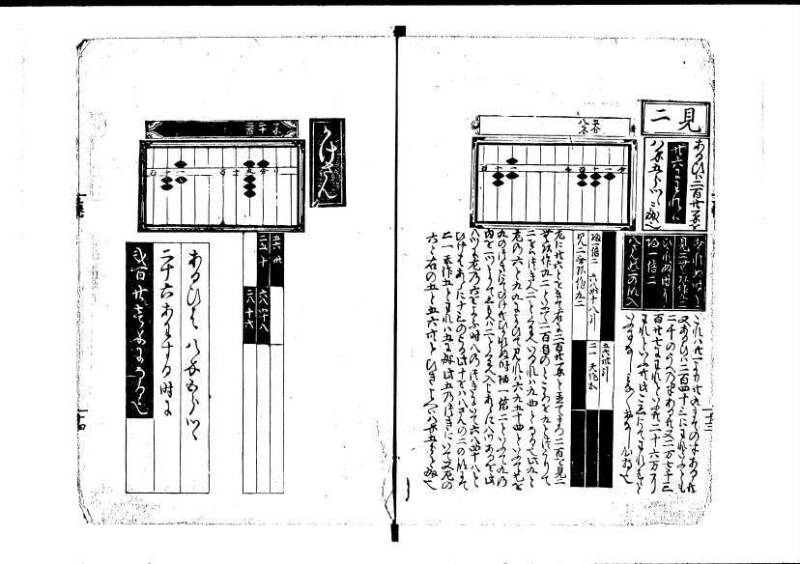
あるひは二百廾一匁を 廾六にわれは 八匁五分つつに成也
おかれぬ時に見二無頭作二
ひかれぬ時に帰一倍二
八さんの二の段入
これは廾一より廾九までの半ある共
又あるひは二百四十三にわれといふとも
二千のうへの半ある共又二万七千三
百廾七にわれといふ共二十六万に
われといふ共此こえにてわれすと
いふ事なしにみなみなおなし心持成
一 五六卅引
五分 二十 帰一倍二 六八四十八引 二一天作五
八匁 二百 見二無頭作九二
左に廾六とをきて右に二百廾一匁と置てまつ二百を見二
無頭作九二といふて二百目のところを九とつくりて
二をはつきへ二とくわへいるれは九四となる也此九と
六 左の六と九九によひて見れは六九五十四といふて是を
二十 九のつきたてひけ共ひかれぬ時帰一倍二といふて九の
内を一つとりてしもへは二とくわへ入申候あとに八つあるを此
八つに左の六をよふ時八のつきにいて六八四十八と
ひけはあとに十三のこる此十を八八さんの二の段にて
二一天作五とわれは五に成此五のつきにいて又左の
六と右の五と五六卅とひき申候へは八匁五分と成也
【上巻十四丁表】
かけさん
一匁 五六 卅
二十 五分 二五 十 六八 四十八
二百 八 二八 十六
あるひは八匁五分つつ
六 二十六あわする時に
二 二百廿壱匁になる也
現代語訳
【上巻十三丁裏】
**見二(みに)**
あるいは二百二十一匁を二十六に割れば、八匁五分ずつに成るなり。
おかれぬ時に:「見二無頭作二(みにむとうさくに)」
引かれぬ時に:「帰一倍二(きいちばいに)」
八算の二の段を入れる。
これは二十一より二十九までの半端があるとも、
またあるいは二百四十三に割れと言うとも、
二千の上の半端があるとも、また二万七千三
百二十七に割れと言うとも、二十六万に
割れと言うとも、この「見二」にて割れずと
いうことなし。みなみな同じ心持ちなり。
一 五六三十 引く
五分 二十 帰一倍二 六八四十八 引く 二一天作五
八匁 二百 見二無頭作九二
左に二十六と置き、右に二百二十一匁と置いて、まず二百を「見二
無頭作九二」と言って、二百目の所を九と作って、
二を次の桁に二と加え入れれば九四となるなり。この九と
六 左の六と、九九に呼んで見れば、六九五十四と言って、これを
二十 九の次に立て引けど引かれぬ時、「帰一倍二」と言って、九の
内を一つ取って下へは二と加え入れ申し候。後に八つあるを、この
八つに左の六を呼ぶ時、八のつきに出て、六八四十八と
引けば、後に十三残る。この十を、八算の二の段にて
「二一天作五」と割れば、五に成る。この五のつきに出て、また左の
六と右の五と、五六三十と引き申し候えば、八匁五分と成るなり。
【上巻十四丁表】
**掛け算**
一匁 五六 三十
二十 五分 二五 十 六八 四十八
二百 八匁 二八 十六
あるいは八匁五分ずつ
六 二十六(人分)合わせる時に
二 二百二十一匁になるなり。
英語訳
**Volume 1, Folio 13 (Verso)**
**"See Two" (見二) — Division Rule**
When 221 momme is divided by 26, the result is 8 momme, 5 bu each.
When [the dividend] cannot be placed: "See two, no leading digit — form nine-two."
When [the result] cannot be subtracted: "Return one, double two."
Apply the "two" column of the eight-times table (八算).
This applies whether there is a remainder between 21 and 29,
or even if one says "divide by 243,"
or there is a remainder above 2,000, or "divide by 27,327,"
or "divide by 260,000" —
with this "See Two" [rule], there is nothing that cannot be divided.
All are handled with the same principle.
[Abacus operation sequence, right to left:]
Five-six: thirty (subtract)
5 bu: 20 Return-one-double-two Six-eight: forty-eight (subtract) Two-one-heaven-form-five
8 momme: 200 See-two-no-head-form-nine-two
Place 26 on the left [of the abacus] and 221 momme on the right.
First, for 200, apply "See two, no leading digit — form nine-two":
make the 200 position into nine, and add two into the next digit,
making it nine-four. Call the nine and the six on the left
in the multiplication table: six times nine is fifty-four.
Try to subtract fifty-four next to the nine, but when it cannot be subtracted,
say "Return one, double two" — take one from the nine and add two below,
leaving eight. When calling the six on the left for this eight,
it comes out next to the eight: six times eight is forty-eight —
subtract, leaving thirteen remaining. For this ten [i.e., the ten-place digit],
apply the "two" column of the eight-times table:
"Two-one-heaven-form-five" — dividing gives five.
Coming out next to this five, call the six on the left with the five on the right:
five times six is thirty — subtract, and the result is 8 momme, 5 bu.
---
**Volume 1, Folio 14 (Recto)**
**Multiplication (掛け算)**
1 momme: Five-six: 30
20: 5 bu: Two-five: 10 Six-eight: 48
200: 8 momme: Two-eight: 16
When combining 8 momme, 5 bu each
for 26 [people/units],
the result is 221 momme.