翻刻
【右丁 上段】
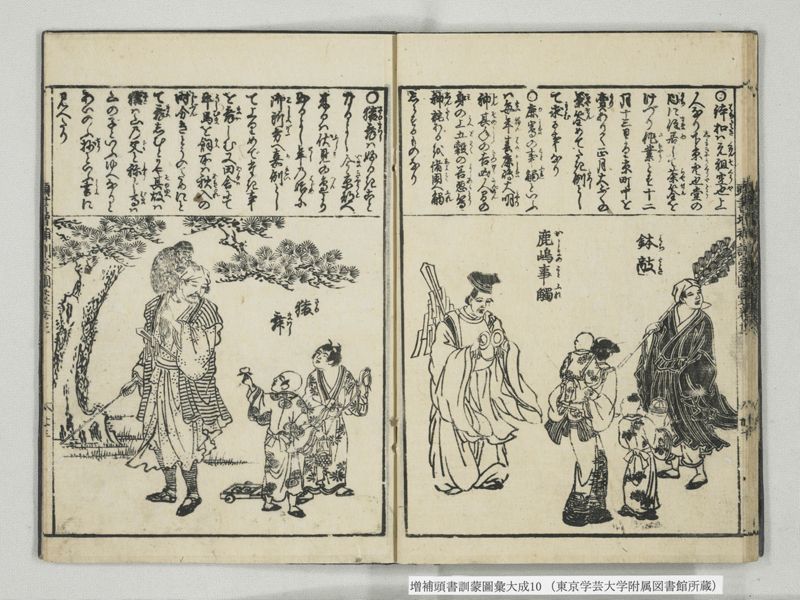
○鉢扣(はちたゝき)は元祖(くわんそ)空也(くうや)上
人なり下京(しもきやう)空也堂(くうやどう)の
内(うち)に住居(すまゐ)して茶筌(ちやせん)を
けづり作業(さきやう)とす十二
月十三日より京町中を
売(うり)ありく正月大ぶくの
茶筌(ちやせん)めてたき例(ためし)とし
て求(もとむ)る事なり
○鹿島(かしま)の事触(ことふれ)といふ
は毎年(まいねん)春(はる)鹿島(かしま)大 明(みやう)
神(じん)其年(そのとし)の吉凶(きつけう)人間(にんげん)の
身(み)の上(うへ)五穀(ごこく)の善悪(よしあし)等(とう)
神託(しんたく)あるを諸国(しよこく)へ触(ふれ)
しらするものなり
【左丁 上段】
○猿舞(さるまはし)はふるきこと
なるよし今(いま)京都(きやうと)へ
来るは伏見(ふしみ)の辺(へん)より
出るよし年(とし)の始(はじめ)に
御所方(こしよがた)へ嘉例(かれい)とし
て上りめでたき事
を舞(まは)しむ又 田舎(ゐなか)にて
牛馬(うしむま)を飼(かふ)所は秋入(あきいれ)の
時分(じぶん)きとうのためにと
て舞(まは)しむとかや其故(そのゆへ)は
猿(さる)は山の父(ちゝ)と称(しやう)じ馬(むま)は
山の子(こ)といふゆへなりと
あいのふ抄(せう)といふ書(しよ)に
見へたり
【右丁 下段挿絵】
鉢敲(はちたゝき)
鹿島事触(かしまのことふれ)
【左丁 下段挿絵】
猿(さる)
舞(まはし)
現代語訳
【右丁 上段】
○鉢叩きの元祖は空也上人である。下京の空也堂の中に住んで、茶筌を削ることを仕事としている。十二月十三日から京都の町中を売り歩く。正月用の大きな茶筌をめでたい縁起物として人々が求めるのである。
○鹿島の事触れというのは、毎年春に鹿島大明神がその年の吉凶、人間の身の上、五穀の豊凶などについて神託を下すのを、諸国に触れ知らせるものである。
【左丁 上段】
○猿回しは古くからある芸能とのことである。現在京都に来るのは伏見の辺りから出てくるということである。年の初めに御所方へ縁起の良い芸能として上がり、めでたいことを舞わせる。また田舎で牛馬を飼っている所では、秋の取り入れの時分に祈祷のために舞わせるということである。その理由は、猿は山の父と称し、馬は山の子というからであると、『哀のふ抄』という書物に見えている。
【右丁 下段挿絵】
鉢叩き
鹿島事触れ
【左丁 下段挿絵】
猿回し
英語訳
【Right Page Upper Section】
○The founder of the "hachi-tataki" (bowl beaters) is the monk Kūya. They live in Kūya-dō temple in Shimogyō and make their living by carving tea whisks. From December 13th, they walk around selling through the streets of Kyoto. People buy large tea whisks for New Year as auspicious items.
○The "Kashima no kotofure" (Kashima proclamations) refers to the annual spring practice where Kashima Daimyōjin (the great deity of Kashima) gives divine oracles about the year's fortune and misfortune, people's fate, and the success or failure of the five grains, which are then proclaimed throughout the provinces.
【Left Page Upper Section】
○Monkey dancing is said to be an ancient art. Those who currently come to Kyoto apparently come from the Fushimi area. At the beginning of the year, they go up to the Imperial Palace as an auspicious performance to dance celebratory pieces. Also, in rural areas where cattle and horses are raised, they have monkeys dance during autumn harvest time for prayers. The reason is that monkeys are called "fathers of the mountain" and horses are called "children of the mountain," as written in a book called "Ainō-shō."
【Right Page Lower Section Illustrations】
Bowl Beaters
Kashima Proclamations
【Left Page Lower Section Illustrations】
Monkey Dancing