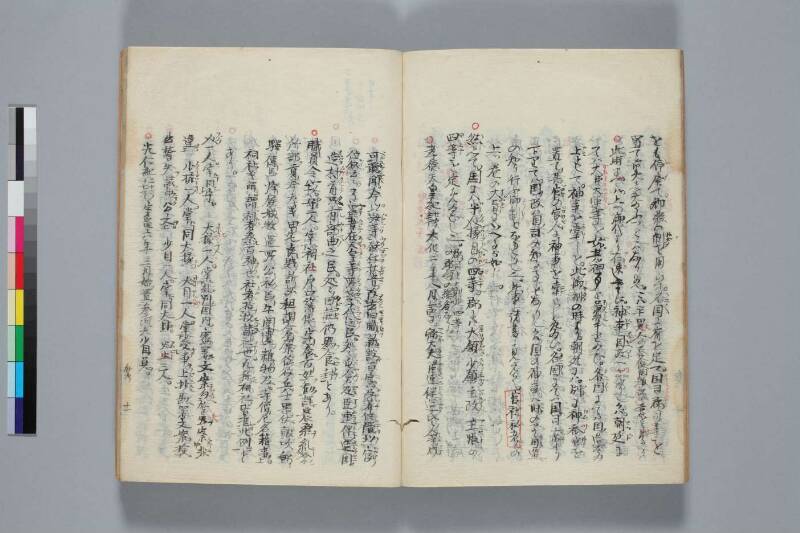
翻刻
【右丁】
【行頭の〇は朱書き】
をも停廃(ヤメ)て。郷県【縣】の制(サダメ)を用ひて。各国(クニ〳〵)に府を定て。国司(クニノミコトモチ)郡司等を
置て治めしめ給ふつとゝはなり給い。こは平田大人の古史徴開題記の意をうけていへり
〇此時までは。上つ御代より在来(アリコ)しまゝに。神事(カムワザ)国政(マツロヘコト)一つなりしかば。朝廷(ミカド)に
ては大臣大連(ヲホオミヲホムラシ)等を始。其 ̄ノ
神事を兼(カネ)掌(シ)り給ひ。各国(クニ〳〵)にては国 ̄ノ造その
上(カミ)として。神事を掌(シリ)しを。此 ̄ノ御制(ミサタメ)の時より。朝廷には。別(コト)に神祇官(カムツカサ)【振り仮名、「カ」の脱落】を
置て。其 ̄ノ官(ツカサ)の官人(ツカサビト)に神事を掌(シ)らしめ給ひ。各国(クニ〳〵)にては国 ̄ノ司 京(ミヤコ)より
下りては。国 ̄ノ改は国 ̄ノ司の知る事となりしかば。国の神事は旧(モト)のまゝ国 ̄ノ造
の知り行ふ御制(ミノリ)となれりし也。此 ̄ノ事諸書に見えて。官社私考【この四字を朱で四角く囲んでいる。】の
上ツ巻の大旨(オホムネ)にいへるが如し。
〇然して。国には守介掾目(カミスケマツリゴト人サクワン)の四等(ヨシナ)。郡には大領(コホリノミヤツコ)少領(スケノミヤツコ)主改(マツリゴト人)主帳(フミヒト)の
四等(ヨシナ)を定め給ひし也。《割書:郡司とは則此 ̄ノ四等|の郡領の総名(オナ)なり。》
〇孝徳天皇紀《割書:廿五ノ|廿七丁》大化二年八月 詔(ミコトノリ)に。郷大夫(マヘツギミタチ)。臣連(オミムラシ)伴造(トモノミヤツコ)氏々 ̄ノ人 等(トモ)。咸(ミナ)
【左丁】
可(ベシ)_二聴聞(ウケタマハル)_一【訓点の脱落】今 以(ヲ)_二汝等(イマシラ)_一使仕状者(ツカヘマツラシムサマハ)。改(メ)_二去(ステヽ)旧職(モトヨリノツカサ) ̄ヲ_一【訓点の脱落】新 ̄タニ設 ̄ケ_二【訓点の脱落】百官 ̄ヲ_一。及(マタ)著(ツケ)_二【訓点の脱落】位階(タノシナ) ̄ヲ。以 ̄テ_二官(ツカサ) ̄ノ
位_一【訓点の脱落】叙(ツイツ)云々。また罷(ヤメテ)_二昔(ムカシ) ̄ノ在 天皇等所立子代之(スメラミコトタチノタテタマヘルミコシロノ)民。処々 ̄ノ屯倉(ミヤケ)及(マタ)臣連伴造(オミムラシトモノミヤツコ)国(クニ) ̄ノ
造(ミヤツコ)村首(ムラオビト) ̄ノ所有(タテル)部曲(カキベ) ̄ノ之民。処々 ̄ノ田荘(タドコロ) ̄ヲ_一仍賜 ̄フ_二食封(ヘヒト)【「ヘビト」は正しくは「ヘヒト」】 ̄ヲ_一とあり。
〇職員令《割書:一ノ|八十丁》。守(カミ)一人。掌 ̄ル_下祠社戸-口簿帳字-_二養 ̄シ百-姓 ̄ヲ_一勧-_二課 ̄シテ農桑 ̄ヲ_一糺-_二察 ̄シ
所部 ̄ヲ貢 ̄ノ挙孝-義田-宅良-賤 ̄ノ訴-訟租調倉廩徭役兵 ̄ノ士器-杖鼓吹郵-
駅【驛】伝-【傳】馬烽-候城-牧過所公-私 ̄ノ馬-牛闌-遺 ̄ノ雑-物及 ̄ヒ寺 ̄ノ僧-尼 ̄ノ名籍 ̄ノ事 ̄ヲ_上。
祠社義解 ̄ニ。謂 ̄ル祠 ̄トハ者祭 ̄ル_二百神 ̄ヲ_一也(ナリ。)社 ̄トハ者検-_二校 ̄スルヲ《割書:云》諸社 ̄ヲ_一【訓点脱落】也(ナリ)。凡称 ̄スル_二祠社 ̄ト皆准 ̄ヒ_二此(ヨ) ̄ノ例 ̄ニ_一と
あり。
介(スケ)一人。掌 ̄ルコト同 ̄シ_レ守 ̄ニ。大掾(オホヒマツリコト)《割書:人》一人。掌 ̄ル_下糺判 ̄シ国内 ̄ヲ_一審-_二署 ̄シ文案 ̄ヲ_一句(カムカヘ)_二稽失 ̄ヲ_一察 ̄スルコトヲ_中非
違 ̄ヲ_上。少掾(スナイマツリコト)《割書:人》一人。掌 ̄ルコト同大掾 ̄ニ_一。大目(オホイサウクワン)一人。掌 ̄ル_下受 ̄ケテ_レ事 ̄ヲ上(ノセ)抄(シルシ)勘 ̄ヘ署 ̄シ_二【訓点脱落】文案 ̄ヲ_一検_二
出稽失 ̄ヲ_一【訓点脱落】読 ̄ミ-申 ̄スコト公(ク)文 ̄ヲ_上。少目一人。掌 ̄ルコト同大目 ̄ミ_一。史生(フムビト)三人。
〇光仁紀《割書:三十三ノ|十七丁》宝亀六年三月始 ̄ニ置 ̄ク_二参河 ̄ニ大少目員 ̄ヲ_一【訓点脱落】。
和考 十一
現代語訳
【右丁】
○を停廃して、郷県の制を用いて、各国に府を定めて、国司・郡司等を置いて治めさせ給うようになった。これは平田篤胤の『古史徴開題記』の意を受けて述べたものである。
○この時までは、上代より存在していたままに、神事と国政が一つであったので、朝廷では大臣・大連等をはじめ、その神事を兼ね掌り給い、各国では国造がその上として神事を掌っていたのを、この御制の時より、朝廷には別に神祇官を置いて、その官の官人に神事を掌らせ給い、各国では国司が京都より下って、国の政治は国司の管轄となったので、国の神事は旧来のまま国造が管理し行う御制となったのである。このことは諸書に見えて、『官社私考』上巻の大旨に述べてある通りである。
○そして、国には守・介・掾・目の四等、郡には大領・少領・主政・主帳の四等を定め給うたのである。《割書:郡司とはすなわちこの四等の郡領の総称である。》
○『孝徳天皇紀』大化二年八月の詔に、「郷大夫・臣・連・伴造・氏々の人等、皆
【左丁】
聴聞すべし。今汝等をもって仕えまつらしむる様は、旧職を改め去って新たに百官を設け、また位階を著けて、官の位をもって叙す」云々とある。また「昔の天皇等の立て給うた子代の民、処々の屯倉および臣・連・伴造・国造・村首の所有する部曲の民、処々の田荘を罷めて、食封を賜う」とある。
○『職員令』に、「守一人。祠社・戸口・簿帳を掌り、百姓を字養し、農桑を勧課して、所部を糺察し、貢挙・孝義・田宅・良賤の訴訟・租調・倉廩・徭役・兵士・器杖・鼓吹・郵駅・伝馬・烽候・城牧・過所・公私の馬牛・闌遺の雑物および寺の僧尼の名籍の事を掌る。
祠社義解に、「祠とは百神を祭ることなり。社とは諸社を検校することなり。凡そ祠社と称するは皆この例に准ず」とある。
介一人。掌ることは守と同じ。大掾一人。国内を糺判し、文案を審署し、失を句稽し、非違を察することを掌る。少掾一人。掌ることは大掾と同じ。大目一人。事を受けて抄を上げ、文案を勘署し、失を検出し、公文を読み申すことを掌る。少目一人。掌ることは大目と同じ。史生三人。
○『光仁紀』宝亀六年三月、初めて三河に大少目員を置く。
和考 十一
英語訳
【Right Page】
○were abolished, and the provincial-county system was adopted, with administrative centers established in each province, and provincial governors (kokushi) and district governors (gunji) appointed to govern them. This is stated following the ideas from Hirata Atsutane's "Koshi-chō Kaidaiki."
○Until this time, as had existed since ancient times, divine affairs and national government were unified, so at court the great ministers (ōomi) and great muraji (ōmuraji) and others served concurrently in charge of divine affairs, and in each province the provincial governors (kuni no miyatsuko) held divine affairs as their superior responsibility. From the time of this imperial system, the court established a separate Department of Worship (Jingikan) and had its officials handle divine affairs, while in each province, as the provincial governors came down from the capital and provincial administration came under their jurisdiction, the divine affairs of the provinces remained under the management of the traditional provincial governors as before. This matter appears in various texts and is as stated in the general purport of the first volume of "Kansha Shikō."
○Thus, in the provinces the four ranks of kami (governor), suke (assistant governor), jō (secretary), and sakan (clerk) were established, and in the districts the four ranks of dairyō (head district governor), shōryō (assistant district governor), shusei (administrator), and shuchō (recorder) were established. {{Note: Gunji (district governors) is the collective term for these four ranks of district administrators.}}
○In the "Chronicle of Emperor Kōtoku," in the edict of the eighth month of Taika 2, it states: "Village chiefs, omi, muraji, tomo no miyatsuko, and people of various clans, all
【Left Page】
should listen and hear. The manner in which we now have you serve is to reform and abandon the old offices, newly establish one hundred offices, and also assign court ranks, conferring them according to official position," and so forth. It also states: "Abolishing the populations of imperial estates (koshiro) established by emperors of old, granaries (miyake) in various places, and the hereditary groups (kakibe) owned by omi, muraji, tomo no miyatsuko, kuni no miyatsuko, and village chiefs, as well as agricultural estates (tadokoro) in various places, we grant sustenance fiefs (heito)."
○In the "Shokuin-ryō" (Administrative Code): "One governor (kami). He oversees shrines and temples, population registers and record books, nurtures the people, encourages agriculture and sericulture, investigates his jurisdiction, handles tribute recommendations, matters of filial piety and righteousness, lawsuits concerning fields and residences and free and slave status, land tax and tribute, granaries, corvée labor, soldiers, weapons, musical instruments, postal stations, relay horses, beacon fires, castle pastures, travel passes, public and private cattle and horses, miscellaneous lost items, and the name registers of monks and nuns at temples.
In the Shrine Interpretation (Shisha Gige): 'Shrine worship (shi) means worshipping the hundred deities. Shrine (sha) means inspecting and supervising various shrines. All references to shrines and worship follow this precedent.'
One assistant governor (suke). Duties same as the governor. One senior secretary (ōjō). Oversees investigating and judging within the province, examining and signing documents, checking for errors, and investigating misconduct. One junior secretary (shōjō). Duties same as the senior secretary. One senior clerk (ōsakan). Oversees receiving matters, submitting reports, examining and signing documents, detecting errors, and reading and reporting official documents. One junior clerk (shōsakan). Duties same as the senior clerk. Three scribes (fubito).
○In the "Chronicle of Emperor Kōnin," in the third month of Hōki 6, senior and junior clerk positions were first established in Mikawa Province.
Wakō [Section] 11