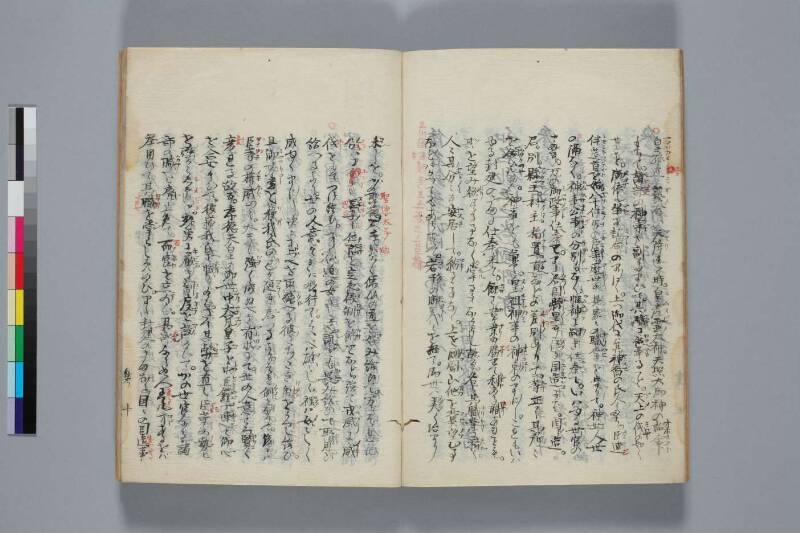
翻刻
【右丁】
【行頭の〇は朱書き】
〇 皇孫(アマツカミノミコ)迩々芸(ニヽギ)【藝】 ̄ノ命の天降(アモリ)ました時。皇産霊(ミムスビ) ̄ノ大神。天照大御神の詔命(オホミコト)
もちて。諸部(モロトモ)の神 等(タチ)を副(ソヘ)たまひて。其 ̄ノ職(ツカサ)【左に「ワサ」と振り仮名】に傔(ツカヘ)奉(マツレ)ること。天上(アメ)の儀(ミワザ)の如く
せよと。御依(ミヨサ)し【おまかせに】坐(マセ)る詔命(ミコト)のまに〳〵【~に従って】。上つ御代には其 ̄ノ神裔(ミスヱ)の氏人たち。臣連(オミムラジ)
伴造(トモノミヤツコ) 首(オビト)を始 ̄メ。八十伴男(ヤソトモノヲ)の臣等(オミタチ)。歴世(ヨノツギ〳〵)に其家々の職掌(ナリハヒ)を守りて。神世人 ̄ノ世
の隔なく。神事公事(カムワザオホヤケゴト)の分別(ケヂメ)もなく。帷神(カムナガラ)に嗣(ツ)ぎ仕 ̄ヘ奉て。いはゆる世-官【せいかん=代々同じ官職をつぐこと】の
さまに。万 ̄ツ の御政事(ミヲサメゴト)仕 ̄ヘ奉り。また各国(クニ〳〵)県里(サト〳〵)に住(スメ)る国造(クニノミヤツコ)には。国 ̄ノー造。
君。別。県(アガタ)【縣】主(ヌシ)。村主(スクリ)。稲置(イナキ)。直(アタヘ)などの差別(ケヂメ)ありて。等(ミナ)正く其 ̄ノ所々
を領治(アツカリヲサ)め。神事をも兼て。皇祖神(スメミオヤカミ)等の神勅(オホミコト)のまに〳〵。これもいは
ゆる封建のさまに仕 ̄ヘ奉 ̄リ 来て。余(ホカ) 【餘】に吾(ワ) ̄ガ業(ナリ)に勝(マサ)りて利(クボサ)ある職(ワザ)あれとも。
其(ソ)を望み欲(ホリ)する事なく。掌(ミル)る事なかりし故に。各々其 ̄ノ職業(ナリワザ)に精(クハシ)く。
人々其 ̄ノ分々(ホド〳〵)に安居(ヤスヰ)して。紛(マキ)るゝ事なく。上を闚闞(ウカヾ)ひ他(ホカ)を冀望(コヒノソ)む事
などはかつてもあらずて。若干(コヽバク)の御々代々(ミヨ〳〵)を経(ヘ)て。御世は美(メデタ)く治まり
【左丁】
来(コ)しを。かの聖徳太子。ふかく儒仏の道を好(コノ)み給ひて。万 ̄ツ それに
倣(ナラ)【振り仮名は朱書き】はまほしく【朱で「ホシク」と注記しているが、原文が仮名なので仮名書きとした。】思召(オホシメ)し位 ̄ノ階(シナ)を定め。儀制(シワザ)を飾(カサ)りなど。強て戎風(カラブリ)に威(イキ)
儀(ホイ)【朱で注記】をもてつけ給む。また仏道の女々しき説(コト)をも畏(カシコ)み給ひて取 ̄リ用ひ
給へるより。世の人意 ̄カ それに移 ̄リ行て。うはべは雄々(をヽ)しく。裏(シタ)は女々(メヽ)しく
成ゆくまに〳〵。次々に上(ウハ)べを取 繕(ツクロ)へる彼 ̄ノ たちたき制(サダメ)をうつし給ひ。
且 御政事(ミマツリコト)を蘇我(ソガ)氏の己(オノ)が随(マニ〳〵)に為(シ)つるより。それ例(タメシ)となりて。後には
臣等(ヲミタチ)の権威(イキホヒ)のみ。大きく強(ツヨ)く成ぬべき有状(アリサマ)にて。世の人意わかつ賢(サカシ)く
変(ナ)【朱で注記】れる故に。孝徳天皇の御世。中大兄皇子(ナカノオホエノミコ)と中臣鎌子連(ナカトミノカマコノムラシ)と御心
を合せ給ひて。彼蘇我氏を滅(ホロホ)し給む。さて其 弊(ツヒエ)を直し臣(オミ)等の勢ひ
を強からしめじと【「シメジト」と朱で注記】。殊更に厳(キビシ)き制度(ミオキテ)を設(マケ)給ひて。かの世官なる諸
部の職(ツカサ)を廃止(ヤ)めて。百【「而」とある右横に朱で「百」と注記】 ̄ノ官(ツカサ)を立 ̄テ給ひ。其 部(ムレ)ならぬ人にても才(カド)あるをば
挙用ひて。其 ̄ノ職(ツカサ)を掌(シ)らしめ給ひ。また封建のさまなる。国々の国造等【「事」とある右横に「等」と朱書き】
和考 十
現代語訳
【右丁】
○ 皇孫瓊瓊杵命が天降りなされた時、皇産霊大神と天照大御神の詔命により、諸部の神々を副え給うて、その職務に奉仕することを天上の儀式のごとくせよとの御委任の詔命に従い、上代にはその神の末裔である氏人たち、臣・連・伴造・首をはじめ、八十伴男の臣たちが、代々にその家々の職掌を守って、神代と人の世の隔てなく、神事と公事の区別もなく、神のままに継ぎ仕えまつって、いわゆる世官の様に、あらゆる御政事に仕えまつり、また各国・各里に住む国造には、国造・君・別・県主・村主・稲置・直などの区別があって、皆正しくその所々を領治し、神事をも兼ねて、皇祖神等の神勅のままに、これもいわゆる封建の様に仕えまつってきて、他に自分の業に勝って利のある職があっても、それを望み欲しがることなく、掌ることもなかった故に、各々その職業に精しく、人々がその分々に安住して、紛れることなく、上を窺い他を希望することなどはかつてもなくて、数多の御代々を経て、御世は美しく治まってきたのを、かの聖徳太子が、深く儒仏の道を好み給うて、万事それに
【左丁】
倣いたく思し召し、位階を定め、儀制を飾りなど、強いて唐風に威儀をもって付け給う。また仏道の女々しい説をも畏み給うて取り用い給えるより、世の人の心がそれに移り行って、うわべは雄々しく、内は女々しく成っていくままに、次々に上辺を取り繕えるかの立派な制度を移し給い、かつ御政事を蘇我氏の己が思うままにしたことより、それが例となって、後には臣たちの権威のみ大きく強くなるべき有様にて、世の人の心がいやしくも賢しらに変わった故に、孝徳天皇の御世、中大兄皇子と中臣鎌足連とが御心を合わせ給うて、かの蘇我氏を滅ぼし給う。さてその弊害を直し、臣等の勢いを強からしめじと、殊更に厳しい制度を設け給うて、かの世官なる諸部の職を廃止めて、百官を立て給い、その部でない人でも才があるものは挙用いて、その職を掌らしめ給い、また封建の様な、国々の国造等
和考 十
英語訳
【Right Page】
○ When the imperial grandson Ninigi-no-Mikoto descended from heaven, by the imperial decree of Ōmimusubi no Ōkami and Amaterasu Ōmikami, various departmental deities were assigned to accompany him, and in accordance with the imperial command to serve in their duties as in the heavenly ceremonies, in ancient times the descendants of these deities—the clan members including omi, muraji, tomo no miyatsuko, and obito, as well as the eighty accompanying male retainers—maintained their hereditary duties generation after generation. With no distinction between the age of gods and the human world, and no separation between divine and public affairs, they served in accordance with the divine will in what was called the hereditary office system, serving in all imperial governmental affairs. The provincial governors (kuni no miyatsuko) residing in various provinces and villages had distinctions such as kuni no miyatsuko, kimi, wake, agata-nushi, sukuri, inaki, and atae, all properly governing their respective territories, also serving divine affairs, and in accordance with the divine edicts of the imperial ancestral deities, they served in what could be called a feudal manner. Even when there were other occupations that surpassed their own work and offered greater profit, they never desired or sought such positions, nor did they undertake them. Therefore, each person was skilled in their occupation, people lived peacefully within their respective stations without confusion, never spying on their superiors or coveting others' positions, and through many imperial reigns, the realm was beautifully governed. However, Prince Shōtoku deeply favored the ways of Confucianism and Buddhism, and wished to model everything after them,
【Left Page】
establishing court ranks and elaborating ceremonial systems, forcibly adopting Chinese-style dignity and protocol. He also revered and adopted the effeminate teachings of Buddhism, causing people's hearts to shift in that direction, becoming outwardly brave but inwardly effeminate. Gradually, those splendid systems that merely adorned the surface were adopted, and since governmental affairs were conducted according to the Soga clan's whims, this became precedent, leading to a situation where only the authority of the ministers would grow large and strong in later times. Because people's hearts became cunningly wise, during the reign of Emperor Kōtoku, Prince Naka no Ōe and Nakatomi no Kamatari joined forces to destroy the Soga clan. To rectify these abuses and prevent the ministers' power from growing too strong, they established particularly strict institutions, abolished the hereditary departmental offices, established one hundred government offices, and promoted even those not from hereditary departments if they had talent, allowing them to hold office. They also dealt with the feudal-style provincial governors of various provinces...
Wakō [Section] 10