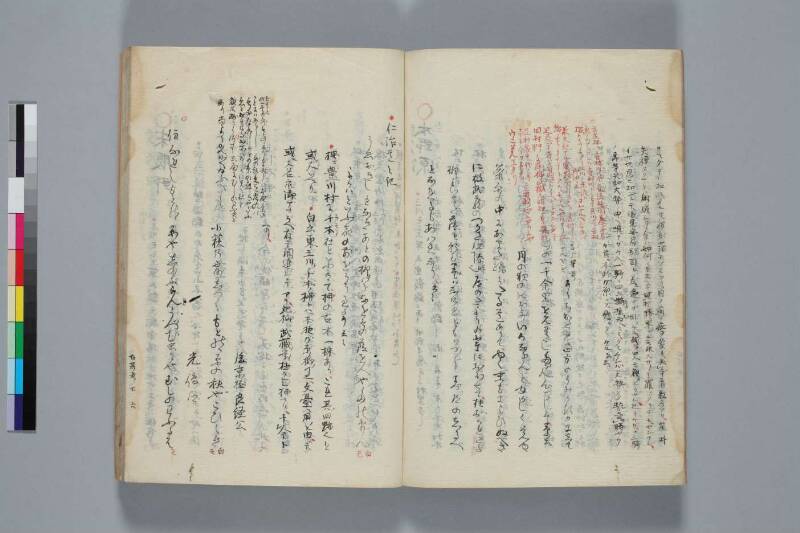
翻刻
ヲヘダテヽ扣ヘタルガ、被射落_一モノモアリ、目ノ前ニ疵ヲ蒙リ、失_レ命【𫝇】者数多アリ、筑井
矢種スクナク、射成シテ、今ハ如何ニカスベキ可_二打勝_一、軍サニモ非スサノミ罪ツクリテモ、センナシ、
イサヤ、思ヒ切ントテ、後見安房郡司ト差シ違テゾ臥ニケル、残リ【「ヲ」を見せ消ち、朱字「リ」に】四人モ親タシウサシ■(、)テケリ、十三騎
ノ郎等共《割書:中略|》大勢ノ中へ噢テカケ入、一騎ニ四五騎推 ̄シ双へ々々、クミケレバ无勢多勢ニ可_レ ̄キ勝ヤウ
ナクシテ、皆々被打取_一ヌ、十九騎ガ首、本野ガ原ニゾ、懸ケタリケル《割書:云| 云》、
【貼紙あり 朱字】
●ほむの川原《割書:按ニ川原ト書ルハ筆者ノ|誤ニテ が原 ナルベシ、》にうち出たれば、四方のうみかすかにして
山なく岡なし、秦甸の一千余里を見わたしたらん心ちして草土
ともに、蒼茫たり、月の夜ののぞみいかならんとゆかしく覚ゆ、
筿(サヽ)原の中にあまた踏分たる道ありて、ゆく末もまよひぬべき
に、故武蔵のつかさ《割書:平泰時|ノコト也》道のたよりの輩におほせて、植おかれたる
柳もいまだ蔭と賴むまではなけれども、かつ〴〵まづ道のしるべ
となれるもあはれなり、云々
●仁治道之記
うゑおきし主なきあとの柳ばらなをその蔭を人やたのまん《割書:白|モ》【「白モ」朱字】
よかはといふ宿の前をうち過るに云々
●按ニ豊川村に千本(チモトノ)社といふ有て、柳の古木一株あり、これ其 ̄ノ旧跡也と
或人いへり、 ●白云東三川 ̄ノ千本ノ柳トハ、本野が原 ̄ノ柳 ̄ノ コト也、文台ニ用 ̄ノ? ル由《割書:ニ|》【「ニ」朱字】テ、
或 ̄ル大名衆御アツラヘ有テ調進シヽコトアリ、此 ̄ノ柳は武蔵 ̄ノ守 ̄ノ植ラレシ柳ナリ、于_レ今ト
ヨ川林ニ柳アリト云リ、
【貼紙あり】
●月清集上 後京極良経公
うつしうゝる庭の小萩の露しづくもとのゝ原の秋やこひしき《割書:白|モ》【「白モ」朱字】
○ 光俊卿
住なれしもとのゝ原やしのぶらんうづむ虫にやむしのわぶるは《割書:モ|》【「モ」朱字】
【右頁貼紙 朱字】
○宣光按ニ音羽川ハ今長沢村関屋ノ少シ
東ニ川アリコレヲ音羽川トイヒテ其川上ニ音羽
塚トイフモアリ《割書:此川ノ末流ハ|御油ヘ出ル》コレナルベシサラバ
承久記ナル宮路山ヘ打カヽリ音羽川ノ
端ニ下リタチテトアルニモアヘルヤウナリ此
辺スベテ昔ハ音羽郷トイヘリトオボシタテ
同村《割書:中ノ|田?丁》産神嶽大明神ノ古キ棟札
《割書:足利家中ツ代ノ年|ナリキ今ワスレタリ》ニ音羽ノ郷トアリシヤ
ウニ覚エタリ
【左頁貼紙】
《割書: |長■【貴・央】云》
此二首の歌もとのゝ原トよまれしは本野原の
ことにはあらじ歌の趣意を考れば
すみなれしもとの原の恋しきやトいふ
意とおもはる出所はたしかに覚へねと
雑木抄ニう/つ(ツ)【「徒」の右に朱字「ツ」】す虫屋にむしのわふるはと
あり尚よくかんがへたまふべし
【「○」「●」「、」は朱】
古歌考 下 六
現代語訳
を隔てて控えていたが、射落とされる者もあり、目の前で傷を負い、命を失う者が数多くあった。筑井は矢が少なくなって射尽くし、「今はどうすべきか。打ち勝つことはできず、軍というほどのこともない。ただ罪を作るばかりでも仕方がない。さあ、思い切ろう」として、後見安房郡司と刺し違えて倒れた。残りの四人も親しく刺し違えて死んだ。十三騎の郎等たちも大勢の中へ駆け入り、一騎に四五騎が押し並んで組み合ったが、無勢多勢でどうしても勝つ術がなくて、皆々討ち取られた。十九騎の首は、本野が原に掛けられたのであった。
●「ほむの川原に打ち出たれば、四方の海がかすかに見えて山なく岡なし、秦の野の一千余里を見渡したような心地がして、草も土もともに蒼茫としている。月の夜の眺めはいかであろうかと心惹かれる思いがする。笹原の中にあまた踏み分けた道があって、行く先も迷いそうであるが、故武蔵司(平泰時のこと)が道案内の者たちに命じて植えさせた柳も、まだ頼りになる陰というほどではないけれども、かろうじてまず道の標となっているのも趣深い」
●仁治道之記より
「植え置きし主なきあとの柳原なおその蔭を人や頼まん」
よかはという宿の前を打ち過ぎるに云々
●考えるに、豊川村に千本社というのがあって、柳の古木一株がある。これがその旧跡であると或る人が言った。●白雲によると「東三河の千本の柳とは、本野が原の柳のことである。文台に用いる由来があって、或る大名衆の御注文があって調進したことがある。この柳は武蔵守の植えられた柳である。今に至ってもよ川林に柳があるという」。
●月清集上より 後京極良経公
「移し植うる庭の小萩の露しずくもとのの原の秋や恋しき」
○ 光俊卿
「住み慣れしもとのの原やしのぶらん埋む虫にやむしのわぶるは」
○宣光の考えによると、音羽川は今の長沢村関屋の少し東に川があり、これを音羽川といい、その川上に音羽塚というのもある。この川の末流は御油へ出る。これであろう。そうすれば承久記にある「宮路山へ打ちかかり音羽川の端に下り立って」とあるのにも合うようである。この辺りすべて昔は音羽郷といったと思われ、同村(中の田?丁)の産神嶽大明神の古い棟札(足利家中代の年であったが今忘れた)に音羽の郷とあったように覚えている。
長貴によると「この二首の歌で『もとのの原』と読まれたのは本野原のことではあるまい。歌の趣意を考えれば『住み慣れしもとの原の恋しきや』という意味と思われる。出所ははっきり覚えないが、雑木抄に『うつす虫屋にむしのわぶるは』とある。なお良く考えるべきである」。
古歌考 下 六
英語訳
across the valley, and some were shot down, many suffered wounds before their eyes and lost their lives. Tsutsui's arrows ran low and were exhausted, so he said "What shall we do now? We cannot win, this is hardly even a battle. It is useless to merely create more sins. Come, let us resolve ourselves," and he stabbed the governor of Awa and fell together with him. The remaining four men also intimately stabbed each other to death. The thirteen mounted retainers also charged into the large force, with four or five riders pressing against each one in combat, but being few against many there was no way to win, and they were all struck down. The heads of the nineteen horsemen were hung at Motono-ga-hara.
●"When we emerged onto Homu-no-kawara, the seas in all directions appeared faintly with no mountains or hills, giving the feeling of looking out over a thousand ri of the plains of Qin, with both grass and earth vast and boundless. One wondered what the view would be like on a moonlit night, feeling drawn to it. In the bamboo grass plains there were many trodden paths, and though one might easily lose one's way, the willows that the late Governor of Musashi (meaning Taira no Yasutoki) had ordered his guides to plant, though not yet grown enough to provide reliable shade, serve at least as markers for the road, which is touching."
●From the Jinji Michi no Ki:
"The willow grove left masterless where someone once planted—do people still rely upon its shade?"
Passing in front of the lodging called Yokawa...
●Upon consideration, in Toyokawa village there is a shrine called Chimoto-sha with one old willow tree, which someone said is that historic site. ●According to Hakuun, "The thousand willows of Eastern Mikawa refers to the willows of Motono-ga-hara. There was a tradition of using them for writing desks, and there was once an order from certain daimyo to supply them. These willows were planted by the Governor of Musashi. It is said that even now there are willows at Yo-kawa-bayashi."
●From Gessei Collection, Upper Volume Lord Gokogoku Yoshitsune
"The dew drops on the small bush clover transplanted to the garden—do they long for the autumn of Motono-no-hara?"
○ Lord Kōshun
"Do they yearn for Motono-no-hara where they once dwelt? Are the insects troubled by being buried?"
○According to Senk ō's investigation, for Otowa River there is now a river slightly east of Sekiya in Nagasawa village, called Otowa River, and upstream there is also something called Otowa Mound. The lower reaches of this river flow out to Goyu. This must be it. If so, it matches the description in the Jōkyū-ki of "attacking Miyaji-yama and dismounting at the edge of Otowa River." This entire area was probably called Otowa-gō in ancient times, as I recall seeing "Otowa-gō" written on an old roof tablet of the tutelary deity Gaku Daimyōjin of the same village (it was from the Ashikaga period but I have forgotten the exact year).
According to Chōki: "The 'Motono-no-hara' in these two poems is probably not referring to Motono-hara. If we consider the meaning of the poems, it seems to mean 'longing for the original plain where one once dwelt.' I don't clearly remember the source, but in Zōboku-shō it says 'the insects troubled in the insect house.' This should be considered more carefully."
Ancient Poem Study, Volume Two, Part Six