翻刻
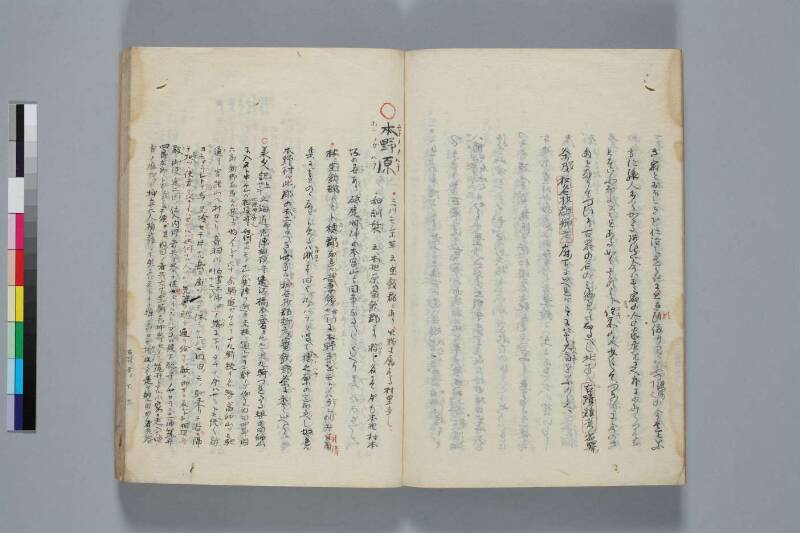
き宿とおぼしきを、仁治之道之記に、近き頃【「ひ」を見せ消ち、右に朱字「頃」】俄にわたふづ《割書:渡津ノ|コト也》の今道といふ
方に旅人多くかゝるあひだ、今は其宿の人の家居をさへ外にのみうつすな
とそいふなる云々、とある如く其頃より往来(ユキヽ)の人少くして、つき〳〵に今のさ
まとなりて、つひに古宿の名のみ残れるなるべし、此 ̄ノ事は古蹟雑考【「古蹟雑考」を朱の四角枠で囲】宿駅 ̄ノ
条/及(マタ)和名抄郡郷考【「和名抄郡郷考」を朱の四角枠で囲】府 ̄ノ下にいへればこゝには、其/大旨(オホムネ)をいふのみ也、
○本野原(モトノノハラ)【左ルビ「ホンノガハラ」】 ●三川モシホ草云、宝飯郡ニあり、此野に属する村里多し、
●和訓栞 云、本野原は宝飯郡より転(ウツリ)し名にて今も本野 村本
坂の名あり、砥鹿明神の本宮山も同事なるべし、といへり、
●按ニ宝飫郡はもと穂(ホノ)郡なれば、吾妻鏡《割書:卅二ノ|卅一丁》に本野原をモトノハラト訓み、月清【「旦清」を見せ消ち、右に朱字「月清」】
集にもとのゝ原とよめるは非(ヒガコト)にて、旧く。ホノハラと唱へて、穂之原(ホノハラ)の意なるべしかゝれば
本野村ば、此 ̄ノ郡の本土(モト)なるべきカ此事は、和名抄郡郷考【「和名抄郡郷考」を朱の四角枠で囲】宝飫 ̄ノ郡 ̄ノ条に委くいへり、
○承久記《割書:上|廿三丁》之海道先陣相模守遠江 ̄ノ橋本ニ著キケルニ十九騎つれたる勢、高師山
に入ヌト申ケレバ相模守(北条時房也)如何ナルモノナレバ、先陣ヲ越テ先様ニ通ルヤラン《割書:中|略》トゾ仰ケル内田四郎同
六郎新野右馬允、是レヲ始メトシテ六十余騎追カケタリ、十九騎続イタル勢、高師山ヲモ馳
通(、)テ宮路山ヘ打カヽリ、音羽川《割書:白雲云御油|川ナルベシ》ノ端(ハタ)に下リタチテ、今ハサリトモ続(ツヾ)く敵
ヨモアラジトテ、馬ノ足冷サ【「サ」朱字】セテ片ナル岳ニ扇ツカフテ、休ミケル処ニ内田 ̄ノ モノ馳来リテ、谷ヲ【「ニ」を見せ消ち、右に朱字「ヲ」】隔
テ扣(ヒカヘ)ツヽ、使者ヲ以テイハセケルハ如何ナル人ナレハ、先陣ヲ越テ通リ給フゾ、敵カ御方
カ承レトテ、相模守
殿ノ御使、遠江国ノ住人内田ノ者共ガ参テ候也【■を見せ消ち、右に朱字「也」】、トイハスレハ、マコト候下総守ノヤカラニ三浦筑井
四郎太郎ト申スモノニテ候、《割書:中略|》内田ノ者共、六十余騎ニテ押寄セタリ、筑井トアル小家ニ走入テ、四
方ノ垣切ツテ、押立六人楯籠リテ、矢タバネトイテ推シクツロゲ指攻(サシツメ)々々、是ヲ射ル内田ノ者共、谷
【「○」「●」「、」は朱】
古歌考 下 五
現代語訳
き宿と思われるが、仁治道之記によると、「近頃急に渡津(渡津のことである)の今道という方に旅人が多く通るようになったため、今はその宿の人の家居までも他所に移してしまう」などと言うとある。このようにその頃より往来の人が少なくなって、次第に今の様子となって、ついに古宿の名のみが残ったのであろう。この事については古蹟雑考の宿駅の条及び和名抄郡郷考の府の項で述べているので、ここではその大要を言うのみである。
○本野原(もとののはら) ●三河藻塩草によると、宝飯郡にあり、この野に属する村里が多い。
●和訓栞によると、本野原は宝飯郡より転じた名で、今も本野村、本坂の名がある。砥鹿明神の本宮山も同じことであろう、という。
●考えるに宝飫郡はもと穂郡であるから、吾妻鏡(巻三十二の三十一丁)で本野原を「もとのはら」と訓み、月清集でも「もとのの原」と読んでいるのは間違いで、古くは「ほのはら」と唱えて、穂之原の意味であろう。そうであれば本野村は、この郡の本土であろうか。この事は、和名抄郡郷考の宝飫郡の条で詳しく述べてある。
○承久記(上巻二十三丁)によると、海道の先陣相模守が遠江の橋本に着いたところ、十九騎を連れた勢力が高師山に入ったと申したので、相模守(北条時房である)は「どのような者であれば、先陣を越えて先様に通るのだろうか」と仰せられた。内田四郎、同六郎、新野右馬允を始めとして六十余騎が追いかけた。十九騎連れた勢力は、高師山をも馳せ通って宮路山へ打ちかかり、音羽川(白雲によると御油川であろう)の端に下り立って、「今はもはや続く敵もあるまい」として、馬の足を冷やして片方の岳に扇を使って休んでいたところに、内田の者達が馳せ来て、谷を隔てて控えつつ、使者を以て言わせたのは「どのような人であれば、先陣を越えて通られるのか、敵か味方か承りたい」として、「相模守殿の御使、遠江国の住人内田の者共が参って候」と言わせれば、「まことに候、下総守の一族に三浦筑井四郎太郎と申す者にて候」。内田の者共、六十余騎にて押し寄せた。筑井らは小家に走り入って、四方の垣を切って、押し立て六人が楯籠りて、矢束を解いて押し崩し攻め立てた。これを射る内田の者共、谷
古歌考 下 五
英語訳
appears to have been a prosperous lodging station, but according to the Jinji Michi no Ki, "Recently travelers have suddenly begun taking the new road via Watafu-zu (meaning ferry crossing), so now even the residents of that lodging station are moving their homes elsewhere." As stated, from that time onward the number of travelers decreased, and it gradually became as it is today, with finally only the name Furujuku (Old Lodging) remaining. This matter is discussed in the Koseki Zakkō under the section on lodging stations and in the Wamyōshō Gungō-kō under the section on provincial capitals, so here I will only mention the main points.
○Motono-hara (Original Plain) ●According to Mikawa Moshio-gusa, it is located in Hoi District, and there are many villages and hamlets belonging to this plain.
●According to Wakun Shiori, Motono-hara is a name that derives from Hoi District, and today there are still the names Motono village and Motosaka. The Hongu-san of Toga Myōjin is probably the same thing.
●Upon consideration, since Hōi District was originally Ho District, the reading of Motono-hara as "Motono-hara" in the Azuma Kagami (Volume 32, folio 31) and as "Motono-no-hara" in the Gessei Collection is incorrect, and it was anciently pronounced "Hono-hara," meaning "Plain of Grain Stalks." If so, Motono village would be the original territory of this district. This matter is discussed in detail in the Wamyōshō Gungō-kō under the section on Hōi District.
○According to the Jōkyū-ki (Upper volume, folio 23), when the vanguard of the Tōkaidō force, Governor of Sagami, reached Hashimoto in Tōtōmi, it was reported that a force of nineteen horsemen had entered Takashi-yama, whereupon the Governor of Sagami (Hōjō Tokifusa) said, "What manner of men would pass ahead of the vanguard?" Uchida Shirō, Uchida Rokurō, Niino Umanosuke and others, totaling over sixty horsemen, gave chase. The force of nineteen horsemen galloped through Takashi-yama and attacked Miyaji-yama, then dismounted at the edge of Otowa River (according to Hakuun, this would be Goyu River), thinking "Now there should be no pursuing enemies," and rested their horses' legs while fanning themselves on one side of the peak. There Uchida's men came galloping up and, keeping across the valley, sent a messenger saying, "What manner of persons are you to pass ahead of the vanguard? Are you enemy or ally?" When told "We are retainers of Governor of Sagami, residents of Tōtōmi Province, Uchida's men have come," they replied, "Indeed, we are kinsmen of the Governor of Shimōsa, one called Miura Tsutsui Shirō Tarō." Uchida's men, over sixty horsemen, pressed forward in attack. Tsutsui and his men ran into a small house, cut down the fences on all four sides, and six men took defensive positions with shields, untied their arrow bundles and launched fierce attacks. Uchida's men shot at them from the valley
Ancient Poem Study, Volume Two, Part Five