翻刻
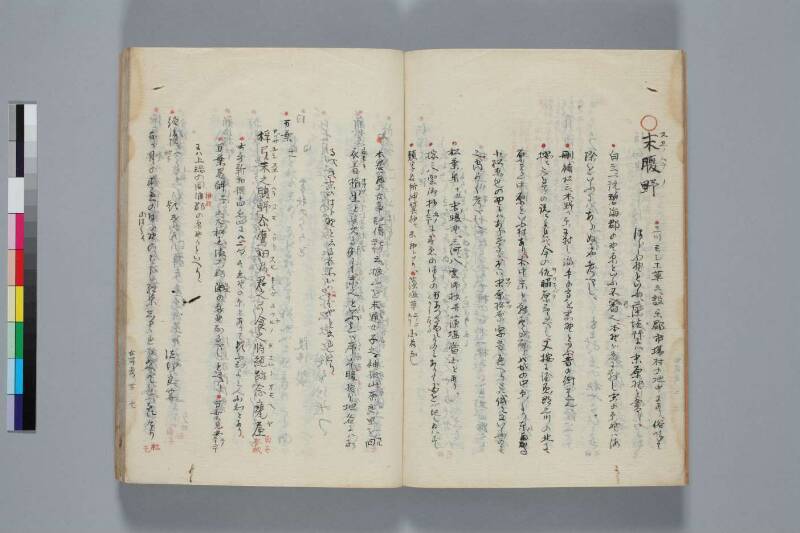
○末腹野(スヱノハラノ) ●三川モシホ草云、設楽郡市場村の地中にあり、俗呼て
はらふ野といふ、藻塩艸には末原野と書り、
●白云、一説、碧海郡の野原といふ不審也、本野が原に対し末の原野は海
際をいふにはあらぬにや考べし、
●刪補松云、本野が原に対し海手の方を末野といふ、昔の街道也、
●按ニこれらの説ニよれば、今の佐脇原(サワキバラ)なるべし、又按に渥美 ̄ノ郡二川の北に、
原また中原といふ村あり、本中末と対するならば、かの中原より東南なる
小松原辺の野にはあらざるが、そは末(マツ)原/松(マツ)原字音通へり、こは試みにいふのみ
也、尚よく考べし、
●松葉集《割書:十五|》末 ̄ノ腹野、三河、八雲御抄并藻塩当国とあり、
●按ニ八雲御抄《割書:五ノ|十七丁》に、すゑのはらの《割書:万あつさゆみ|とかりする》とのみありて、国をば記し給はず
●類字名所補翼抄《割書:七|》未勘トアリ、●藻塩草《割書:三ノ二|九丁》国名なし
●本居翁の古事記伝《割書:七ノ|四十丁》云、振山を未通女子之袖振山、奈良 ̄ノ里を旧(フル)
衣着(コロモキ)楢(ナラノ)里とよめる例にて、末之といふ迄は序にて腹野ぞ地名にはあ
るべき、末のはら野と云る名所いかに【「わ」見せ消ち、右に朱字「に」】ぞやと云れたり、
●万葉《割書:十一|》
梓弓(アヅサユミ)、末之腹野尓(スヱノハラヌニ)、鷹田為(トカリスル)、君之弓食(キミガユツル)【「ル」の右に書入れ「テ」】之(ノ)、将絶跡念甕屋(タエムトオモヘヤ)《割書:白モ|松秋》【「白モ松秋」は朱字】
●此歌新勅撰十四恋四には、二 ̄ノ句すゑ野の原とありて、題不知よみ人不知とあり、
●万葉略解《割書:十一ノ|》云、大和国添 ̄ノ上 ̄ノ郡/陶(スヱ)の原野なるべし といへり●万葉見安《割書:二 ̄ノ|五十二丁》
又は上総の周/准(稚歟)【「稚歟」朱字】郡の原野かといへり、
●続後撰《割書:七|秋下》 題しらず
なが月のすゑのはら野【「はら野」の左に書入れ「のはらイ」】のはじ紅葉しくれもあへず色づきにけり《割書:松|モ》【「松モ」朱字】
【「○」「●」「、」は朱】
古歌考 下 七
現代語訳
○末腹野(スエノハラノ) ●『三河藻塩草』によれば、設楽郡市場村の地域内にあり、俗に「はらふ野」と呼んでいる。『藻塩草』には「末原野」と記されている。
●白氏は言う、一説に碧海郡の野原というが疑問である。本野が原に対して末の原野は海際を指すのではないだろうか、考察すべきである。
●『刪補松』によれば、本野が原に対して海手の方を末野という。昔の街道である。
●考察すると、これらの説によれば、現在の佐脇原であろう。また按ずるに渥美郡二川の北に、原また中原という村がある。本中末と対応するならば、あの中原より東南にある小松原辺りの野ではないだろうか。しかし、それは「末原」と「松原」で字音が通じている。これは試みに言うだけである。なお、よく考察すべきである。
●『松葉集』巻十五に「末腹野、三河」とあり、『八雲御抄』並びに『藻塩草』に当国とある。
●考察すると『八雲御抄』巻五の十七丁に「すゑのはらの」(万葉にあづさゆみととかりする)とのみあって、国名は記していない。
●『類字名所補翼抄』巻七に「未勘」とある。●『藻塩草』巻三の二十九丁には国名なし。
●本居宣長翁の『古事記伝』巻七の四十丁に言う、振山を「未通女子之袖振山」、奈良の里を「旧衣着楢の里」と詠んだ例のように、「末之」というまでは序詞で「腹野」こそ地名であるべき。「末のはら野」という名所はいかがなものかと言われた。
●万葉集巻十一
梓弓(あづさゆみ)、末之腹野尓(すえのはらのに)、鷹田為(とかりする)、君之弓弦(きみがゆづるの)、将絶跡念甕屋(たえんとおもへや)
●この歌は『新勅撰集』巻十四恋四には、二句が「すゑ野の原」とあって、題知らず読み人知らずとある。
●『万葉略解』巻十一によれば、大和国添上郡陶の原野であろうという。●『万葉見安』巻二の五十二丁
また上総の周淮(稚か)郡の原野かという。
●『続後撰集』巻七秋下 題知らず
長月の末の原野の初紅葉時雨も待たず色づきにけり
英語訳
○Suenohara-no (Suenohara Field) ●According to "Mikawa Moshiogusa," it is located within the territory of Ichiba village in Shitara County, colloquially called "Harafu-no." In "Moshiogusa," it is written as "Suehara-no."
●Master Haku says: One theory places it as a field in Hekikai County, but this is doubtful. In contrast to Honda-ga-hara, could Sue-no-hara-no refer to the seaside area? This should be investigated.
●"Sanpo Matsu" states that in contrast to Honda-ga-hara, the seaside direction is called Sue-no. It was an ancient highway.
●Upon examination, according to these theories, it would be present-day Sawakibara. Also, upon investigation, north of Futagawa in Atsumi County, there are villages called Hara and Nakahara. If these correspond to hon (original), naka (middle), and sue (end), it might be the field around Komatsuhara, southeast of that Nakahara. However, "Suehara" and "Matsuhara" are phonetically similar. This is merely a tentative suggestion. Further investigation is needed.
●"Matsuba-shū" volume 15 states "Suehara-no, Mikawa," and both "Yakumo Goshō" and "Moshiogusa" list it as being in this province.
●Upon examination, "Yakumo Goshō" volume 5, folio 17, only contains "suenohara-no" (in Man'yōshū with azusayumi totkarisuru) without recording the province name.
●"Ruiji Meisho Hoyoku-shō" volume 7 states "location unknown." ●"Moshiogusa" volume 3, folio 29 has no province name.
●Master Motoori's "Kojiki-den" volume 7, folio 40 states: Following examples like reading Furi-yama as "Otome no sode furi-yama" and Nara-no-sato as "Furu koromo ki Nara-no-sato," up to "sue no" is a makura-kotoba (pillow word), and "hara-no" is the actual place name. He questioned what kind of famous place "Sue-no-hara-no" might be.
●Man'yōshū volume 11
Azusa-yumi (catalpa bow), sue no hara no ni (at Suenohara field), tokarisuru (where falcons hunt), kimi ga yuzuru no (your bowstring), taen to omohe ya (do you think will break?)
●This poem appears in "Shin Chokusen-shū" volume 14, Love 4, with the second line as "sue-no no hara," attributed to an unknown topic and unknown poet.
●"Man'yō Ryakkai" volume 11 suggests it is Sue-no-hara field in Soegami County, Yamato Province. ●"Man'yō Kenan" volume 2, folio 52
also suggests it might be a field in Suhei (or Waka?) County in Kazusa Province.
●"Zoku Gosen-shū" volume 7, Late Autumn Topic unknown
In the ninth month, at Suenohara field, the first autumn leaves have colored without waiting for winter showers.