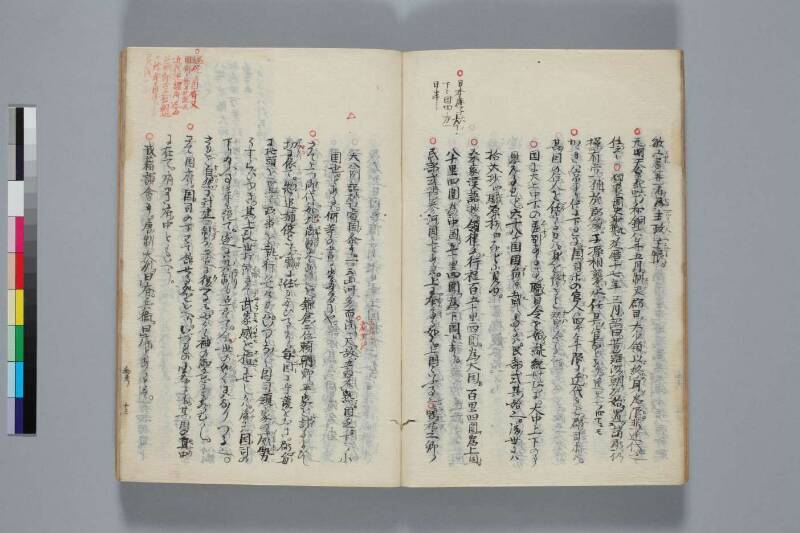
翻刻
【右丁】
【〇△は朱書き】
敏工 ̄ミサル_二書算 ̄ニ_一者 ̄ヲ為 ̄セヨ_二主政(マツリコト)《割書:人》主帳(フミビト) ̄ト_一。
〇元明天皇紀《割書:六ノ|四丁》和銅六年五月。制 ̄スラク夫郡司 ̄ノ大少領 ̄ハ以_レ【訓点の脱落】終 ̄ルヲ_レ身 ̄ノ為_レ【訓点の脱落】限 ̄ト。非 ̄ス_二遷代 ̄ル之
任 ̄ニ_一。云々〇類聚国史《割書:廿九|神祇十九》延暦十七年三月 ̄ノ詔 ̄ニ曰。昔 ̄ノ難波 ̄ノ朝廷始 ̄テ置 ̄ク_二諸郡_一。仍
択【擇】 ̄テ_二有労 ̄ヲ_一補 ̄ス_二於郡領 ̄ニ_一。子孫相襲 ̄テ永 ̄ク任_二其 ̄ノ官 ̄ニ_一なとあり。逸史七ノ四丁 ̄ニモ
〇かゝれは京より任に下れる。国 ̄ノ司等の官人は四ヶ年限に遷代(カハ)れど。郡 ̄ノ司等は。
其 ̄ノ国の住人を任(マケ)らるれは。身を終(オフ)ること替(カハ)らざる也。
〇国に大上中下の差別(ケヂメ)ある事。職員令を始 ̄メ。続紀《割書:十六ノ|十丁》に。大中上下の事
見えるれど。六十八ケ国国 毎(ゴト)に載(シル)したるは。民部式其 ̄ノ始也。後 ̄ノ世には
拾芥抄《割書:四》職原抄《割書:四》などに見ゆ。
〇桑家漢語抄 ̄ニ。領律 ̄ニ云。行程百五十里四囲【圍】 ̄ヲ為_二【訓点の脱落】大国 ̄ト_一【訓点の脱落】。百里四囲【圍】 ̄ヲ為_二【訓点の脱落】 上国 ̄ト_一。
八十里四圍 ̄ヲ為_二 中国 ̄ト_一。五十里四圍 ̄ヲ為_二 下国 ̄ト とあり。
〇民部式《割書:廿二ノ|二丁》参河 ̄ノ国上とあるは。上に挙(アゲ)たる如く。上国といふ事也。〇鴨 ̄ノ祐之郷 ̄ノ
【左丁】
△ 大八州記《割書:六ノ|十九丁》当【當】国 ̄ノ条に。一 ̄ニ云山河多 ̄ク【「ノ」に見えるが誤記と思われる。】而【右下に〇 さらに注記あり[注]】浅 ̄キコト一尺。故 ̄ニ五穀不_レ熟 ̄ラ。国乏 ̄シ。下々 ̄ノ小
国也。とあるは。何等の書に出たるにや。
〇さて上つ御代は如(カヽル)御制(ミサタメ)にてありしを。鎌倉 ̄ノ二位頼朝 ̄ノ卿。平家を討(ウチ)たまひし
功(イサヲ)に依て。惣追捕使といふ職(ツカサ)に任(メサ)【左横に「ヨサヽ」と傍記】れ給ひてより。毎国(クニゴト)に守護をおき。郡 毎(ゴト)
に地頭を置て政事を執 ̄リ行はせけれは。いつとなく国司領家の威勢(イキホ)
うすらひゆき。其 ̄ノ上乱世打続きて。武家(モノヽフドモ) 威(イキホヒ)を檀(ホシキマヽ)にせしかば。後(ノチ)には国 ̄ノ司の
下り給ふ事等も絶て。遂には其 ̄ノ制(ミノリ)も立ずて。今 ̄ノ【「ヲ」の送り仮名を朱で消し「ノ」と朱書き】世の如くにはなりつる也。
されど自然(オノヅカラ)に封建の制(ミサダメ)なる古 ̄ヘ に復(カ)へるも。やがて神の御意にもあらむかし。
さて国府は。国 ̄ノ司の下りて舘せる処をいへり。いづれの国なにも。其 ̄ノ国の真中(モナカ)
に在て。府また府 ̄ノ中ともいへり。
〇戎籍韻会【會】に。唐 ̄ノ制 ̄ニ大州 ̄ヲ曰_レ府 ̄ト。兵衛 ̄ヲ曰_レ府 ̄ト とありとそ。
和考 十三
【注】土蔵宗歟【「土■宗」を見せ消ち】
【右頁上部欄外】
日本鹿子《割書:六ノ|六丁》
下々国四方一
日半
【左丁頭部欄外 朱書き】
塩尻云国府又
国衙ト称ス世説云
近代通謂府ノ述給
公衙即古之公朝也
ト然ルトキノ同事 ̄ニ シテ
異議ナシ
現代語訳
【右丁】
敏工で書算に通じない者を主政(まつりごと)や主帳(ふみびと)とせよ。
○元明天皇紀(六巻四丁)和銅六年五月の制によると、「郡司の大少領は終身をもって限りとし、遷代する任ではない」云々とある。○類聚国史(二十九巻神祇十九)延暦十七年三月の詔に曰く「昔の難波朝廷が始めて諸郡を置いた。そこで功労のある者を選んで郡領に補任した。子孫が相続して永くその官に任じた」などとある。逸史七巻四丁にも同様の記述がある。
○このように京都から任命されて下ってくる国司等の官人は四年限りで交替するが、郡司等はその国の住人を任命するため、終身で交替することがない。
○国に大上中下の区別があることは、職員令を始めとして続紀(十六巻十丁)に大中上下のことが見えるが、六十八ヶ国すべてに記載したのは民部式が最初である。後の世には拾芥抄(四巻)職原抄(四巻)などに見える。
○桑家漢語抄に、領律によると「行程百五十里四囲を大国とし、百里四囲を上国とし、八十里四囲を中国とし、五十里四囲を下国とする」とある。
○民部式(二十二巻二丁)に「参河国上」とあるのは、上に挙げたように上国ということである。○鴨の祐之郷の
【左丁】
大八州記(六巻十九丁)当国の条に、「一に云う、山河多くして浅きこと一尺。故に五穀熟さず。国乏しく、下々の小国なり」とあるが、これはどのような書に出ているのであろうか。
○さて上つ御代はこのような御制度であったが、鎌倉の二位頼朝卿が平家を討った功により、総追捕使という職に任じられてより、毎国に守護を置き、郡毎に地頭を置いて政事を執り行わせたため、いつとなく国司領家の威勢が薄らいでいき、その上乱世が打ち続いて、武家が威を欲しいままにしたため、後には国司の下向することも絶えて、遂にはその制度も立たずに、今の世のようになったのである。しかし自然に封建の制度となり古へに復ったのも、やがて神の御意であろうか。
さて国府とは、国司が下って館を構えた処をいう。いずれの国でも、その国の真中にあって、府または府中ともいう。
○戎籍韻会に「唐の制では大州を府といい、兵衛を府という」とある。
【欄外注記】
日本鹿子(六巻六丁)「下々国四方一日半」
塩尻に「国府は国衙とも称す。世説に『近代通じて府の述給公衙と謂う。即ち古の公朝なり』とある。然るときは同事にして異議なし」
英語訳
[Right page]
Those who are skilled and capable but not versed in writing and arithmetic should be appointed as Shusai (administrators) and Suchō (clerks).
○According to the Genmei Tennō-ki (Volume 6, folio 4), in the fifth month of Wadō 6 (713), it was decreed: "The senior and junior heads of district offices serve for life, not as rotating appointments," etc. ○In the Ruiju Kokushi (Volume 29, Shinji 19), an edict from the third month of Enryaku 17 (798) states: "Long ago, the Naniwa court first established the various districts. Accordingly, those with merit were selected and appointed as district heads. Their descendants inherited the positions and served permanently in those offices," etc. Similar records appear in Itsu-shi, Volume 7, folio 4.
○Thus, while government officials appointed from the capital served four-year terms before being replaced, district officials were appointed from local residents and served for life without rotation.
○The classification of provinces into dai (great), jō (superior), chū (middle), and ge (inferior) categories appears in the Shokuin-ryō and other sources, with references in the Shoku Nihongi (Volume 16, folio 10). However, the Minbu-shiki was the first to record all 68 provinces. Later works like Shūgai-shō (Volume 4) and Shokigen-shō (Volume 4) also contain such records.
○The Sōke Kango-shō, quoting the Ryō-ritsu, states: "A territory of 150 ri square constitutes a great province, 100 ri square constitutes a superior province, 80 ri square constitutes a middle province, and 50 ri square constitutes an inferior province."
○The Minbu-shiki (Volume 22, folio 2) designates "Mikawa Province as superior," which, as mentioned above, means it was classified as a superior province. ○Regarding Kamo no Sukeyuki-gō...
[Left page]
The Daihachishū-ki (Volume 6, folio 19) states in its section on this province: "It is said that there are many mountains and rivers, but they are shallow, only one shaku deep. Therefore, the five grains do not ripen. The province is poor and ranks as an inferior small province." It is unclear from which source this derives.
○While such was the imperial system in ancient times, after Kamakura no Ni-i Yoritomo defeated the Taira clan and was appointed as Sō-tsuibushi (Chief Constable), he placed shugo (military governors) in each province and jitō (stewards) in each district to administer affairs. Gradually, the authority of provincial governors and estate holders weakened. Moreover, as turbulent times continued and military houses exercised power at will, eventually even the appointment of provincial governors ceased, and the old system collapsed, leading to the present state of affairs. However, that it naturally reverted to a feudal system resembling ancient times may also be according to divine will.
The kokufu (provincial capital) refers to the place where the provincial governor established his residence upon arriving in the province. In every province, it was located at the center of that province and was also called fu or fuchū.
○The Jūseki In'e states: "Under the Tang system, a great prefecture was called fu, and military guards were called fu."
[Marginal notes]
Nihon Kanoko (Volume 6, folio 6): "Inferior provinces: one and a half days square"
Shiojiri states: "The provincial capital is also called kokuya. According to Sesetsu: 'In recent times, it is commonly called fu, meaning the public office. This is the same as the ancient public court.' This being the case, it is the same thing with no disagreement."