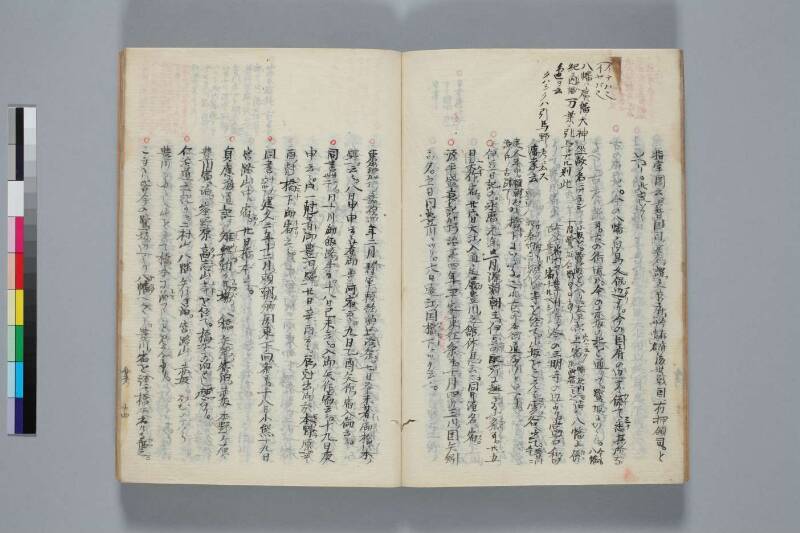
翻刻
【右丁】
【行頭の○は朱書き】
指掌図 ̄ニ云。古昔国司 ̄ノ居処 ̄ヲ謂 ̄府 ̄フ_二之官府 ̄ト_一《割書:今存府|中遺_レ名》後世戦国 ̄ニ有押領司。と
いへり。此説いろ〳〵
○古の府の地。今の八幡白鳥久保 ̄ノ辺(アタリ)より。今の国府の辺まで係(カケ)て悉(ミナ)其 ̄ノ所な
るべし。古老の説云。古の街道は。今の赤坂の北を通りて。鷺坂に切たり。《割書:今も|八幡》
《割書:□□□□□□□□□【張り紙があり、その上の文字に隠れ、判読できず 注】小坂を。鷺坂といへり。太平記|□□□□【張り紙があり、その上の文字に隠れ、判読できず】。建武ニ年十月鷺坂合戦の事あり》上宿(ウハジユク)《割書:八幡ノ地内也。古ノ|御油宿也といへり。》八幡に係(カヽ)
りて。豊川宿へ出。《割書:今ノ古宿村ヨリ豊川村カケテ|古ヘノ豊川宿ナルベシ。》今の三明寺の辺より。当古和田
【張り紙あり。判読できず。】《割書:産土神クラカケノ社アリ。建久中|頼朝卿鞍 ̄ヲ奉納シメラレタリ。》等を経(ヘ)て。山坂をこえて。雲谷(ウノヘ)へ出て。《割書:晋門|寺ニ》
《割書:建久年中。頼朝《割書:ノ》卿上|洛ノトキノ古跡アリ。》/橋下(ハシモト)にいたる。これ古への本街道なりといへり。
○伊豆日記の。永暦元年二月。源 ̄ノ頼朝主。伊豆の配所に趣き給ふ条(クダリ)に。廿五
日/矢作(ヤハギ) ̄ニ宿 ̄ス。廿六日大江 ̄ノ入道定厳 ̄ガ豊川 ̄ノ之舘 ̄ニ休息 ̄ス云々。同日浜名 ̄ニ宿 ̄ス
○源平盛衰記《割書:廿三ノ|九丁》治承四年平家東征ノ条に。十月四日三川ノ国矢矧
《割書:ニ》ツク。五日同豊川 ̄ニ ツク。六日遠江ノ国ノ橋下(ハシモト) ̄ニ ツク云々。
【注 張り紙をめくった画面が次のコマに有り。】
【同 頭部の張り紙部分】
イナハ也
イヤバ也【この二行頭部を丸ガッコでつなぐ】
八幡ハ広幡 ̄ノ大神 ̄ノ坐故ノ名ニアラシ
紀ニ因幡(イナハ)万葉ニ引馬(イナバ) ̄ト アル則此
辺ヲ云
クハシクハ引馬野 ̄ノ考 ̄ニ出ス
庸業云
【左丁 次のコマにて飜刻】
現代語訳
【右丁】
指掌図に言う。「古昔、国司の居処を府之官府と謂う(今も府中の名が残る)。後世戦国時代には押領司があった」といっている。この説はいろいろある。
○古の府の地は、今の八幡白鳥久保の辺りから、今の国府の辺まで係わって、すべてその所であろう。古老の説によると、古の街道は、今の赤坂の北を通って、鷺坂に至った(今も八幡の小坂を鷺坂という。太平記に建武二年十月鷺坂合戦の事がある)。上宿(八幡の地内である。古の御油宿であるという)、八幡に係わって、豊川宿へ出る(今の古宿村より豊川村にかけて古への豊川宿であろう)。今の三明寺の辺より、当古和田(産土神クラガケの社がある。建久年中頼朝卿が鞍を奉納された)等を経て、山坂を越えて、雲谷へ出て(晋門寺に建久年中、頼朝卿上洛の時の古跡がある)、橋本に至る。これが古への本街道であるという。
○伊豆日記の永暦元年二月、源頼朝主が伊豆の配所に趣く条に「二十五日矢作に宿す。二十六日大江入道定厳が豊川の館に休息す云々。同日浜名に宿す」とある。
○源平盛衰記(二十三巻九丁)治承四年平家東征の条に「十月四日三川国矢矧に着く。五日同豊川に着く。六日遠江国の橋本に着く云々」とある。
【張り紙部分】
イナバ也
イヤバ也
八幡は広幡大神の坐す故の名であろう
紀に因幡(イナバ)、万葉に引馬(イナバ)とあるのは、この辺りを言う
詳しくは引馬野の考に出す
庸業云
英語訳
[Right page]
The Shishō-zu states: "In ancient times, the residence of the provincial governor was called fu-no-kanfu (official府). The name fuchū still remains today. In later warring states period, there were ōryōji (military commissioners)." There are various theories about this.
○The site of the ancient fu probably extended from the present-day area of Hachiman Hakuchō Kubo to the vicinity of the present Kokufu. According to the accounts of old people, the ancient highway passed north of present-day Akasaka and reached Sagi-saka (even now, a small hill in Hachiman is called Sagi-saka. The Taiheiki records a battle at Sagi-saka in the tenth month of Kenmu 2 [1335]). It connected to Kami-juku (within Hachiman territory; said to be the ancient Goyu post station), Hachiman, and led to Toyokawa post station (from present-day Furujuku village to Toyokawa village was probably the ancient Toyokawa post station). From the vicinity of present-day Sanmyōji, it passed through Tōko-wada (where there is a shrine to the tutelary deity Kuragake; Lord Yoritomo dedicated a saddle there during the Kenkyū period) and others, crossed mountain passes, emerged at Unoya (at Shinmon-ji there are remains from when Lord Yoritomo traveled to the capital during the Kenkyū period), and reached Hashimoto. This is said to have been the main highway in ancient times.
○In the Izu Nikki, under the entry for the second month of Eiryaku 1 (1160) when Minamoto no Yoritomo went to his place of exile in Izu: "On the 25th day, lodged at Yahagi. On the 26th day, rested at the mansion of Ōe no Nyūdō Teigen in Toyokawa, etc. On the same day, lodged at Hamana."
○In the Genpei Seisuiki (Volume 23, folio 9), in the section on the Taira clan's eastern expedition in Jishō 4 (1180): "On the fourth day of the tenth month, arrived at Yahagi in Mikawa Province. On the fifth day, arrived at Toyokawa in the same province. On the sixth day, arrived at Hashimoto in Tōtōmi Province, etc."
[Pasted paper section]
Inaba
Iyaba
Hachiman is probably named after the residence of the great deity Hirohata
The Chronicles mention Inaba, and the Man'yōshū mentions Hikima (Inaba), referring to this area
Details are given in the study of Hikima-no
Yōgyō says