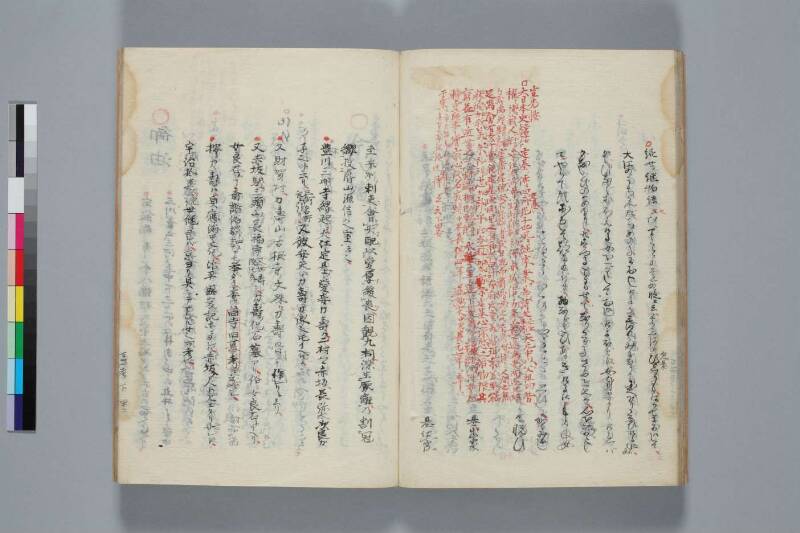
翻刻
○続世 ̄ノ継物語《割書:九ノ| 丁》【「五」見せ消ち、右に朱字「九」】、まことの道の段ニ云、其三河の/ひしり(定基)も、はかせにおはして、
大江のうちかんだちめの子におはしけるが、三河のかみになりて、国へ下りたまひけるに、た
ぐひなくおほえける女をぐしておはしけるほどに、女身まかりければ
かなしびのあまり、取すつることもせ、で、なりさがるさまを見て、心をおこし
て、やかて頭おろして都にのぼり、物などこひあるきけるに、もとの女
にて有ける女、われを捨たるむくひにてかゝれとこそ思ひしに、かくみなし
たる事など申ければ、さとくぞ仏になりなんとて、手をすりて悦び
けるとつたへかたりつる
●扶桑略記《割書:廿七ノ|廿七丁》云、一條 ̄ノ天皇長保五年秋 ̄ノ時参河 ̄ノ守大江 ̄ノ貞基、出家
●入道法号寂照云々、
●元亨釈書《割書:十六ノ|十三丁》云、釈寂昭ハ諫議大夫江斉光 ̄ノ之子也 ̄リ、俗名定基仕_レ ̄テ官 ̄ニ至_二
至参州 ̄ノ剌吏_一 ̄ニ会_レ ̄ヒテ失 ̄フニ配 ̄ヲ以_二愛厚_一 ̄ヲ緩_レ喪(ソ)、因観_二 九相_一、深生_二厭離_一、乃割_二冠
纓_一投_二睿【𥈠】山 ̄ノ源信之室_一云々、
●豊川三明寺縁起ニ大江定基 ̄ノ愛妾力壽ハ二村郷赤坂長弥太次良ガ
子也ト云リ、《割書:三河名所|記ニ引リ、》又彼弁天ハ力壽ガ像トモイヘリ、
●又財賀村、力壽山舌根寺 ̄ノ文殊ハ力壽 ̄ノ骨ニテ作レリト云リ
●又赤坂駅、三頭山長福寺《割書:又妙壽|院トモ云》ニ、力壽 ̄ノ化石墓アリ、俗ニ女良石トイヘリ、
女良石ノコト斎諧俗談《割書:四ノ|十三丁》ニモ挙タリ、委クハ旧寺旧墓考【「旧寺旧墓考」を朱の四角枠で囲】ニ云ベシ、
●按ニ力壽ハ、貞應海道記、源平盛衰記等ニヨレバ、赤坂ノ人ト見エタリサレド、
宇治拾遺、続世継ニヨレバ、京ヨリ具シテ下レル女也可考、
【右頁朱字貼紙】
《割書: 宣光按|○大日本史《割書:二百十七|文学ノ部》定基ノ伝曰定基斉光子也夙ニ継_二家業_一 ̄ヲ善_二 ̄ス詩文_一《割書:続往|生伝》天元中以_二 ̄テ父祖功労_一 ̄ヲ| 擢 ̄テ、補_二 ̄セ蔵人_一 ̄ニ《割書:小右|記》尋任_二 ̄ス参河守_一 ̄ニ《割書:小右記 続往|生伝 系図》初得赤坂倡力壽寵_レ ̄ス之遂為妻而遂_二其婦_一 ̄ヲ| 力壽病死ス《割書:力壽ハ拠|盛衰記》 定基抱屍号哭不歛葬者数日既而稍厭_二 ̄ヒ悪之_一乃座焉因テ悟トシ人間之無| 足為会有女子売鏡定基匣開見之有和歌曰/計布麻氐登美留珥奈美駄能(ケフマテトミルニナミタノ)| 麻須加我美奈礼珥志加計乎比登珥加太留奈(マスカヽミナレニシカケヲヒトニカタルナ)定基心深愍之給物振其| 窮益有遁世之志《割書:十訓抄箸【著ヵ】聞集今昔|物語抄【新ヵ】一代要記》 永/延(エン)二年遂ニ下髪為僧《割書:百練抄一代|要記》 投如意| 輪寺_一 ̄ニ師_二 ̄トシ事僧寂心_一 ̄ニ改_二 ̄ム名寂昭_一 ̄ト《割書:中略》長保四年遂如_レ ̄ク宋 ̄ニ《割書:中略》長元七年ニ卒_二 ̄ス| 于宋_一 ̄ニ《割書:帝王編年記為_二八年ニ卒ス|年七十七_一 ̄ニ今従_二続往生伝_一》云々下略》
【「○」「●」「、」は朱】
古歌考 下 四十二
現代語訳
○続世継物語九の巻、真の道の段に云う、その三河の定基も、博士でいらして、
大江のうちかんだちめの子でいらしたが、三河の守になって、国へ下りなされたときに、類
なく美しいと思われた女を連れていらしたほどに、女が亡くなったので
悲しみのあまり、取り捨てることもせずに、衰えていく様を見て、心を起こし
て、やがて頭を下ろして都に上り、物乞いなどして歩いていたところ、元の女
であった女が、私を捨てた報いでこうなったと思っていたのに、このように身を
なしたことなどを申したので、悟って仏になるだろうと言って、手を摺って喜ん
だと伝え語ったという
●扶桑略記二十七の二十七丁に云う、一条天皇長保五年秋の時、参河守大江貞基、出家
●入道の法号は寂照云々
●元亨釈書十六の十三丁に云う、釈寂昭は諫議大夫江斉光の子である。俗名定基、官に仕えて参州
刺史に至った。愛する配偶を失ったため愛情深く喪に服していたが、九相を観じて、深く厭離の心を生じ、そこで冠
纓を断って叡山の源信の室に投じた云々
●豊川三明寺縁起に、大江定基の愛妾力寿は二村郷赤坂長弥太次良が
子であると云う。三河名所記に引用されている。またあの弁天は力寿の像とも言われる。
●また財賀村、力寿山舌根寺の文殊は力寿の骨で作られたと云う
●また赤坂駅、三頭山長福寺(また妙寿院とも云う)に、力寿の化石墓がある。俗に女良石と言う。
女良石のことは斎諧俗談四の十三丁にも挙げられている。詳しくは旧寺旧墓考に云うべし。
●考えるに力寿は、貞応海道記、源平盛衰記等によれば、赤坂の人と見えるけれども、
宇治拾遺、続世継によれば、京より連れて下った女である、考えるべし。
【右頁朱字貼紙】
宣光按
○大日本史二百十七文学の部、定基の伝に曰く、定基は斉光の子なり、早くに家業を継いで詩文を善くした。天元中、父祖の功労により
蔵人に擢補され、尋いで参河守に任ぜられた。初め赤坂の倡力寿の寵を得てこれを愛し、ついに妻となしてその婦を連れた。
力寿病死す。定基は屍を抱いて号哭し、数日間葬らなかった。既にして次第にこれを厭悪し、そこで座した。因って人間の無
足なることを悟った。たまたま女子が鏡を売りに来て、定基が匣を開いて見ると、和歌があった。曰く
今日まで見るに涙の
増す鏡慣れにし影を人に語るな
定基は心深く憐れんで物を給い、その窮状を振い、益々遁世の志があった。永延二年ついに髪を下ろして僧となった。如意輪寺に投じて僧寂心に師事し、名を寂昭と改めた(中略)長保四年ついに宋に行った(中略)長元七年に宋において卒した云々下略
古歌考 下 四十二
英語訳
○In the Zoku Yotsugi Monogatari, volume 9, in the section on "The True Path," it says: That Mikawa no Sadamoto was also a hakase (scholar),
and was the son of an Ōe uchikandate. When he became Mikawa Governor and went down to the province, he brought with him
a woman who was thought incomparably beautiful. When the woman died,
in his overwhelming grief, he could not dispose of her body, and seeing her decay, he awakened religiously,
immediately shaved his head, went up to the capital, and walked about begging. A woman who had been his former wife
thought this happened as retribution for abandoning her, but when she heard that he had thus renounced the world,
she said he would attain enlightenment and become a Buddha, and rejoiced, rubbing her hands together -
so it is told and related.
●The Fusō Ryakki, volume 27, page 27, says: In autumn of the fifth year of Chōhō during Emperor Ichijō's reign, Mikawa Governor Ōe no Sadamoto became a monk.
●The lay monk's Buddhist name was Jakushō, etc.
●The Genkō Shakusho, volume 16, page 13, says: Priest Jakushō was the son of Counselor Ōe no Saikō. His secular name was Sadamoto, who served in government office and rose to
the position of Sanshū governor. Having lost his beloved spouse, he mourned deeply with great affection, but observing the nine stages of decay, he developed deep disgust and renunciation, whereupon he cut off his court cap
and cords and entered the quarters of Genshin on Mount Hiei, etc.
●In the Toyokawa Sanmyōji Engi, it says that Ōe no Sadamoto's beloved concubine Rikiju was the
daughter of Nagayata Jirō of Akasaka in Futamura village. This is quoted in the Mikawa Meishoki. That Benzaiten is also said to be an image of Rikiju.
●Also, the Monju statue at Rikijuzan Zetsukonji Temple in Zaiga village is said to be made from Rikiju's bones.
●Also, at Akasaka Station, at Santōzan Chōfukuji Temple (also called Myōjuin), there is Rikiju's petrified grave. It is commonly called the Nyoryo Stone.
The matter of the Nyoryo Stone is also mentioned in Saikei Zokudan, volume 4, page 13. Details should be found in the Kyūji Kyūbo-kō.
●Upon consideration, according to the Jōō Kaidōki, Genpei Jōsuiki, etc., Rikiju appears to have been a person from Akasaka, but
according to the Uji Shūi and Zoku Yotsugi, she was a woman he brought down from Kyoto - this should be considered.
[Right page red ink note]
Senkō's Note
○In the Dai Nihonshi, volume 217, Literature Section, Sadamoto's biography states: Sadamoto was Saikō's son who early inherited the family profession and was skilled in poetry and prose. During the Ten'gen era, due to his ancestors' meritorious service,
he was promoted and appointed as a court attendant, and soon after was appointed Mikawa Governor. Initially he gained the favor of the Akasaka courtesan Rikiju, loved her, and finally made her his wife and brought that woman with him.
Rikiju died of illness. Sadamoto embraced her corpse, wailed, and did not bury her for several days. Eventually he gradually came to loathe this, and sat down. Thus he realized the insufficiency of human existence.
It happened that a woman came selling a mirror, and when Sadamoto opened the box to look, there was a waka poem that said:
"Until today, seeing tears
increase in the mirror - do not tell others of this familiar reflection."
Sadamoto deeply pitied her, gave her something, relieved her poverty, and increasingly had aspirations for renouncing the world. In the second year of Eien, he finally shaved his hair and became a monk. He entered Nyoirin Temple, took the monk Jakushin as his teacher, and changed his name to Jakushō (middle section omitted). In the fourth year of Chōhō he finally went to Song China (middle section omitted). He died in Song China in the seventh year of Chōgen, etc. (remainder omitted)
Kokakō, Volume 2, Page 42