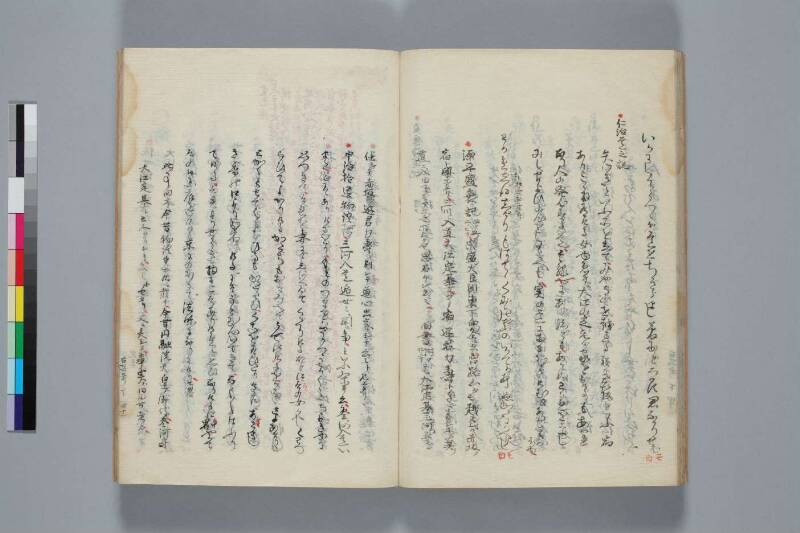
翻刻
いかにしてうつゝが道をちぎらまし夢おどろかす君なかりせば《割書:モ|白》【「モ白」朱字】
●仁治道之記
矢はぎといふ所を立て、みやぢ山を越過る程に、赤坂といふ宿
あり、ここに有ける女ゆゑに、大江の定元が家を出けるもあはれ
なり、人の発心する道、其縁一【「へ」を見せ消ち、右に朱字「一」】にあらねども、あかぬわかれををし
みし、まよひの心をしもかへし、実の道におもむきけむもありかたくおぼゆ、
わかれ/じ(ち 扶桑拾葉本)にしげりもはてゝくずの葉のいかでかあらぬかたにかへりし《割書:モ|白》【「モ白」朱字】
●源平盛衰記《割書:四十五ノ|二ノヒラ》、宗盛 ̄ノ大臣関東下向 ̄ノ条ニ云、宮路山ヲモ越ヌレバ赤坂ノ
宿ト聞エタリ、三_川入道、大江定基ガ、コノ宿ノ遊君力壽トイフニオクレテ、真 ̄ノ
道ニ入ルコトモアラマホシクヤ思召ケン云々、同書《割書:七ノ|廿三丁》ニモ大江 ̄ノ定基三河 ̄ノ守ニ
任シテ赤坂ノ遊君力壽ニ別レテ道心出家シテ云々ト見エタリ、
●宇治拾遺物語《割書:四ノ|十一丁》、三河入道遁世々ニ聞ル事、といふ条に云、参河入道い
まだ、俗にてありけるをり、もとのつまをば、さりつゝわかくかたちよき女に
思つきて、それを妻にて三河へゐてくだりけるほどに、その女久しくわづ
らひてよかりけるかたちもおとろへてうせにけるを、かなしさのあまりに
とかくもせで、よるもひるもかたらひ、くちをすひたりけるに、あさまし
き香の口より出来りけるにぞ、うとむ心いできて、なく〳〵はふり
てける、それより世うき物にこそありけれと思ひなりけるに《割書:中|略》やがて
その日国府をいでゝ京にのほりて、法師になりにけり、《割書:下略》
此事旧本今昔物語第十九ニ載テ、今昔円融院天皇 ̄ノ御代ニ、参河守
大江定基ト云人アリレ【「ケ」ヵ】リ、云々トノセタリ、文ハ異シテ、事実ハ同シ可考合、
【「●」「、」は朱】
古歌考 下 四十一
現代語訳
いかにして現実の道を契らましょう、夢を覚ます君がいなければ
●仁治道の記
矢矧という所を立って、宮路山を越え過ぎる程に、赤坂という宿
がある。ここにいた女のゆえに、大江の定元が家を出たのもあわれ
なことである。人が発心する道、その縁は一つではないけれども、満たされない別れを惜し
んで、迷いの心をも翻し、真実の道に赴いたであろうこともありがたく思われる。
別れじと茂りも果てて葛の葉のいかでか異なる方に帰りし
●源平盛衰記四十五の二の平、宗盛大臣関東下向の条に云う、宮路山をも越えれば赤坂の
宿と聞こえたり。三河入道、大江定基が、この宿の遊君力寿というに遅れて、真の
道に入ることもあらまほしくや思し召しけん云々。同書七の二十三丁にも大江の定基三河の守に
任じて赤坂の遊君力寿に別れて道心出家して云々と見えたり。
●宇治拾遺物語四の十一丁、三河入道遁世の事と聞く事、という条に云う、参河入道が
まだ俗にてありける折、元の妻をば離縁して若く容貌よき女に
思いついて、それを妻にて三河へ連れて下りけるほどに、その女久しく患って
いたが良かった容貌も衰えて亡くなってしまったのを、悲しさのあまりに
どうすることもできず、夜も昼も語らい、口を吸ったりしたところ、浅ましい
香が口より出てきたので、嫌悪の心が出てきて、泣く泣く葬った
のである。それより世は憂きものであると思うようになったが(中略)、やがて
その日国府を出て京に上って、法師になってしまった。(下略)
この事は旧本今昔物語第十九に載せて、今昔円融院天皇の御代に、参河守
大江定基という人がいた云々とのせたり。文は異なって、事実は同じ、考え合わせるべし。
古歌考 下 四十一
英語訳
How could I pledge to follow the path of reality, if there were no君 to awaken me from dreams?
●Ninji Michi no Ki (Record of the Ninji Era Journey)
Departing from a place called Yahagi, as we crossed over Miyaji Mountain, there is a post station
called Akasaka. It is a pitiful tale that Ōe no Sadamoto left his home because of a woman
who was there. The path by which people attain religious awakening has various causes, and though he regretted an
unsatisfying parting, it seems admirable that he turned around even his deluded heart and headed toward the true path.
Promising not to part, the kudzu leaves grew thick to the end - how could they return in a different direction?
●In the Genpei Jōsuiki, volume 45, page 2, in the section on Minister Munemori's journey to the east, it says: "Having crossed Miyaji Mountain, we came to what is called Akasaka
post station. The Mikawa lay monk, Ōe no Sadamoto, being separated from a courtesan of this post station named Rikiju, perhaps thought it desirable to enter the true
path," etc. The same work, volume 7, page 23, also records that Ōe no Sadamoto was appointed Mikawa Governor,
parted from the Akasaka courtesan Rikiju, awakened to religious life, and became a monk, etc.
●In the Uji Shūi Monogatari, volume 4, page 11, in the section titled "What We Hear About the Mikawa Lay Monk's Renunciation of the World," it says: When the Mikawa lay monk was
still a layman, he divorced his former wife and became infatuated with a young woman of good appearance,
made her his wife, and brought her down to Mikawa. This woman fell ill for a long time, and
her once-beautiful appearance declined until she died. In his overwhelming grief, he could
do nothing else but speak with her night and day and kiss her mouth, whereupon a terrible
smell came from her mouth, and disgust arose in his heart, so he buried her while weeping.
From then on he came to think that the world was a sorrowful thing (middle section omitted), and immediately
that day he left the provincial office, went up to Kyoto, and became a monk. (remainder omitted)
This matter is recorded in the old version of Konjaku Monogatarishū, volume 19, saying "In the Konjaku, in the reign of Emperor En'yū-in, there was a person called Mikawa Governor
Ōe no Sadamoto," etc. The text differs, but the facts are the same - this should be considered together.
Kokakō Volume 2, Page 41