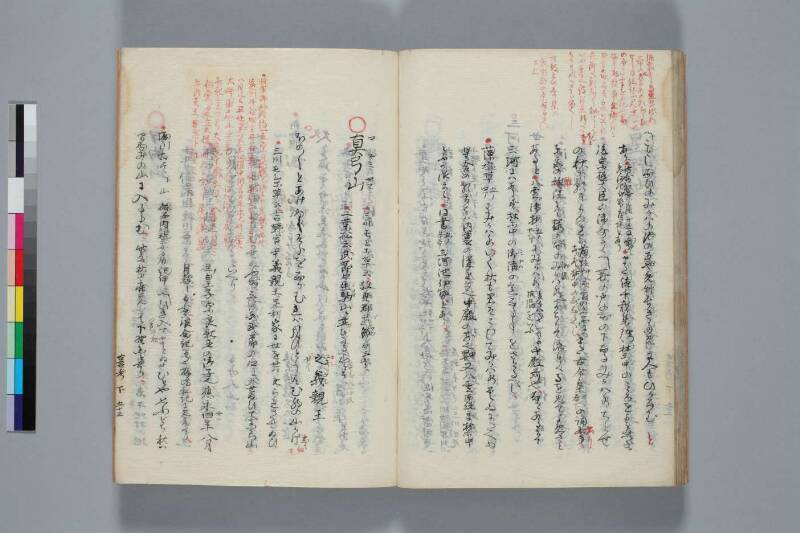
翻刻
〽ことしおひのみかはの池のあやめ艸長きためしに人もひかなむ と【「と」朱字】
あり、《割書:●此歌松葉集十三に載て|参河池伊㔟藻塩とあり》●また続千載集《割書:賀ノ|部、》禁中のこゝろをよみ給へる、
後京極大臣の御歌に、〽萩の戸の花の下なるみかは水ちとせ
の秋の影ぞうつれる、《割書:藻塩艸云、三河の名所には|あらず、禁中の歌なるへし、》また古今集《割書:二|春下》の詞書に【「右に」を見せ消ち、右に朱字「書に」】、
東宮の雅【「稚」を見せ消ち、右に朱字「雅」】院にて桜の花の/みかは(御溝)水にちりて流れくるを見てよめる、と
あると●八雲御抄《割書:五ノ|廿六丁》に、みかは水《割書:多くはだいりの|御溝をいふ》中殿前也、などあるにて
三河にはあらず、禁中の御溝(ミカハ)の意なる事をさとるべし、
●藻塩草《割書:五ノ|四丁》にみかは水、いく秋も君そうつしてみかは水雲ゐにたへぬ
星合の影、多くは内裏の溝を云也、中殿の前也、《割書:中|略》又八雲御説に禁中
ニ不可限云々、●同書《割書:五ノ|五十三丁》三河池伊㔟、とあり、
○真弓山(マユミヤマ) ●三川モシホ草云、設楽郡/武節(ブセツ) ̄ノ郷ニあり、
●二葉松云、武節郷/生駒(イコマ)山ニ並びたる山とぞ、
○ 之(ユキ)【「ユキ」の右に朱字「コレ」。「之」の左に「尹イ」】義(ヨシ)親王
ほの〴〵とあけゆくそらをながむれば月ひとりすむ西の山か/げ(なイ)《割書:白|モ》【「白モ」朱字】
●三川モシホ草云、吉野 ̄ノ宮、尹義親王、足利家に世をせばめられさせ給ひ、
上野 ̄ノ国新田ニおもむかせ給ふ時、三河 ̄ノ国武節の郷に入せ給ひて、真弓山
の月を見給ひてよめる、といへり、
●按ニ尹良親王は、後醍醐天皇 ̄ノ皇子宗良親王の御子也、応永/四(卅一)年八月
十五日信濃 ̄ノ国大川原にて自殺し給ふと、浪合 ̄ノ記また藤嶋私記に見えたり、
●堀川百首《割書:下》 山 祐子内親王女房紀伊 〽ひき入て【「入て」の左に「つれて 秋」】まとゐせむとや思ふどち秋は
まゆみの山に入るらむ、 此歌秋の寝覚等ニは下野国とせり、
【右頁頭註朱字】
《割書:統叢考ニ云星野の池水|帝の御髪水の朝な〳〵献|せし事諸記所見中何れ|の帝といふ事を不記不審|按るに持統帝宮路山引馬|野幸の時名水なれは其?行|在所へ朝な〳〵献せしを|いふならん彼【傳ヵ】行在所へはほど|ちかけれはさも有へし》
《割書:可【一ツヵ】待【彼ヵ】三河歌集の|飫【「飫」の左に「下」】宝【「宝」の左に「上」、「宝飫」】郡の条合見るへし》
【左頁朱字貼紙】
《割書:●将軍御外戚伝一云宗良親王 ̄ノ御子尹良親王御母ハ| 遠州井谷城主井谷遠江守道政女也元中三年| 八月八日平姓ヲ玉フ正三位権中納言右近衛大将征夷| 大将軍応永二十一年八月十五日信州波合戦ニ| 討死シ玉フ号大竜寺殿永享八年六月十四日| 祠堂ヲ建立大橋大明神ト祭リテ尾州津島 ̄ノ| 牛頭天王 ̄ノ若宮ト称スルハコレナリ》
【「○」「●」「、」は朱字】
古歌考 下 五十三
現代語訳
〽今年生いの三河の池の菖蒲草、長き例しに人も引かなむ と
ある。●この歌は『松葉集』十三に載せて、参河池伊勢藻塩とある。●また『続千載集』賀部に、禁中の心を読まれた後京極大臣の御歌に、〽萩の戸の花の下なる三河水、千歳の秋の影ぞ映れる、『藻塩草』によると、三河の名所ではなく、禁中の歌であろう。また『古今集』春下の詞書に、
東宮の雅院にて桜の花が御溝水に散って流れてくるのを見て詠んだ、と
あり、●『八雲御抄』に、三河水(多くは内裏の御溝をいう)は中殿の前である、などとあることによって
三河にはあらず、禁中の御溝の意味であることを理解すべきである。
●『藻塩草』に「三河水、いく秋も君ぞ映して三河水、雲居に絶えぬ星合の影」、多くは内裏の溝を言うのである、中殿の前である。また『八雲御抄』に禁中に限らないと云々。●同書に三河池伊勢、とある。
○真弓山 ●『三河藻塩草』によると、設楽郡武節の郷にある。
●『二葉松』によると、武節郷生駒山に並んだ山である。
○ 之義親王
ほのぼのと明けゆく空を眺むれば、月ひとり住む西の山陰
●『三河藻塩草』によると、吉野宮の尹義親王が、足利家に世を狭められなさって、
上野国新田に赴かれる時、三河国武節の郷にお入りになって、真弓山
の月を御覧になって詠んだ、という。
●考察するに、尹良親王は後醍醐天皇の皇子宗良親王の御子である。応永三十一年八月
十五日、信濃国大川原にて自殺されたと、『浪合記』また『藤嶋私記』に見える。
●『堀川百首』下、山、祐子内親王女房紀伊 〽引き連れて輪座をしようと思う友達が、秋は
真弓の山に入るのだろう。 この歌は『秋の寝覚』等には下野国とする。
【右頁頭註】
『統叢考』によると、星野の池の水を帝の御髪水として朝な夕なに献上したことは諸記に見えるが、いずれの帝かということを記さず不審である。考えるに持統帝の宮路山引馬野行幸の時、名水なので、その行在所へ朝な夕なに献上したのを言うのであろう。あの行在所へはほど近いからそうであろう。
『三河歌集』の宝飫郡の条を合わせ見るべきである。
【左頁貼紙】
●『将軍御外戚伝』一によると、宗良親王の御子尹良親王の御母は遠州井谷城主井谷遠江守道政の女である。元中三年八月八日に平姓を賜る。正三位権中納言右近衛大将征夷大将軍。応永二十一年八月十五日、信州波合戦にて討死される。大竜寺殿と号する。永享八年六月十四日に祠堂を建立し、大橋大明神と祭って、尾州津島の牛頭天王の若宮と称するのはこれである。
古歌考 下 五十三
英語訳
"May people also pull the iris grass of Mikawa Pond that grows anew this year, as a long-lasting example"
This poem appears in "Matsuba-shū" volume 13, listed as "Mikawa Pond Ise Moshio." ●Also in "Zoku Senzai-shū" in the congratulatory section, a poem by the Former Kyōgoku Minister expressing court sentiments: "The autumn shadows of a thousand years are reflected in the Mikawa water beneath the flowers of the bush clover gate." According to "Moshiogusa," this is not about a famous place in Mikawa but is a court poem. Also in the preface to "Kokin-shū" spring volume:
"Composed upon seeing cherry blossoms scattering and flowing in the imperial channel water at the Crown Prince's elegant residence"
●From "Yakumo Gyoshō" which states "Mikawa water (usually refers to the imperial palace channels) is in front of the central hall," etc.,
we should understand that this does not refer to Mikawa but to the imperial palace channels.
●In "Moshiogusa": "Mikawa water, how many autumns have you reflected our lord, Mikawa water, the eternal starry shadows in the clouds above" - this mostly refers to the palace channels, in front of the central hall. Also "Yakumo Gyoshō" states it is not limited to the imperial court, etc. ●The same book mentions "Mikawa Pond Ise."
○Mount Mayumi ●According to "Mikawa Moshiogusa," it is located in Busetsu village in Shitara District.
●According to "Futaba-matsu," it is a mountain parallel to Mount Ikoma in Busetsu village.
○ Prince Yoshiyuki
Gazing at the gradually brightening sky at dawn, the moon alone dwells in the western mountain's shadow
●According to "Mikawa Moshiogusa," when Prince Yoshiyuki of the Yoshino Palace, pressed by the Ashikaga family,
was traveling to Nitta in Kōzuke Province, he entered Busetsu village in Mikawa Province and
composed this while viewing the moon over Mount Mayumi.
●Upon examination, Prince Yuranaga was the son of Prince Munenaga, who was a son of Emperor Go-Daigo. On August 15th of Ōei 31 (1424), he committed suicide at Ōkawahara in Shinano Province, as recorded in "Namiai-ki" and "Fujishima Shiki."
●"Horikawa Hyakushu" volume 2, mountains, Yūshi Naishinnō's lady-in-waiting Kii: "Do friends who think to gather in a circle enter the mayumi mountain in autumn?" This poem is attributed to Shimotsuke Province in "Aki no Nezame" and other works.
[Right margin note]
According to "Tōsō-kō," while various records mention offering water from Hoshino Pond as imperial hair-washing water morning and evening, none specify which emperor, which is puzzling. Considering Emperor Jitō's imperial progress to Miyaji-yama and Hikuma-no, perhaps this famous water was offered morning and evening to that temporary palace. Since it would be quite close to that temporary palace, this seems plausible.
One should also consult the section on Hōi District in "Mikawa Kashū."
[Left page attachment]
●According to "Shōgun Go-Gaiseki Den" volume 1, Prince Yuranaga, son of Prince Munenaga, had as his mother the daughter of Itani Tōtōmi-no-kami Dōmasa, lord of Itani Castle in Enshū. On August 8th of Genchū 3, he was granted the Taira surname. He held the ranks of Shōsanmi Gon-Chūnagon, Ukonoe-no-Taishō, and Seii-Taishōgun. He died in battle at Namiai in Shinshū on August 15th of Ōei 21. He was known as Dairyū-ji-dono. On June 14th of Eikyō 8, a memorial hall was built and he was enshrined as Ōhashi Daimyōjin, called the young shrine of Gozu-Tennō of Tsushima in Bishū.
Kokakou, Volume 2, Page 53