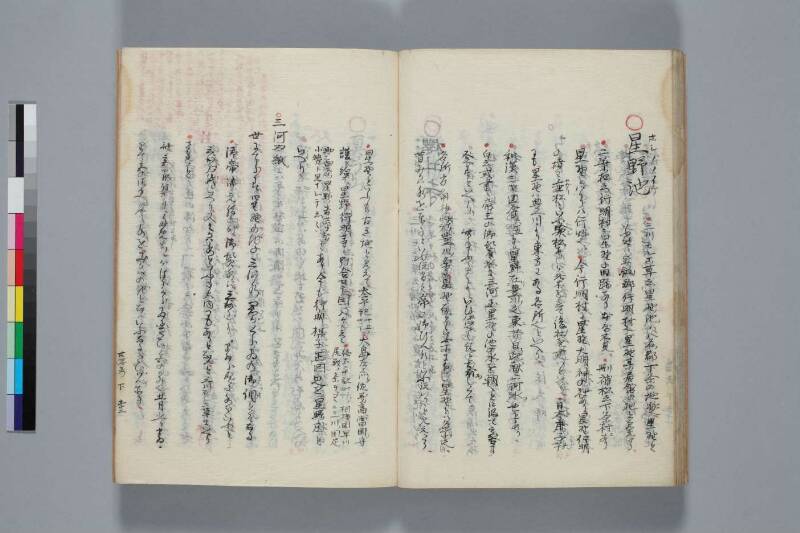
翻刻
○星野池(ホシノノイケ) ●三川モシホ草云星野 ̄ノ池は、八名 ̄ノ郡下条の地脈【脉】也、星野と
いふ時は宝飯 ̄ノ郡行明村也、星野某居舘の地と見えたり、
●二葉松云、行明村ニ星野の旧跡あり本歌不見、●刪補松云下条村ニあり、
星野とばかりは行明也、●今行明村に星野大明神の社あり、星野行明
の墳に垂(サガリ)松といふ験(シルシ)松ありしが、此木をれて後社を建つといへり、●日本鹿子《割書:六|卅丁》
にも、星野は豊川より東方にある名所也といへり、
●和漢三才図会《割書:六十九》にも、星野 ̄ハ在_二 ̄リ豊川 ̄ノ之東_一 ̄ニ昔自 ̄リ此献_二 三河水_一 ̄ヲ也とあり、
●白云或書ニ帝王の御鬢水に三河 ̄ノ国星野の池の水を朝ごとに汲て宮古に
登すといへり、此事ふるくより、いひ伝へし説とおぼしくて、
●名所方角抄《割書:六十ノ|ヒラ》豊川 ̄ノ条に、星野などゝいふ所に近し、星野とは名所也、
昔みかは水を奉るといふ説有之、帝の御びん水といふ説いかゞと見えたり、
●星野といふも古き地と見えて、太平記《割書:卅五ノ|卅一丁》に【「に」朱字】大島左エ門 ̄ノ佐義高、当国 ̄ノ守
護ヲ給テ、星野行明等ト引合セテ、国ヘ入ケル云々《割書:●続太平記《割書:十六ノ|四丁》相模国早川|尻戦ノ条にコヽニ三川 ̄ノ国足》
《割書:助西条 ̄ノ星野 ̄ノ者共、コレヲ|小㔟ト見ナシテ云々、》とあり、今も行‐明 柑‐子 正_岡辺を、星野 ̄ノ庄と
いへり、
○三河双紙
世にてらす星野の池の三河水君がくらゐの御調(ミツキ)とぞなる
●御帝御元服の時、御鬢水に、参河国よりまゐらする水をいふ、と
三河双紙ニいへり、又みかは水といふ事大内にもありとなん、と三川モシホ草にいへり
●されど
斎宮家集に、ためちゝがはらから為国さい宮のかみ也、五月五日まゐ
りて宮の御まへのやり水を、みかはの池となんいふなる、だいばん所に、
【「○」「●」「、」は朱字】
古歌考 下 五十二
現代語訳
○星野池 ●『三河藻塩草』によると、星野の池は八名郡下条の地域である。星野というときは宝飯郡行明村である。星野某が居住した館の地と見られる。
●『二葉松』によると、行明村に星野の旧跡があるが、本歌は見当たらない。●『刪補松』によると下条村にある。星野とだけいうのは行明である。●今、行明村に星野大明神の社がある。星野行明の墳墓に垂松という印の松があったが、この木が折れた後に社を建てたという。●『日本鹿子』にも、星野は豊川より東方にある名所であるという。
●『和漢三才図会』にも、「星野は豊川の東にあり、昔からここから三河水を献上した」とある。
●『白』によると、ある書に「帝王の御鬢水に三河国星野の池の水を朝ごとに汲んで宮中に運び上げる」とある。この事は古くから言い伝えられた説と思われる。
●『名所方角抄』豊川の条に、「星野などという所に近い。星野とは名所である。昔三河水を奉るという説がある。帝の御鬢水という説はいかがなものか」と見える。
●星野というのも古い地と見えて、『太平記』に「大島左衛門佐義高が当国の守護を賜って、星野行明等と合流して国に入った」云々(●『続太平記』相模国早川尻戦の条に「ここに三河国足助西条の星野の者共が、これを軽視して」云々)とある。今も行明・柑子・正岡辺りを星野の庄という。
○三河双紙
世を照らす星野の池の三河水、君が位の御調となる
●御帝の御元服の時、御鬢水に参河国より参らせる水をいう、と『三河双紙』にある。また三河水ということは大内にもあるという、と『三河藻塩草』にある。
●しかし
『斎宮家集』に、為親の兄弟である為国は斎宮の長官である。五月五日に参って宮の御前の遣り水を、三河の池というのだという。台盤所に、
古歌考 下 五十二
英語訳
○Hoshino Pond ●According to "Mikawa Moshiogusa," Hoshino Pond is in the Shimojō area of Yana District. When referring to Hoshino, it is Gyōmei Village in Hoi District. It appears to be the site where a certain Hoshino had his residence.
●According to "Futaba-matsu," there are old ruins of Hoshino in Gyōmei Village, but the original poem cannot be found. ●According to "Sanpo-matsu," it is in Shimojō Village. When simply called Hoshino, it refers to Gyōmei. ●Now there is a shrine to Hoshino Daimyōjin in Gyōmei Village. At Hoshino Gyōmei's tomb there was a sacred pine called Sagari-matsu (Drooping Pine), but after this tree broke, a shrine was built there. ●"Nihon Kanoko" also states that Hoshino is a famous place east of the Toyo River.
●"Wakan Sansai Zue" also states, "Hoshino is located east of the Toyo River, and from ancient times Mikawa water has been offered from this place."
●According to "Haku," a certain book states that "water from Hoshino Pond in Mikawa Province was drawn every morning for the emperor's ceremonial hair-washing water and brought up to the palace." This matter seems to be a theory handed down from ancient times.
●In "Meisho Hōgaku-shō" under the Toyo River entry: "It is near a place called Hoshino and such. Hoshino is a famous place. There is a theory that Mikawa water was once offered from there. The theory about it being the emperor's hair-washing water is questionable."
●Hoshino also appears to be an ancient place, as "Taiheiki" records: "Ōshima Saemon-no-suke Yoshitaka received the governorship of this province and joined with Hoshino Gyōmei and others to enter the province" etc. (●In "Zoku Taiheiki" in the section on the Battle of Hayakawa-jiri in Sagami Province: "Here the Hoshino people from Asuke Saijō in Mikawa Province looked down upon this" etc.). Even now the areas around Gyōmei, Kōji, and Masaoka are called Hoshino-no-shō.
○Mikawa Sōshi
The Mikawa water of Hoshino Pond that illuminates the world becomes the ceremonial offering for your imperial reign
●This refers to water sent from Mikawa Province for the emperor's ceremonial hair-washing during his coming-of-age ceremony, as stated in "Mikawa Sōshi." Also, the matter of Mikawa water exists in the imperial court as well, as stated in "Mikawa Moshiogusa."
●However,
In "Saikū Kashū," Tamekuni, who is Tamechika's brother and head of the Saikū, came on the 5th day of the 5th month, and the water sent before the shrine is called Mikawa Pond. At the ceremonial dining hall,
Kokakou, Volume 2, Page 52