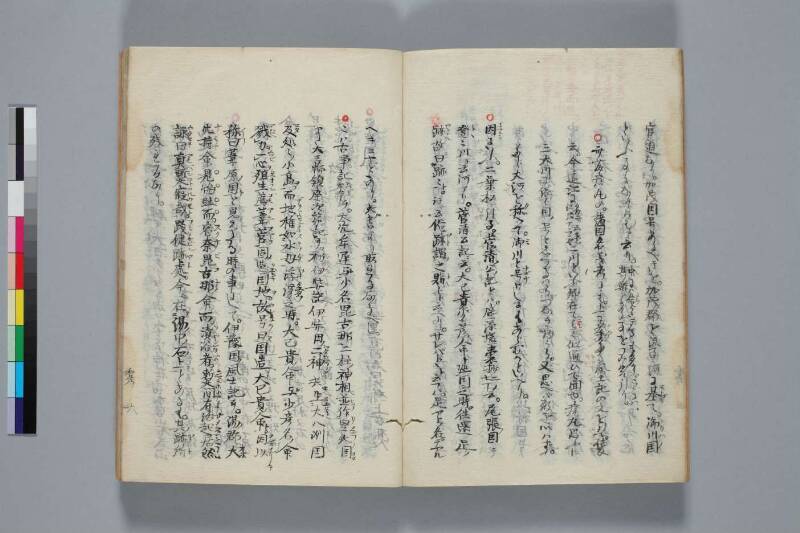
翻刻
【右丁】
【行頭の〇は朱書き】
官道なり。加茂国号あるべきを。加茂郡を流るゝ河に基(モトヅキ)て。御川(ミカハ) ̄ノ国
といふ事になりけむと云り。《割書:中には信(ウケ)がたき事も多かり。こゝには|其の要(ムネ)とある事をつみ出て引り。》
〇斎藤彦丸の。諸国名義考にも。上に挙(アゲ)たる風土記の文を引て。信友
云。今遠江に《割書:タクヲ云フと|江ニハナラズ》二川といふ郷在てよ【「は」を見せ消ちにして右横に「よ」と朱書き】く似通ひて聞ゆ。彦丸思ふに
三大川に依て国 ̄ノ号としつるはかづなき物から。又思へば救をいはず。
たゞ大河を称(タヽ)へて。御(ミ)川と号(ナヅケ)け【「け」が重複】しにもあらむかといへり。
〇/因(チナミ)にいふ。二葉松 ̄ニ引る。菅 ̄ノ清 ̄ノ公 ̄ノ記とは。塵添壒嚢抄《割書:二ノ|七丁》云。尾張 ̄ノ国ニ
登々(トヽ)川 ̄ト云河アリ。菅清公記 ̄ニ云。大已貴少彦命ト巡国之時。往還足 ̄ノ
跡(アトナル)故 ̄ニ曰_二跡々 ̄ト_一。注 ̄ニ云俗 ̄ニ跡(アト)謂 ̄フ_二之■【文字を特定し難し】々(トヽ) ̄ト_一云へり。サレバトヽ ̄ト云フハ。足アトノ名 ̄ニ テアル
【左丁】
ヘキニヤとあり。此 ̄ノ書より取れるなるべし。
〇こは古事記《割書:上ノ|四丁五丁》に。大穴牟遅 与(ト)_二【「レ」点に見えるが「二」と有るところ】少名毘古那_一 二柱 ̄ノ神相 ̄ヒ並 ̄ヒテ作 ̄リ_二堅 ̄メ《割書:玉フ》此 ̄ノ国 ̄ヲ_一。【訓点脱落】
また大三輪鎮座次第記に。初 ̄ノ伊弉諾伊弉冉 ̄ノ二神(フタハシラノカミ)共 ̄ニ生_二 ̄ミ《割書:玉ヒキ》大八洲国
及(マタ)処々 ̄ノ小島 ̄ヲ_一而 ̄シテ地(クニ)稚(ウヒシク)如(ナス)_二水母(クラゲ)_一浮(ウキ)漂(タユタフ)之時 ̄ニ。大已貴 ̄ノ命与(ト)_二。少彦名 ̄ノ命_一【訓点脱落】
戮(アハセ)_レ力 ̄ヲ一(ムツビ)_レ心 ̄ヲ殖生(ウエオフ) ̄シ_二【訓点の脱落】薦葦菅(コモアシスゲ) ̄ヲ_一固 ̄メ_二造 ̄リ《割書:玉ヒキ》国地 ̄ヲ_一。【訓点の脱落】故(カレ)号(ミナヲ)曰 ̄ス_二国造 ̄リ大已貴 ̄ノ命 ̄ト_一。因以(コレニヨリ) ̄テ
称曰(イフ)_二【訓点脱落】葦原 ̄ノ国 ̄ト_一と見えたる時の事にして。伊予 ̄ノ国 ̄ノ風土記に。湯 ̄ノ郡 ̄ハ大(オホ)
穴持(ナモチ) ̄ノ命 見悔耻而(〇〇〇〇)。宿奈毘古那(スクナビコナ) ̄ノ命而 ̄メ 漬浴者(ソヽギシカバ)。蹔間(シマシホト) 有(アリ) ̄テ活起居然(サメマシテ)。
詠(ウタヒ) ̄テ_二曰 真蹔寝哉(マシバシネツルカモ) ̄ト_一。践健(フミタケビ) ̄シ跡処(アト)。今 ̄モ在 ̄リ_二湯 ̄ノ中 ̄ノ石 ̄ノ上 ̄ニ_一とあるも。其 ̄ノ跡所(アト)
の残れるなり。
和考 六
現代語訳
【右丁】
官道である。加茂という国号があるべきところを、加茂郡を流れる河に基づいて、御川(みかわ)の国というようになったのであろうと言われている。《割書:中には信じがたいことも多い。ここではその要点となることを抜き出して引用する。》
○斎藤彦丸の『諸国名義考』にも、上に挙げた風土記の文を引いて、信友が言うには「今、遠江に二川という郷があってよく似通って聞こえる。彦丸が思うに、三大川によって国号としたのは数少ないものの、また思えば救いを言わず、ただ大河を称えて御川と名付けたのかもしれない」と言っている。
○ついでに言うと、『二葉松』に引く『菅清公記』とは、『塵添壒嚢抄』《割書:二の七丁》に言う「尾張国に登々川という河がある。『菅清公記』に言う。大己貴・少彦命が巡国の時、往還の足跡であるゆえに跡々と言う。注に言う。俗に跡を之々(とと)と言う」とある。それゆえ「とと」と言うのは、足跡の名であるべきだ
【左丁】
とある。この書から取ったものであろう。
○これは『古事記』《割書:上の四丁五丁》に「大穴牟遅と少名毘古那の二柱の神が相並んでこの国を作り固めた」とあり、また『大三輪鎮座次第記』に「初めに伊弉諾・伊弉冉の二神が共に大八洲国及び所々の小島を生み、地が稚くクラゲのように浮き漂っている時に、大己貴命と少彦名命が力を合わせ心を一つにして薦・葦・菅を植え生やし、国土を固め造った。ゆえに国造り大己貴命と号す。これによって葦原の国と称する」と見える時のことであって、『伊予国風土記』に「湯郡は大穴持命が見て恥じ悔い、宿奈毘古那命を漬け浴びせたところ、しばらくの間で蘇って『真しばし寝たるかも』と詠んで、踏み健やかに歩いた跡処が、今も湯の中の石の上にある」とあるのも、その跡所が残っているのである。
和考 六
英語訳
【Right Page】
This is the official road. Although there should have been a provincial name "Kamo," it is said that based on the river flowing through Kamo District, it came to be called Mikawa (御川) Province. 《Interlinear note: There are many unbelievable things among these. Here we extract and cite only the essential points.》
○ In Saitō Hikomaru's "Consideration of Provincial Name Origins," he also quotes the above Fudoki text, and Nobutomo says: "Now in Tōtōmi there is a village called Futagawa that sounds quite similar. Hikomaru thinks that naming a province after three great rivers is rare, but on further thought, rather than seeking salvation, perhaps it was simply named Mikawa to praise the great river."
○ Incidentally, the "Suga Seikō-ki" cited in "Futaba-matsu" refers to what is stated in "Jinten Ainō-shō" 《Interlinear note: Volume 2, folio 7》: "In Owari Province there is a river called Totogawa. According to the 'Suga Seikō-ki': When Ōnamuchi and Sukunahikona made their provincial tour, these were the traces of their going and coming footsteps, hence called 'toto' (traces). The commentary says: Commonly, traces are called 'toto.'" Therefore, "toto" should be the name for footprints.
【Left Page】
This likely derives from this text.
○ This refers to the time described in the Kojiki 《Interlinear note: Volume 1, folios 4-5》: "The two deities Ōnamuji and Sukunabikona worked together to create and solidify this land," and also in the "Ōmiwa Chinza Shidai-ki": "Initially, the two deities Izanagi and Izanami together gave birth to the Great Eight Islands and various small islands, and when the land was young and floating and drifting like jellyfish, Ōnamuchi-no-mikoto and Sukunahikona-no-mikoto joined forces and united their hearts to plant reeds, rushes, and sedges, solidifying and creating the land. Therefore, he is called Kunizukuri Ōnamuchi-no-mikoto. Hence it is called Ashihara-no-kuni (Reed Plain Land)." The Iyo-no-kuni Fudoki states: "Regarding Yu District, when Ōnamochi-no-mikoto felt shame and regret, he bathed Sukunabikona-no-mikoto, who shortly revived and sang 'Truly, I have slept for a while,' then stepped vigorously, and the place where he walked still remains on the stones in the hot springs." This too shows that such traces remain.
Wakō [Section] 6