翻刻
【見返し】
【赤印】東京学芸図書
【左丁】
【赤四角印】尾崎蔵書
【赤丸印】しみづさい
【整理番号】東京学芸大学竹早分館蔵書 01391
291,36 Sa25
【本文】
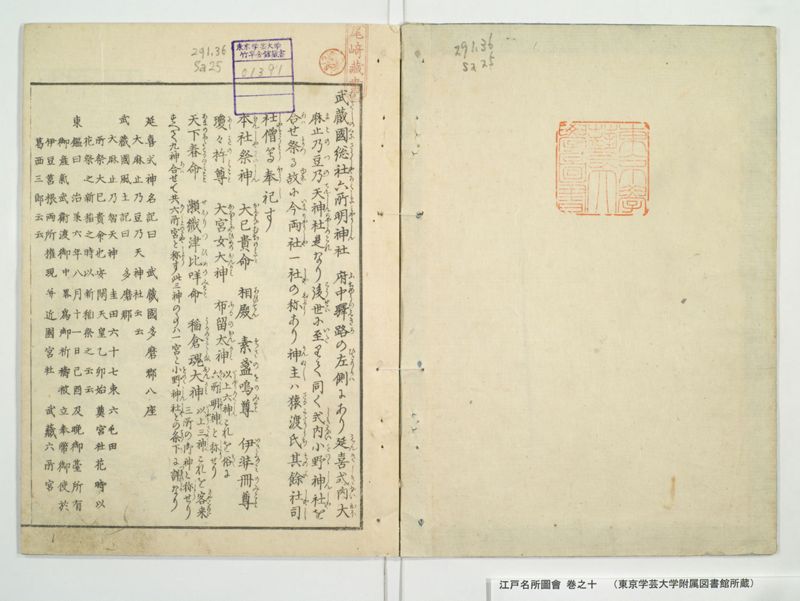
武蔵野国総社六所明神社(むさしのくにさうしやろくしよみやうしん ) 府中駅路(ふちゆうえきろ)の左側(ひたりかは)にあり延喜式内(えんきしきない)大(おほ)
麻止乃豆乃天神社(まとのつのてんしんのやしろ)是(これ)なり後世(こうせい)に至(いた)りて同く式内(しきない)小野神社(をのゝしんしや)を
合(あは)せ祭(まつ)る故(ゆゑ)に今(いま)両社(りやうしや)一 社(しや)の称(しよう)あり神主(かんぬし)は猿渡氏(さるわたりうち)其余(そのよ)社司(しやし)
社僧(しやそう)等(とう)奉祀(ほうし)す
本社祭神(ほんしやさいしん) 大已貴命(おほなむちのみこと)【注】 相殿(あひてん) 素盞嗚尊(そさのをのみこと) 伊弉冊尊(いさなみのみこと)
瓊々杵尊(にゝきのみこと) 大宮女大神(おほみやひめのおんかみ) 布留太神(ふるのおんかみ)《割書:以上(いしやう)六神(ろくしん)これを俗(そく)に|六所明神(ろくしよみやうしん)と称(しよう)せり》
天下春命(あまのしたはるのみこと) 瀬織津比咩命(せおりつひめのみこと) 稲倉魂大神(うかのみたまおんかみ)《割書:以上(いしやう)三神(さんしん)これを客来(きやくらい)|三所の御神と称(しよう)せり》
《割書:すへて九神 合(あは)せて共 六所宮(ろくしよのみや)と称(しよう)す此三神の事は一宮と小野神社(おのゝしんしや)との条下(てうか)に詳(つまひらか)なり》
延喜式神名記曰 武蔵国多磨郡八座
大麻止乃豆乃天神社云々
武蔵国風土記曰 多摩郡
大麻止乃智天神 圭田六十七束六毛田
所祭大巳貴命【注】也安閑天皇乙卯始奠宮社花時以
花祭之新稲之時以新稲祭之云云
東鑑曰 治承六年八月十一日己酉及晩御台所有
御産気武衛渡御中略為御祈祷被立奉幣御使於
伊豆筥根両所権現并近国宮社 武蔵六所宮
葛西三郎云云
【注 「大已貴命」「大巳貴命」は「大己貴命」の誤】
現代語訳
【見返し】
【赤印】東京学芸図書
【左丁】
【赤四角印】尾崎蔵書
【赤丸印】しみづさい
【整理番号】東京学芸大学竹早分館蔵書 01391
291,36 Sa25
【本文】
武蔵国総社六所明神社(むさしのくにそうしゃろくしょみょうじんしゃ)は、府中駅路(ふちゅうえきろ)の左側にあり、延喜式内の大社である麻止乃豆乃天神社(まとのつのてんじんのやしろ)がこれである。後世になって、同じく式内の小野神社を合わせて祭るため、現在では両社一社の呼称がある。神主は猿渡氏で、その他社司・社僧等が奉仕している。
本社祭神 大己貴命 相殿 素戔嗚尊 伊弉冊尊 瓊々杵尊 大宮女大神 布留太神
(以上六神をこれを俗に六所明神と称する)
天下春命 瀬織津比咩命 稲倉魂大神
(以上三神をこれを客来三所の御神と称する)
(すべて九神を合わせて共に六所宮と称する。この三神のことは一宮と小野神社の条項に詳しい)
延喜式神名記に曰く 武蔵国多磨郡八座
大麻止乃豆乃天神社云々
武蔵国風土記に曰く 多摩郡
大麻止乃智天神 圭田六十七束六毛田
所祭大己貴命也。安閑天皇乙卯始奠宮社。花時以花祭之、新稲之時以新稲祭之云云
吾妻鏡に曰く 治承六年八月十一日己酉、晩に及び御台所に御産気あり。武衛渡御(中略)御祈祷のため御使を伊豆箱根両所権現并びに近国宮社 武蔵六所宮 葛西三郎云云に奉幣を立てらる
英語訳
【Endpaper】
【Red Seal】Tokyo Gakugei Library
【Left Page】
【Red Square Seal】Ozaki Collection
【Red Circle Seal】Shimizu Sai
【Classification Number】Tokyo Gakugei University Takehaya Branch Library Collection 01391
291.36 Sa25
【Main Text】
The Musashi Province Sōsha Rokusho Myōjin Shrine is located on the left side of the Fuchū Station Road. This is the Matono-tsu-no-tenjin Shrine, which is a major shrine listed in the Engi-shiki. In later times, the Ono Shrine, also listed in the Engi-shiki, was combined in worship, so now both shrines are called by the single name. The head priest is from the Saruwatari family, and other shrine officials and shrine monks serve there.
Main Shrine Deities: Ōnamuchi-no-mikoto; Enshrined together: Susanoo-no-mikoto, Izanami-no-mikoto, Ninigi-no-mikoto, Ōmiyahime-no-ōnkami, Furu-no-ōnkami
(These six deities are commonly called the Six-Place Bright Gods)
Amanoshitaharu-no-mikoto, Seoritsu-hime-no-mikoto, Ukanomitama-no-ōnkami
(These three deities are called the Guest Three-Place Deities)
(All nine deities together are called the Six-Place Shrine. Details about these three deities are given in the sections on Ichinomiya and Ono Shrine)
The Engi-shiki Shinmei-ki states: Musashi Province Tama District, eight seats
Ōmatono-tsu-no-tenjin Shrine, etc.
The Musashi Province Fudoki states: Tama District
Ōmatono-chi-tenjin, sacred rice fields sixty-seven bundles six mō fields
The deity worshipped is Ōnamuchi-no-mikoto. In the kinoto-u year of Emperor Ankan, the shrine was first established. At flower time, it is celebrated with flower festivals; at new rice time, it is celebrated with new rice festivals, etc.
The Azuma Kagami states: Jishō 6th year, 8th month, 11th day, kinoto-tori, toward evening the Midaidokoro went into labor. The Warrior Governor visited (omitted)... For prayers, messengers were sent with offerings to Izu and Hakone Both-Place Gongen, nearby provincial shrines, Musashi Six-Place Shrine, Kasai Saburō, etc.