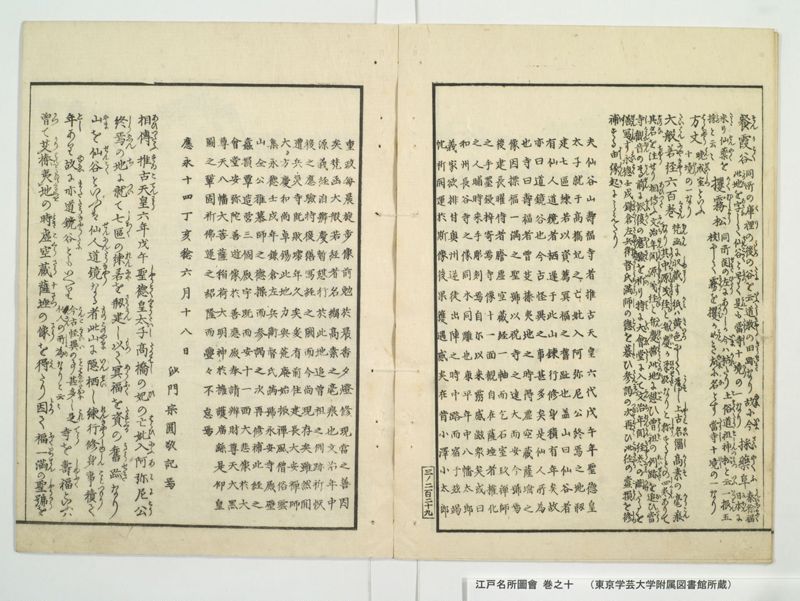
翻刻
【右丁】
餐霞谷(そんかこく)《割書:同所の庫裡(くり)の後(うしろ)の谷(たに)を云(いふ)道教(たうきやう)の旧跡(きうせき)なり故(ゆゑ)に今(いま)|此地(このち)を字(あさな)して仙谷(せんこく)と号(なつ)く是(これ)も当寺(たうし)十/境(けう)の一なり》採薬阜(さいやくふ)《割書:秦徐福(しんのちよふく)|日本(にほん)に》
《割書:来(きた)り仙薬(せんやく)を|採(とる)と云々》攫霧松(かくむしよう)《割書:同所/関(せき)の左(ひたり)にありしか今(いま)は枯(かれ)たり土俗(とそく)道祖神松(たうそしんのまつ)と云(いふ)一根(いつこん)五|枝(し)にして霧(きり)を攫(つかむ)か如(こと)き故(ゆゑ)に名(な)とす当寺(たうし)十/境(けう)の一なり》
方丈(はうちやう)《割書:晩成室(はんせいしつ)といふ|十/境(けう)の一なり》
大般若経(たいはんにやきやう)六百/巻(くわん)《割書:梵函(ほんかん)に収蔵(しゆさう)す紙(かみ)は黄色(きいろ)にして薄(うす)し上古(しやうこ)名緇(めいし)高素(かうそ)の毫痕(かうこん)|なり其中(そのうち)源義経(みなもとのよしつね)と弁慶(へんけい)か筆跡(ひつせき)なりと称(しよう)するもの四巻(しくわん)ありて》
《割書:其名(そのな)を註(ちゆう)せり相伝(あひつた)ふ文治年間(ふんちねんかん)源義経(みなもとのよしつね)と弁慶(へんけい)暫(しはらく)此地(このち)に憩(いこ)ひ曽祖(そうそ)の例跡(れいせき)を追(お)ひ当(たう)|寺(し)観音(くわんおん)の尊前(そんせん)に恢復(くわいふく)の応験(おうけん)を祈(いの)り特(こと)に大会堂(たいゑたう)に入て文治年間(ふんちねんかん)経巻(きやうくわん)の闕(かけ)たるを|繕冩(せんしや)す永徳(えいとく)壬戌/鎌倉(かまくら)左兵衛督氏満(さひやうゑのかみうちみつ)師(し)の徳(とく)を慕(した)ひ参謁(さんえつ)の次(つひて)再(ふたゝ)ひ此経(このきやう)の蠹損(こそん)を修(しゆ)|補(ほ)する由(よし)縁起(えんき)にみえたり》
夫仙谷山寿福寺者推古天皇六代戊午年聖徳皇
太子就于高橋妃之亡妣入阿弥尼公終焉之地剏
建七区練若以資薦冥福之奮趾也盖山曰仙谷者
有仙人道鏡者栖遅于此山錬行修身積有年矣故
亦曰道鏡谷也今古怪異之事甚多矣是仙人所為
也寺曰寿福者曾芟搸【榛ヵ】夷地之時得虚空蔵薩埵之
像因摽【標ヵ】福一満之聖號以祱【祝ヵ】寺之遠大而安今號焉
後建長曜侍者謄虚空蔵経一軸而乞石室玖禅師
之手墨鋟梓寄焉寺像十一面観自在薩埵者権化
之人晡時来手彫刻焉自尓以来霛感滋衆矣或曰
和州長谷寺之像同木同雕也康平年中八幡太郎
義家欲排付奥州逆徒出陣之時中路而宿于茲竭
帎【忱ヵ】祈開運於斯像後果獲遇感矣在昔小沢小太郎
【枠外】 三ノ二百二十九
【左丁】
重政毎晨旋歩像前勉於晨香夕燈修現当之善因
矣梵函大般若経者名𦃓【緇ヵ】高素之毫痕也文治年中
源義経泊弁慶暫憩行於此地追曾祖之例跡祈恢
復之応験特復繕写経之闕而今尚現存矣雖然間
遭兵災寺既敗壊年久矣爰有前住建長大安禅師
大方慶和尚卓錫此地力与荒廃始振禅風僧俗雲
集永徳壬戌年鎌倉左兵衛督氏満號永安寺殿壁
山全公雅慕師之徳操而参謁之次再修補此経之
蠧損覃造営三個殿宇既而安十一面大悲像於大
会堂安弥陀善逝像於善応殿奉請弁財尊天大黒
尊天八幡大菩薩稲荷大明神於擁護庿繇是仰皇
図之鞏固祈仏運之紹隆而亹々不怠焉
応永十四丁亥稔六月十八日
沙門宗圓敬記焉
《割書:|》相伝(あひつたふ)推古天皇(すゐこてんわう)六年戊午 聖徳皇太子(しやうとくくわうたいし)高橋(たかはし)の妃(ひ)の亡妣(はうひ)入阿弥尼公(にふあみにこう)
終焉(しうゑん)の地(ち)に就(つい)て七区(しちく)の練若(れんにや)を剏建(さうけん)し以(もつ)て冥福(めういく)を資(たすくる)の奮跡(きうせき)なり
山(やま)を仙谷(せんこく)といふは仙人(せんにん)道鏡(たうきやう)なる者(もの)此山(このやま)に隠栖(いんせい)し練行(れんきやう)修身(しゆしん)事(こと)積(つもり)て
年(とし)あり故(ゆゑ)に亦(また)道鏡谷(たうきやうたに)ともいへり《割書:今古(こんこ)怪異(くわいい)の事(こと)甚(はなはた)多(おほ)し是(これ)|仙人(せんにん)の所為(しよゐ)なりと云々》寺(てら)を寿福(しゆふく)といふは
曾(かつ)て芟(かり)_レ榛(はんを)夷(たひらくる)_レ 地(ちを)の時(とき)虚空蔵薩埵(こくうさうほさつ)の像(さう)を得(え)たり因(よつ)て福一満(ふくいちまん)の聖号(しやうかう)を
現代語訳
【右丁】
餐霞谷(そんかこく)《同所の庫裏の後の谷をいう。道教の旧跡なり。故に今この地を字して仙谷と号く。これも当寺十境の一なり》採薬阜(さいやくふ)《秦の徐福が日本に来て仙薬を採ったという》攫霧松(かくむしょう)《同所の関の左にありしが今は枯れたり。土俗は道祖神松という。一根五枝にして霧を攫むが如き故に名とす。当寺十境の一なり》
方丈(ほうじょう)《晩成室という。十境の一なり》
大般若経六百巻《梵函に収蔵す。紙は黄色にして薄し。上古の名僧高僧の筆跡なり。その中で源義経と弁慶の筆跡なりと称するもの四巻ありて、その名を註せり。相伝う、文治年間源義経と弁慶暫くこの地に憩い、曽祖の霊跡を追い、当寺観音の尊前に恢復の感応を祈り、特に大会堂に入って文治年間の経巻の欠けたるを繕写す。永徳壬戌年、鎌倉左兵衛督氏満師の徳を慕い参謁の次に、再びこの経の虫損を修補するという由、縁起にみえたり》
そもそも仙谷山寿福寺は、推古天皇六年戊午年、聖徳皇太子が高橋妃の亡母入阿弥尼公の終焉の地に就いて七区の練若を創建し、以て冥福を資する奮跡である。そもそも山を仙谷というのは、仙人道鏡なる者がこの山に隠栖し、練行修身すること積もって年あり。故にまた道鏡谷ともいえり。今昔怪異の事甚だ多し。これ仙人の所為なりという。寺を寿福というのは、かつて榛を刈り地を平らにした時、虚空蔵薩埵の像を得たり。因って福一満の聖号を標して寺の遠大を祝し、安んじて今の号とした。後に建長の侍者が虚空蔵経一軸を謄写して石室玖禅師の手墨を乞い刻板して寄せた。寺像十一面観自在薩埵は権化の人が晩時に来て手ずから彫刻した。それ以来霊感が多くなった。あるいは和州長谷寺の像と同木同雕であるという。康平年中八幡太郎義家が奥州の逆徒を討伐せんと出陣の時、中路でここに宿し、心を尽くしてこの像に開運を祈ったところ、後に果たして感応を得た。昔、小沢小太郎
【枠外】三の二百二十九
【左丁】
重政は毎朝像前を巡歩し、朝の香夕の灯に勤め、現当の善因を修した。梵函の大般若経は名僧高僧の筆跡である。文治年中、源義経と弁慶が暫くこの地に憩い、曽祖の霊跡を追い、恢復の感応を祈り、特に経の欠けた部分を繕写して、今なお現存している。しかしながら兵災に遭い、寺は既に敗壊して年久しい。ここに前住建長大安禅師大方慶和尚がこの地に卓錫し、荒廃と共に力を合わせ、初めて禅風を振起し、僧俗が雲集した。永徳壬戌年、鎌倉左兵衛督氏満号永安寺殿璧山全公が師の徳操を慕って参謁の次に、再びこの経の虫損を修補し、三個の殿宇を造営した。既にして十一面大悲像を大会堂に安置し、弥陀善逝像を善応殿に安置し、弁財尊天・大黒尊天・八幡大菩薩・稲荷大明神を擁護廟に奉請した。これによって皇図の鞏固を仰ぎ、仏運の紹隆を祈って怠らず。
応永十四年丁亥六月十八日
沙門宗円敬記
相伝う、推古天皇六年戊午、聖徳皇太子が高橋の妃の亡母入阿弥尼公の終焉の地に就いて七区の練若を創建し、以て冥福を資する旧跡なり。山を仙谷というのは仙人道鏡なる者がこの山に隠栖し、練行修身すること積もって年あり。故にまた道鏡谷ともいえり《今昔怪異の事甚だ多し。これ仙人の所為なりという》。寺を寿福というのは、かつて榛を刈り地を平らにした時、虚空蔵薩埵の像を得たり。因って福一満の聖号を
英語訳
【Right Page】
Sonka Valley (餐霞谷) 《This refers to the valley behind the temple kitchen of the same location. It is an old site related to Taoism. Therefore, this place is now called Senkok (Immortal Valley). This is also one of the ten scenic spots of this temple》Saiyaku Hill (採薬阜) 《Where Xu Fu of Qin came to Japan and gathered medicinal herbs》Kakumu Pine (攫霧松) 《It was located to the left of the barrier at the same location, but now it has withered. The local people call it Dosojin Pine. Having one root and five branches, it appeared to grasp the mist, hence the name. This is one of the temple's ten scenic spots》
Hōjō (Abbot's Quarters) 《Called Hansei-shitsu (Late Achievement Room). One of the ten scenic spots》
Daihannya-kyō (Great Wisdom Sutra) Six Hundred Volumes 《Stored in Sanskrit boxes. The paper is yellow and thin. These are the brushwork of famous monks and high priests of ancient times. Among them are four volumes said to be the handwriting of Minamoto no Yoshitsune and Benkei, with their names annotated. It is handed down that during the Bunji era, Minamoto no Yoshitsune and Benkei briefly rested at this place, following the spiritual traces of their ancestors, praying for divine response for restoration before the honored Kannon of this temple, and especially entering the great assembly hall to copy the missing portions of the sutras from the Bunji era. In the Eitoku Mizunoe-Inu year, Kamakura Sahyōe-no-kami Ujimitsu, admiring the virtue of the master, repaired the insect damage of these sutras again during his visit, as recorded in the temple origins》
The Senkok-zan Shufuku Temple was originally established in the sixth year of Empress Suiko's reign (598 CE), year of Tsuchinoe-Uma, when Prince Shōtoku built seven meditation areas (練若) at the place where Nyū Ami-ni-kō, the deceased mother of Princess Takahashi, passed away, to aid her posthumous blessing. The mountain is called Senkok because a hermit named Dōkyō dwelled in seclusion on this mountain, practicing ascetic training and self-cultivation for many years. Hence it is also called Dōkyō Valley. There have been many mysterious and strange occurrences from ancient times to now, said to be the work of this immortal. The temple is called Shufuku because when the brambles were cleared and the land leveled, an image of Ākāśagarbha Bodhisattva was discovered. Therefore, the sacred name "Fukuichiman" was adopted to pray for the temple's lasting prosperity, establishing the current name. Later, an attendant of Kenchō-ji transcribed one scroll of the Ākāśagarbha Sutra and requested the calligraphy of Zen Master Sekishitsu Kū to be carved and donated. The temple's statue of Eleven-Faced Avalokiteśvara was hand-carved by a manifestation who came at evening time. Since then, spiritual responses have multiplied. Some say it is carved from the same wood as the statue at Hase Temple in Yamato Province. During the Kōhei era, when Hachiman Tarō Yoshiie was about to set out to suppress rebels in Ōshū, he stayed here en route and earnestly prayed to this image for success in battle, later indeed receiving divine response. In ancient times, Ozawa Kotarō
【Outside frame】Three-229
【Left Page】
Shigemasa would walk before the image every morning, diligently maintaining morning incense and evening lamps, cultivating good karma for this life and the next. The Daihannya-kyō in Sanskrit boxes represents the brushwork of renowned monks and high priests. During the Bunji era, Minamoto no Yoshitsune and Benkei briefly rested at this place, following ancestral spiritual traces, praying for divine response for restoration, and specifically copying the missing portions of the sutras, which still exist today. However, the temple suffered war damage and had been in ruins for many years. Then the former abbot, Kenchō Daian Zenji Daihō Kei-oshō, established his staff at this place, working together against the desolation, first reviving the Zen tradition, with monks and laypeople gathering like clouds. In Eitoku Mizunoe-Inu year, Kamakura Sahyōe-no-kami Ujimitsu (titled Eian-ji-dono Hekizan Zen-kō), admiring the master's virtue, visited and again repaired the insect damage to these sutras, constructing three halls. He enshrined the Eleven-Faced Great Compassion image in the Great Assembly Hall, the Amida Tathāgata image in the Zen'ō Hall, and respectfully invited Benzaiten, Daikokuten, Hachiman Daibosatsu, and Inari Daimyōjin to the protection shrine. Through this, he looked up to the consolidation of the imperial realm and prayed unceasingly for the prosperity of Buddhism.
Ōei 14th year, Hinoto-I, 6th month, 18th day
Respectfully recorded by Monk Sōen
It is handed down that in the sixth year of Empress Suiko (598 CE), year of Tsuchinoe-Uma, Prince Shōtoku established seven meditation areas at the place where Nyū Ami-ni-kō, the deceased mother of Princess Takahashi, passed away, to aid posthumous blessings—this is the old site. The mountain is called Senkok because the hermit Dōkyō dwelled in seclusion on this mountain, practicing ascetic training and self-cultivation for many years accumulated. Hence it is also called Dōkyō Valley 《There have been many mysterious and strange occurrences from ancient times to now, said to be the work of this immortal》. The temple is called Shufuku because when the brambles were cleared and the land leveled, an image of Ākāśagarbha Bodhisattva was discovered. Therefore, the sacred name "Fukuichiman" was adopted