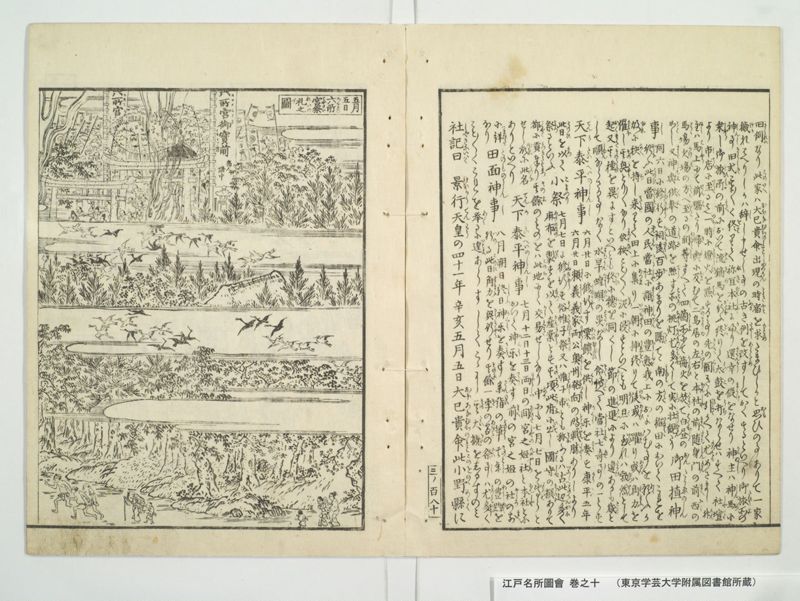
翻刻
【右丁】
《割書:旧例(きうれい)なり此家(このいへ)は大巳貴命(おほなむちのみこと)出現(しゆつけん)の時(とき)宿(やと)を求(もとめ)たまひしかと思(おも)ひの事ありて一家|穢(けか)れはへりしかは辞(し)し申せし事の古(ふる)き例(ためし)を改(あらため)すしてかくするといへり御 旅所(たひしよ)の|神事(しんし)旧式(きうしき)こと〳〵く終(をは)りて祢宜(ねき)本社(ほんしや)に帰(かへ)り還幸(くわんかう)の■(まうけ)【注】をなせり神主(かんぬし)は神馬(しんめ)に|乗(しやう)し御 旅所(たひしよ)の前(まへ)において流鏑馬(やふさめ)を行(おこな)ふ終(をは)りて太鼓(たいこ)を打(うち)ならせはすへて社壇(しやたん)|より市店(してん)に至(いた)る迄 一時(いちし)に燈火(ともしひ)を点(てん)する事 先(さき)の闇(くら)きに引(ひき)かへて尤(もつとも)めさまし神(かん)|主(ぬし)は馬上(はしやう)にて前驅(せんく)たり帰輿(きよ)に及(およ)むて二鳥居(にのとりゐ)の左右(さいう)と本社(ほんしや)の前(まへ)随身門(すゐしんもん)の前(まへ)西(にし)の》
《割書:馬場(はゝ)欠場(かけは)の方(かた)へ至(いた)るの間(あひた)等(とう)すへて四箇所(しかしよ)にて篝火(かゝりひ)を焚(たき)て白昼(はくちう)の|如(こと)し又(また)神輿(しんよ)供奉(くふ)の道路(たうろ)を照(てら)す所(ところ)の挑灯(ちやうちん)尤(もつとも)多(おほ)くして実(しつ)に壮観(さうくわん)たり》御田植神(おんたうゑのしん)
事(し)《割書:同六日に修行(しゆきやう)す祠後(ほこらのうしろ)百 歩(ほ)あまりを隔(へた)てゝ南(みなみ)の方(かた)の稲田(いなた)においてこれを|行(おこな)ふ此日(このひ)当国(たうこく)の人民(にんみん)当社(たうしや)に詣(まうて)神田(しんてん)の豊熟(ほうしゆく)我上におよはむ事を願(ねか)ふか》
《割書:故(ゆゑ)に秧(なへ)を持(し)し来(きた)りて田上に集(あつま)り一朝(いつちやう)に挿(うゑ)終(をは)りて後(のち)或(あるひ)は躍(おと)り或(あるひ)は角力(すまふ)を|催(もよほ)し其興(そのきやう)とり〳〵なり依(よつて)秧(なへ)こと〳〵く泥(とろ)に浸(ひた)すといへとも明旦(あした)に至(いた)れは勃然(ほつせん)として|起(おく)又(また)其種(そのたね)を異(こと)にすといへとも終(つひ)に穂(ほ)を同くし節(ふし)の進退(しんたい)により違(たかひ)あるも歳(とし)と|して順(しゆん)ならさる事なく水旱(すゐかん)蝗螟(くわうめい)の災(わさはひ)なし俗(そく)傳(つた)へて当社(たうしや)七 奇事(きし)の一とす》
天下泰平神事(てんかたいへいのしんし)《割書:六月廿日に修行(しゆきやう)す粟饙(あはのむらつひ)を供(くう)し神楽(かくら)を奏(そう)す康平(かうへい)五年|六月廿日 頼義(よりよし)義家(よしいへ)両公(りやうこう)奥州(あうしう)発向(はつかう)の時(とき)戦勝(せんしやう)ありしより》
《割書:此日(このひ)を以(もつ)て|祭(まつ)るといふ》小祭(こまつり)《割書:七月七日に修行(しゆきやう)す俗(そく)帷子祭(かたひらまつり)又は帷子市(かたひらいち)とも称(とな)ふるは古(いにしへ)此辺(このへん)多(おほ)く|麻布(あさのぬの)を製(せい)すを以(もつ)て産業(さんきやう)とす其頃(そのころ)此府(この’ふ)に出(いて)し国守(こくしゆ)の撰(えら[みヵ])ありて》
《割書:都(みやこ)に貢奉(みつきたてまつ)り其余(そのよ)のものをは此地(このち)にて交易(かうえき)せしなり中(なか)にも七月七日を専(もつは)らと》
《割書:せし故(ゆゑ)に此名(このな)|ありといへり》天下泰平神事(てんかたいへいのしんし)《割書:七月十二日十三日 両日(りやうしつ)の間(あひた)宮之姫社(みやのめのやしろ)と本社(ほんしや)とに|おいて神楽(かくら)を奏(さう)す前(まへ)の宮之姫の社(やしろ)の前(まへ)》
《割書:に詳(つまひらか)|なり》田面神事(たのものしんし)《割書:八月朔日 終日(しうしつ)神楽(かくら)を奏(さう)す参詣(さんけい)の輩(ともから)其年(そのとし)の豊熟(ほうしゆく)を|祈(いの)る此日(このひ)角力(すまふ)を興行(かうきやう)せり其余(そのよ)一 季(き)の間(あひた)の祭事(さいし)は尤(もつとも)多(おほ)く》
《割書:こと〳〵くこれを挙(あく)るに遑(いとま)あらすしてこゝに其(その)大概(たいかい)をしるすのみ》
社記曰(しやきにいはく) 景行天皇(けいかうてんわう)の四十一年辛亥五月五日 大巳貴命(おほあなむちのみこと)此(この)小野県(をのゝめゝく)に
【注 「亻+設」。「儲」「設」の誤ヵ】
【枠外】 三ノ百八十
【左丁】
五月
五日
六所(ろくしよの)
宮祭(みやさい)
礼之(れいの)
図(づ)
【幟旗】
六所宮御宝前 商人講中
六所宮
【提灯】
一宮
一宮
下村
下村
人見
下村
人見
現代語訳
【右丁】
旧例である。この家は大己貴命が出現の時に宿を求められたが、何か思うことがあって一家が穢れていたので辞退申し上げたという古い例を改めずにこのようにしているという。御旅所の神事・旧式がことごとく終わって禰宜が本社に帰り、還幸の準備をした。神主は神馬に乗り御旅所の前において流鏑馬を行う。終わって太鼓を打ち鳴らすと、すべて社殿より市店に至るまで一時に燈火を点ける。先の暗さに引き替えて最も目覚ましい。神主は馬上にて先導となり、帰輿に及んで二の鳥居の左右と本社の前、随身門の前西の馬場欠場の方へ至る間など、すべて四ヶ所にて篝火を焚いて白昼のようである。また神輿供奉の道路を照らす提灯は最も多くして実に壮観である。
御田植神事:同六日に修行する。祠の後ろ百歩余りを隔てて南の方の稲田においてこれを行う。この日、当国の人民が当社に詣で、神田の豊作が我が身の上に及ぶことを願うがゆえに、苗を持参して田の上に集まり、一朝に植え終わって後、あるいは踊り、あるいは相撲を催し、その興は様々である。よって苗がことごとく泥に浸かるといっても、明朝に至れば勃然として起き上がり、またその種を異にするといっても終に穂を同じくし、節の進退により違いがあるも歳として順調でないことはなく、水害・干害・蝗害の災いがない。俗に伝えて当社七不思議の一つとする。
天下泰平神事:六月二十日に修行する。粟飯を供し神楽を奏する。康平五年六月二十日、頼義・義家両公が奥州出発の時、戦勝があったからこの日を以て祭るという。
小祭:七月七日に修行する。俗に帷子祭または帷子市とも称するのは、古くこの辺りで多く麻布を製することを産業とするためである。その頃、この府に出た国守の選択があって都に貢進し、その余のものはこの地にて交易した。中でも七月七日を専らとしたゆえにこの名があるという。
天下泰平神事:七月十二日・十三日両日の間、宮之姫社と本社とにおいて神楽を奏する。前の宮之姫の社の前に詳しい。
田面神事:八月朔日、終日神楽を奏する。参詣の人々がその年の豊作を祈る。この日相撲を興行した。その余、一季の間の祭事は最も多く、ことごとくこれを挙げるに暇がないのでここにその大概を記すのみである。
社記に曰く、景行天皇の四十一年辛亥五月五日、大己貴命がこの小野県に
【左丁】
五月五日
六所宮祭礼の図
【幟旗】
六所宮御宝前 商人講中
六所宮
【提灯】
一宮
一宮
下村
下村
人見
下村
人見
英語訳
【Right Page】
This is an old custom. This house is said to maintain the ancient precedent from when Ōnamuchi-no-mikoto appeared and sought lodging, but they declined due to some concern about the family being in a state of ritual impurity, and they continue this practice unchanged. After all the divine ceremonies and old customs at the otabisho were completed, the negi priests returned to the main shrine and made preparations for the return procession. The head priest rides the sacred horse and performs yabusame (horseback archery) in front of the otabisho. When this ends and drums are beaten, all lights are lit simultaneously from the shrine buildings to the market stalls. This is most striking compared to the previous darkness. With the head priest leading on horseback, during the return procession, bonfires are lit at four locations: on the left and right of the second torii, in front of the main shrine, in front of the Zuishin Gate, and toward the western horse grounds at Kakeba, making it bright as daylight. The many lanterns illuminating the road for the mikoshi procession create a truly magnificent spectacle.
Rice Planting Ceremony: Performed on the 6th of the same month. This takes place in the rice fields to the south, about a hundred steps behind the shrine. On this day, people of the province visit the shrine and pray that the abundant harvest of the sacred fields will extend to their own lives. They bring rice seedlings, gather in the fields, finish planting in one morning, then engage in dancing or sumo wrestling with great enthusiasm. Although the seedlings become completely submerged in mud, by the next morning they spring up vigorously. Even when different varieties are planted, they ultimately produce similar grain, and while there may be differences in growth timing, there is never a year without good harvest, and there are no disasters from floods, droughts, or insect damage. This is popularly considered one of the seven wonders of this shrine.
National Peace Ceremony: Performed on June 20th. Millet rice is offered and kagura is performed. This commemorates the victory of Lords Yoriyoshi and Yoshiie when they departed for the northern provinces on June 20th of Kōhei 5 (1062).
Small Festival: Performed on July 7th. It is commonly called the Katahira Festival or Katahira Market because in ancient times this area's main industry was producing hemp cloth. At that time, provincial governors who came to this province would select the best to tribute to the capital, and the remainder would be traded at this location. Since July 7th was especially favored for this, it received this name.
National Peace Ceremony: Performed over two days, July 12th and 13th, with kagura performed at both Miya-no-me Shrine and the main shrine. Details are provided in the previous section on Miya-no-me Shrine.
Rice Field Ceremony: On August 1st, kagura is performed all day. Worshippers pray for that year's abundant harvest. Sumo wrestling is held on this day. There are many other festival ceremonies throughout the season, but there is no time to list them all, so only the major ones are recorded here.
The shrine record states: "On May 5th of the 41st year of Emperor Keikō (111 CE), the cyclical year Xinhai, Ōnamuchi-no-mikoto appeared in this Ono County..."
【Left Page】
May 5th
Illustration of Rokusho-no-miya Festival
【Banner flags】
Before the Sacred Treasures of Rokusho-no-miya - Merchants' Association
Rokusho-no-miya
【Lanterns】
Ichino-miya
Ichino-miya
Shimomura
Shimomura
Hitomi
Shimomura
Hitomi