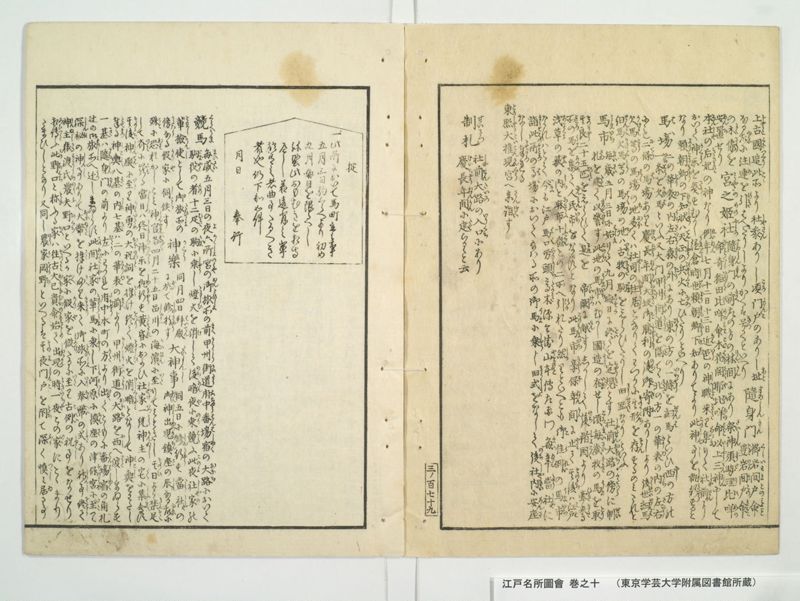
翻刻
【右丁】
《割書:上古(しやうこ)国造(くにつくり)此所(こゝ)より社参(しやさん)ありし項(ころ)門戸(もんこ)のありし址(あと)|なる故(ゆゑ)に注連(しめ)を引(ひき)はへたりしよりかくは号(なつ)くといへり》随身門(すゐしんもん)《割書:櫛岩間戸命(くしいわまとのみこと)|豊岩間戸命(とよいわまとのみこと)》
《割書:の木像(もくさう)を|安置(あんち)せり》宮之姫社(みやのめのやしろ)《割書:随身門(すゐしんもん)の前(まへ)左の方の林間(りんかん)にあり祭神(さいしん)須勢理比咩(すせりひめの)|命(みこと)奇稲田比咩命(くしいなたひめのみこと)木花開耶比咩命(このはなさくやひめのみこと)以上(いしやう)三神(さんしん)にして》
《割書:本社(ほんしや)の后妃(きさき)の神なり例年(れいねん)七月十二日十三日 近邑(きんいう)の神職(しんしよく)来(きた)り集(あつま)りて社前(しやせん)に|おいて神楽(かくら)を奏(さう)すむかし鎌倉時世(かまくらしせい)頼朝卿(よりともきやう)下知(けち)ありてより此(この)神事(しんし)を執行(しゆきやう)すると|なり頼朝卿(よりともきやう)の下知状(けちしやう)は天正(てんしやう)の兵火(ひやうか)に亡(ほろ)ひたりといへり》
馬場(はゝ)《割書:二の華表(とりゐ)の内(うち)左右(さいう)森(もり)の外(ほか)にあり東(ひかし)の方の一條(いちてう)を《振り仮名:■馬|せんは》【注①】といひ西(にし)の方の|一条(いちてう)を欠馬(かけは)といふ又大門 甲州街道(かうしうかいたう)を隔(へた)てゝ北(きた)の方一の華表(とりゐ)の内(うち)の左右(さいう)》
《割書:にも二條(にてう)の馬場(はゝ)あり慶長年間(けいちやうねんかん)大坂(おほさか)御勝利(こしやうり)の後(のち)御寄附(こきふ)ありしより後世(かうせい)《振り仮名:■馬|せんは》|欠馬(かけは)等(とう)の馬場(はゝ)の地(ち)多(おほ)くは社司(しやし)の住居(ちゆうきよ)となりてわつかに其形(そのかたち)を存(そん)するのみされと|《振り仮名:■馬|せんは》欠馬(かけは)等(とう)の馬場(はゝ)の地(ち)は古(いにしへ)牧(まき)の駒(こま)をえらひたりし旧跡(きうせき)なりといふ》
馬市(うまいち)《割書:毎歳(まいさい)五月三日に始(はしま)りて九月 晦日(みそか)に終(をは)るを定規(ちやうき)とす社前(しやせん)大路(おほち)の傍(かたはら)に制(せい)|札(さつ)を建(たて)て以(もつて)警(けい)す此地(このち)の馬市(うまいち)はむかし国造(こくそう)の在(いま)せし頃(ころ)毎歳(まいさい)牧(まき)の馬(うま)を取(とり)》
《割書:其(その)良(りやう)二十五 匹(ひき)をえらひて是(これ)を 帝闕(ていけつ)に献(けん)すしかして後(のち)諸国(しよこく)より牽来(ひききた)る|所(ところ)の馬(うま)を集(あつめ)て人民(にんみん)市(いち)をなすとなり此(この)馬市(うまいち)享保年間(きやうほねんかん)に止(やみ)て其後(そのゝち)は江戸(えと)|浅草(あさくさ)の藪(やふ)の内(うち)と麻布十番(あさふしふはん)との二所へ引(ひか)れたり然(しか)りといへとも御佳例(こかれい)の馬市(うまいち)|なれはとて今(いま)も江戸 馬口労頭(はくらうかしら)高木(たかき)源兵衛 山本(やまもと)傳左衛門 毎年(まいねん)当社(たうしや)に|詣(まうて)此所(このところ)の馬場(はゝ)において給はる所の御 馬(うま)に乗(しやう)し旧式(きうしき)をなして後(のち)社内(しやない)に安座(あんさ)|なし奉(たてまつ)れる》
東照大権現宮(とうしやうたいこんけんくう)へ参詣(さんけい)す
制札(せいさつ)《割書:社前(しやせん)大路(たいろ)の入口(いりくち)にあり|慶長年間(けいちやうねんかん)に建(たて)らるゝと云》
【枠外】 三ノ百七十九
【左丁】
【制札の文】
掟
一此所において馬町立之事
五月三日駒くらへより初め
九月晦日を限るへし
称堅此おもむきを相守
へし若違背之輩
於有之者曲事たるへき
者也仍下知如件
月日 奉行
【本文】
競馬(くらへうま)《割書:毎歳(まいさい)五月三日の夜(よ)六所宮(ろくしよのみや)の御旅所(おんたひしよ)の前(まへ)甲州街道(かうしうかいたう)府中(ふちやう)番場宿(はんはしゆく)の大路(おほち)において|駒役(こまやく)の者(もの)十二 疋(ひき)の駒(こま)に乗(しやう)し燈火(ともしひ)を消(け)して後(のち)暗夜(あんや)に乗競(のりくら)ふ此夜(このよ)社家(しやけ)の》
《割書:輩(ともから)撿使(けんし)として御 旅所(たひしよ)の|傍(かたはら)なる仮屋(かりや)に伺候(しこう)す》神楽(かくら)《割書:同月四日 拝殿(はいてん)|に於(おい)て修行(しゆきやう)す》大神事(たいしんし)《割書:同五日に修行(しゆきやう)す当社(たうしや)の|御神(おんかみ)出現(しゆつけん)鎮座(ちんさ)の辰(しん)なる故(ゆゑ)に》
《割書:殊(こと)に恐(おそ)れかしこみ神官(しんくわん)各(おの〳〵)四月二十五日 品川(しなかは)の海浜(かいひん)に至(いた)りてみそきし其日(そのひ)より禁足(きんそく)|して斉(いみ)に籠(こも)る当日(たうしつ)は終日(しうしつ)神楽(かくら)を執行(しゆきやう)す黄昏(たそかれ)におよひ社家一統(しやけいつとう)神主(かんぬし)の宅(たく)に集会(しふくわい)す|其後(そのゝち)神殿(しんてん)に至(いた)り神勇(かみいさめ)の大祝詞(おほのつと)を捧(さゝ)け終(をはり)て燈火(ともしひ)を消(けし)暗(くらやみ)となして神輿(みこし)をわたし|奉(たてまつ)る神輿(みこし)八 基(き)の内(うち)七 基(き)は二の華表(とりゐ)の前(まへ)より甲州街道(かうしうかいたう)の大路(おほち)を西(にし)へ渡(わた)しまゐらす|一 基(き)は随身門(すゐしんもん)の前(まへ)より左(ひたり)にわかれ府中(ふちゆう)本町の方(かた)より出(いて)てともに番場宿(はんはしゆく)の角札|辻の御 旅所(たひしよ)へ遷(うつ)しまゐらす此間(このあひた)社家(しやけ)の輩(ともから)馬(うま)に乗(しやう)し下河原(しもかはら)に鎮座(ちんさ)の津保宮(つほのみや)に至(いた)り|深秘(しんひ)の神事(しんし)ありて大幣(おほぬさ)を捧(さゝ)け帰(かへ)り来(きたり)て御 旅所(たひしよ)に入(いり)奉幣(ほうへい)の式(しき)あり神事(しんし)終(をはし)て|神主(かんぬし)猿渡氏(さるわたりうち)農夫(のうふ)野口(のくち)といへるか家(いへ)に仮家(かりや)を■(まふけ)【注②】たるに至(いた)り古例(これい)の祝事(しゆくし)をなせり|相傳(あひつた)ふ此(この)野口(のくち)と称(とな)ふる家(かへ)は往古(そのかみ)大巳貴命(おほなむちのみこと)【注③】始(はしめ)て出現(しゆつけん)の時(とき)一夜(いちや)この家(いへ)にとゝまり|たまひしとなり又同し農家(のうか)岡野(をかの)といへるは其夜(そのよ)門戸(もんこ)を閉(とち)て深(ふか)く慎(つゝし)み居(ゐ)る事》
【注① ■は「糸+日」。「細」の誤ヵ】
【注② ■は「亻+設」。「儲」「設」の誤ヵ】
【注③ 「大己貴命」の誤】
現代語訳
【右丁】
上古、国造がここから社参した頃に門戸があった跡であるため、注連縄を張り渡したことからこのように呼ばれるという。
随身門:櫛岩間戸命と豊岩間戸命の木像を安置している。
宮之姫社:随身門の前左の方の林間にある。祭神は須勢理比売命、奇稲田比売命、木花開耶比売命の三神で、本社の后妃の神である。例年七月十二日・十三日に近郷の神職が来集して社前において神楽を奏する。昔、鎌倉時代に頼朝卿の下知があってからこの神事を執行するようになった。頼朝卿の下知状は天正の兵火によって失われたという。
馬場:二の鳥居の内側左右の森の外にあり、東の方の一条を細馬といい、西の方の一条を欠馬という。また大門甲州街道を隔てて北の方、一の鳥居の内側の左右にも二条の馬場がある。慶長年間、大坂御勝利の後に御寄付があってから後世、細馬・欠馬等の馬場の地の多くは社司の住居となって、わずかにその形を残すのみとなった。しかし細馬・欠馬等の馬場の地は古くから牧の駒を選んだ旧跡であるという。
馬市:毎年五月三日に始まり九月晦日に終わるのを定例とする。社前大路の傍らに制札を建てて以て警告する。この地の馬市は昔、国造が在任していた頃、毎年牧の馬を取り、その良馬二十五匹を選んでこれを帝闕に献上した。そして後に諸国から牽いて来る馬を集めて人民が市を成したのである。この馬市は享保年間に廃止されて、その後は江戸浅草の薮の内と麻布十番の二所へ移された。しかしながら御佳例の馬市であるとして、今も江戸馬口労頭の高木源兵衛・山本伝左衛門が毎年当社に詣で、この所の馬場において給わった御馬に乗じ旧式を行った後、社内に安座し奉って東照大権現宮へ参詣する。
制札:社前大路の入口にあり、慶長年間に建てられたという。
【枠外】三ノ百七十九
【左丁】
【制札の文】
掟
一、この所において馬の売買立会のこと
五月三日駒競べより始め
九月晦日を限りとすべし
堅くこの趣を相守るべし
もし違背の輩これ有らば
曲事たるべきものなり
よって下知件の如し
月日 奉行
【本文】
競馬:毎年五月三日の夜、六所宮の御旅所の前、甲州街道府中番場宿の大路において、駒役の者が十二匹の駒に乗じ、灯火を消して後、暗夜に乗り競う。この夜、社家の輩が検使として御旅所の傍らなる仮屋に伺候する。
神楽:同月四日、拝殿において修行する。
大神事:同五日に修行する。当社の御神出現鎮座の辰であるため、殊に恐れ敬い、神官各々四月二十五日品川の海浜に至って禊をし、その日より禁足して斎に籠る。当日は終日神楽を執行する。黄昏に及び社家一統が神主の宅に集会する。その後神殿に至り神勇の大祝詞を捧げ終えて燈火を消し、暗闇として神輿を渡し奉る。神輿八基の内七基は二の鳥居の前より甲州街道の大路を西へ渡し参らせ、一基は随身門の前より左に分かれ府中本町の方より出てともに番場宿の角札辻の御旅所へ遷し参らせる。この間、社家の輩が馬に乗じ下河原に鎮座の津保宮に至り、深秘の神事ありて大幣を捧げ帰り来て御旅所に入り奉幣の式がある。神事終えて神主猿渡氏、農夫野口という者の家に仮屋を設けたるに至り、古例の祝事を成した。相伝するところによると、この野口と称する家は往古、大己貴命が始めて出現の時、一夜この家に留まり給うたという。また同じ農家岡野というのは、その夜門戸を閉じて深く慎み居ることがあった。
英語訳
【Right Page】
According to tradition, in ancient times when the provincial governor (kuni-no-miyatsuko) made shrine visits from this location, there were gates here, so sacred rope was stretched across, which is why it came to be called by this name.
Zuishin Gate: Wooden statues of Kushiiwa-mato-no-mikoto and Toyoiwa-mato-no-mikoto are enshrined here.
Miya-no-me Shrine: Located in the forest to the front left of the Zuishin Gate. The deities enshrined are Suseri-hime-no-mikoto, Kushiinada-hime-no-mikoto, and Konohana-sakuya-hime-no-mikoto - three goddesses who are the consort deities of the main shrine. Every year on July 12th and 13th, Shinto priests from nearby villages gather to perform sacred music (kagura) in front of the shrine. Long ago, during the Kamakura period, this ceremony began to be performed following an order from Lord Yoritomo. Lord Yoritomo's written order was lost in the fires of war during the Tenshō era.
Horse Training Grounds: Located outside the forests on the left and right within the second torii gate. The eastern track is called "sen-ba" (slender horse track) and the western track is called "kake-ba" (galloping track). Also, across the Kōshū Highway to the north, within the first torii gate on both left and right sides, there are two more horse tracks. After donations were made following the victory at Osaka during the Keichō era, much of the land of the sen-ba and kake-ba tracks became residences for shrine officials in later generations, with only traces of their original form remaining. However, the land of these tracks is said to be historic sites where horses from the imperial pastures were once selected.
Horse Market: It customarily begins on May 3rd each year and ends on the last day of September. Warning signs are erected beside the main road in front of the shrine. The horse market at this location dates back to when the provincial governor was in office - every year they would select the best 25 horses from the imperial pastures to present to the Imperial Palace. Later, horses brought from various provinces were gathered for people to trade. This horse market was discontinued during the Kyōhō era and subsequently moved to two locations: Yabu-no-uchi in Asakusa, Edo, and Azabu-jūban. However, since this was an auspicious imperial horse market, even now the Edo horse magistrates Takagi Gen'bei and Yamamoto Denzaemon visit this shrine annually, ride the imperial horses provided at this horse ground following the old customs, then respectfully seat them within the shrine grounds and visit Tōshō Daigongen Shrine.
Notice Board: Located at the entrance to the main road in front of the shrine, said to have been erected during the Keichō era.
【Outside frame】 Page 379
【Left Page】
【Text of the Notice Board】
Regulations
1. Regarding horse trading at this location:
Beginning with horse competitions on May 3rd
Until the last day of September shall be the limit
Strictly observe these provisions
If there are any who violate them
It shall be considered a serious offense
Therefore this order is given as stated
Date Magistrate
【Main Text】
Horse Racing: Every year on the night of May 3rd, on the main road of Banbashuku, Fuchū, along the Kōshū Highway in front of the sacred temporary shrine (otabisho) of Rokusho-no-miya, twelve horsemen ride their steeds in competition in the darkness after extinguishing all lights. On this night, members of the shrine families serve as inspectors, waiting in temporary shelters beside the otabisho.
Sacred Music (Kagura): Performed in the worship hall on the 4th of the same month.
Great Divine Ceremony: Performed on the 5th of the same month. Since this is the auspicious day when the deities of this shrine first appeared and were enshrined, the Shinto priests, with particular reverence and awe, go to the seashore at Shinagawa on April 25th for purification rituals, and from that day observe abstinence and enter into ritual seclusion. On the day itself, kagura is performed all day long. At dusk, all shrine families gather at the head priest's residence. Afterward they go to the divine hall, offer the great prayer of divine courage, extinguish all lights, and in darkness respectfully transfer the portable shrines. Of the eight mikoshi, seven are carried westward along the main Kōshū Highway from in front of the second torii, while one branches left from in front of the Zuishin Gate, exits via Fuchū Honchō, and together they are all transferred to the otabisho at Kakufuda-tsuji in Banbashuku. During this time, shrine family members ride horses to Tsubo-no-miya enshrined at Shimokawara, perform secret rituals offering sacred wands, return to enter the otabisho, and conduct offering ceremonies. After the rituals end, they go to a temporary shelter set up at the house of a farmer named Noguchi of the Saruwatari clan of head priests, and perform ancient celebratory rites. According to tradition, this house called Noguchi is where Ōnamuchi-no-mikoto first stayed for one night when he initially appeared in ancient times. Another farming family called Okano closed their doors that night and remained in deep reverent seclusion.