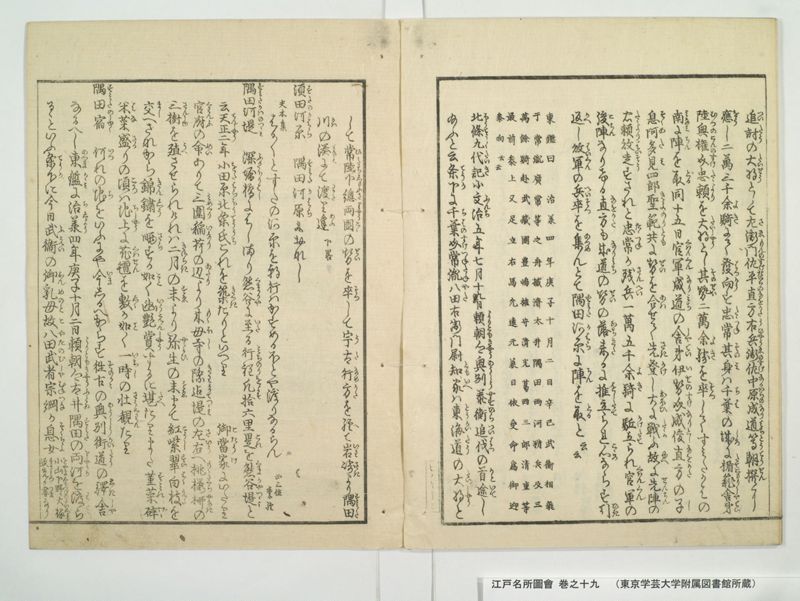
翻刻
追討(ついたう)の大将(たいせう)として左衛門佐(さゑもんのすけ)平直方(たいらのなをかた)右兵衛佐(うひやうゑのすけ)中原成道(なかはらのなりみち)等(とう)朝撰(てうせん)に
応(をう)し二万三千 余騎(よき)にて発向(はつかう)す忠常(たゝつね)其身(そのみ)は千葉(ちは)の城(しろ)に楯篭(たてこもり)舎弟(しやてい)
陸奥権介(むつのこんのすけ)忠頼(たゝより)を大将(たいしやう)とし其勢(そのせい)二万 余騎(よき)を卒(そつ)してすみたかはの
南(みなみ)に陣(ちん)を取(とる)同十五日 官軍(くはんくん)成道(なりみち)の舎弟(しやてい)伊勢介(いせのすけ)成俊(なりとし)直方(なをかた)の子(し)
息(そくの)阿多見(あたみ)四郎 聖範(きよのり)共(とも)に勢(せい)を合(あは)せて先登(さきかけ)し大(おほひ)に戦(たゝか)ふ故(ゆへ)に先陣(せんちん)の
忠頼(たゝより)敗走(はいそう)すされと忠常(たゝつね)か残兵(さんへい)一万五千 余騎(よき)に駆立(かけたて)られ官軍(くはんくん)の
後陣(こちん)なりける直方(なをかた)も成道(なりみち)の勢(せい)の落来(おちきた)るに推立(をしたて)られ心(こゝろ)ならす引(ひき)
返(かへ)し敗軍(はいくん)の兵卒(へいそつ)を集(あつめ)んとて隅田河原(すみたかはら)に陣(ちん)を取(とる)と云云
東鑑曰 治承四年庚子十月二日辛己武衛相乗
于常胤広常等之舟■■太井隅田両河精兵及三
万余騎赴武蔵国豊島権守清光葛西三郎清重等
最前参上又足立右馬允遠元兼日依受命為御迎
参向云云
北条九代記(ほうてうくたいき)に文治(ふんち)五年七月十九日 頼朝卿(よりともきやう)奥州(あうしう)泰衡(やすひら)追伐(ついはつ)の首途(かといて)し
給ふと云 条下(てうか)に千葉介常胤(ちはのすけつねたね)八田(やた)右衛門尉 知家(ともいへ)は東海道(とうかいたう)の大将(たいしやう)と
して常陸(ひたち)下総(しもふさ)両国(りやうこく)の㔟(せい)を卒(そつ)して宇太(うた)行方(なめかた)を経(へ)て岩崎(いわさき)より隅田(すみた)
川(かは)の湊(みなと)にて渡(わた)り逢(あふ)下略
須田河原(すたのかはら) 隅田河原(すみたかはら)におなし
夫木集
はる〳〵とすたの河原を朝行はかすめるほとや渡りなるらん
隅田河堤(すみたかはのつゝみ) 深堀橋(ふかほりはし)にはしまり態谷(くまかや)に至(いた)る行程(みちのり)凡(およそ)拾六里 是(これ)を熊谷堤(くまかやつゝみ)と
云 天正(てんしやう)二年 小田原北条氏(おたはらほうてううち)これを築(きつき)たりといへり
官府(くわんふ)の命(めい)ありて三囲稲荷(みめくりいなり)の辺(あたり)より木母寺(もくほし)の際迄(きわまて)堤(つゝみ)の左右(さいう)へ桃(もも)桜(さくら)柳(やなき)の
三樹(さんしゆ)を殖(うへ)させられけれは二月(きさらき)の末(すゑ)より弥生(やよひ)の末(すゑ)まて紅紫翠白(こうしすいはく)枝(えた)を
交(まし)へさなから錦繍(きんしう)を晒(さら)すか如(こと)く幽艶(いうえん)賞(しやう)するに堪(たへ)たりまた董菜(すみれ)砕(げゝ)
米菜(はな)盛(さか)りの頃(ころ)は地上(ちしやう)に花氈(くはせん)を敷(しく)か如(こと)く一時(いちし)の壮観(さうくわん)たり
隅田宿(すみたのしゆく) 何(いつ)れの地(ち)をいふにや今(いま)しるへからす往古(そのかみ)の奥州街道(あうしうかいたう)の駅舎(ゑきしや)
なるへし東鑑(あつまかゝみ)に治承(ちしよう)四年庚子十月二日 頼朝卿(よりともきやう)太井(ふとゐ)隅田(すみた)の両河(りやうか)を渡(わた)ら
るゝといふ条下(てうか)に今日 武衛(ふえい)の御乳母(おんめのと)故八田武者(こやたのむしや)宗綱(むねつな)か息女(そくちよ) 《割書:小山(をやま)下野(しもつけの)大掾(たいしよう)|政光(まさみつ)か妻(つま)なり》
現代語訳
追討の大将として左衛門佐平直方、右兵衛佐中原成道等が朝廷の選抜に応じ、二万三千余騎で出発した。忠常その身は千葉の城に立て籠もり、舎弟の陸奥権介忠頼を大将とし、その勢力二万余騎を率いて隅田川の南に陣を取った。同十五日、官軍の成道の舎弟伊勢介成俊、直方の子息阿多見四郎聖範が共に勢力を合わせて先駆けし、大いに戦ったため、先陣の忠頼は敗走した。しかし忠常の残兵一万五千余騎に駆け立てられ、官軍の後陣であった直方も成道の勢力が落ちてくるのに押し立てられ、心ならずも引き返し、敗軍の兵卒を集めようとして隅田河原に陣を取ったという。
東鑑に曰く「治承四年庚子十月二日辛巳、武衛は常胤・広常等の舟に相乗り、太井・隅田両河で精兵三万余騎に及び、武蔵国に赴く。豊島権守清光、葛西三郎清重等が最前に参上し、また足立右馬允遠元も兼日より命を受け、御迎えのため参向した」という。
北条九代記によると、文治五年七月十九日、頼朝卿が奥州泰衡追伐の出発をされたという条下に、千葉介常胤、八田右衛門尉知家は東海道の大将として常陸・下総両国の勢力を率いて宇太・行方を経て、岩崎より隅田川の湊で渡り合ったという(以下略)。
須田河原 隅田河原と同じ
夫木集より
「はるばると須田の河原を朝行けば、霞める程や渡りなるらん」
隅田河堤 深堀橋から始まり熊谷に至る行程はおよそ十六里。これを熊谷堤という。天正二年、小田原北条氏がこれを築いたと言われている。
官府の命令があって、三囲稲荷の辺りから木母寺の際まで、堤の左右へ桃・桜・柳の三樹を植えさせられたので、二月の末から三月の末まで、紅紫翠白の枝を交え、さながら錦繍を晒すかのように、幽雅で艶やかで鑑賞するに堪える。また菫や芥子菜が盛りの頃は、地上に花筵を敷くかのように、一時の壮観である。
隅田宿 どの地を指すのか、今では分からない。往古の奥州街道の駅舎であろう。東鑑に治承四年庚子十月二日、頼朝卿が太井・隅田の両河を渡られるという条下に、「今日、武衛の御乳母である故八田武者宗綱の息女《小山下野大掾政光の妻である》
英語訳
As generals for the pursuit, Saemon-no-suke Taira no Naomata, Uhyōe-no-suke Nakahara no Narimichi and others responded to the imperial selection, departing with more than 23,000 mounted warriors. Tadatsune himself fortified himself in Chiba Castle, while his younger brother Mutsu-gon-no-suke Tadayori served as general, leading a force of more than 20,000 mounted warriors and taking position south of the Sumida River. On the 15th of the same month, the imperial forces - Narimichi's younger brother Ise-no-suke Naritoshi and Naomata's son Atami Shirō Kiyonori - joined forces in a frontal assault and fought fiercely, causing Tadayori's vanguard to flee in defeat. However, driven by Tadatsune's remaining forces of more than 15,000 mounted warriors, and with Naomata's rear guard being pushed back by Narimichi's retreating forces, they reluctantly withdrew and established a position at Sumida River Plain to rally the defeated soldiers.
The Azuma Kagami states: "On the 2nd day of the 10th month of the 4th year of Jishō (1180), year of the Metal Rat, day of Metal Snake, the Warrior Guard (Yoritomo) boarded boats with Tsunetane, Hirotune and others, and with elite troops exceeding 30,000 mounted warriors at the Futoi and Sumida rivers, proceeded to Musashi Province. Toshima-gonnokami Kiyomitsu, Kasai Saburō Kiyoshige and others were the first to present themselves, and Adachi Uma-no-jō Tōmoto, having received orders from before, also came to greet him."
According to the Hōjō Kudaiki, under the section stating that on the 19th day of the 7th month of the 5th year of Bunji (1189), Lord Yoritomo departed for the pursuit of Ōshū's Yasuhira, Chiba-no-suke Tsunetane and Hatta Uemon-no-jō Tomoie served as generals of the Tōkaidō route, leading forces from both Hitachi and Shimōsa provinces through Uta and Namekata, crossing at the port of Sumida River from Iwasaki (abbreviated below).
Suda River Plain - Same as Sumida River Plain
From the Fuboku-shū poetry collection:
"Traveling far across Suda River Plain in the morning, is it the misty crossing I see?"
Sumida River Embankment - Beginning from Fukahori Bridge and extending to Kumagaya, a distance of approximately 16 ri. This is called the Kumagaya Embankment. It is said to have been constructed by the Odawara Hōjō clan in the 2nd year of Tenshō (1574).
By government order, from the vicinity of Mimeguri Inari to the area of Mokuboji Temple, three types of trees - peach, cherry, and willow - were planted on both sides of the embankment. From the end of the second month to the end of the third month, with branches of red, purple, green, and white intermingling like unfurled brocade, it was elegantly beautiful and worthy of admiration. Also, when violets and mustard flowers were in full bloom, it was like spreading flower mats on the ground - a magnificent spectacle.
Sumida Post Station - It is unclear which location this refers to today. It was likely a way station on the ancient Ōshū Highway. In the Azuma Kagami, under the section about Lord Yoritomo crossing the Futoi and Sumida rivers on the 2nd day of the 10th month of the 4th year of Jishō, it states: "Today, the daughter of the late Hatta warrior Munetsuna, who was the Warrior Guard's wet nurse <<wife of Oyama Shimotsuke-daijō Masamitsu>>