翻刻
【挿し絵】
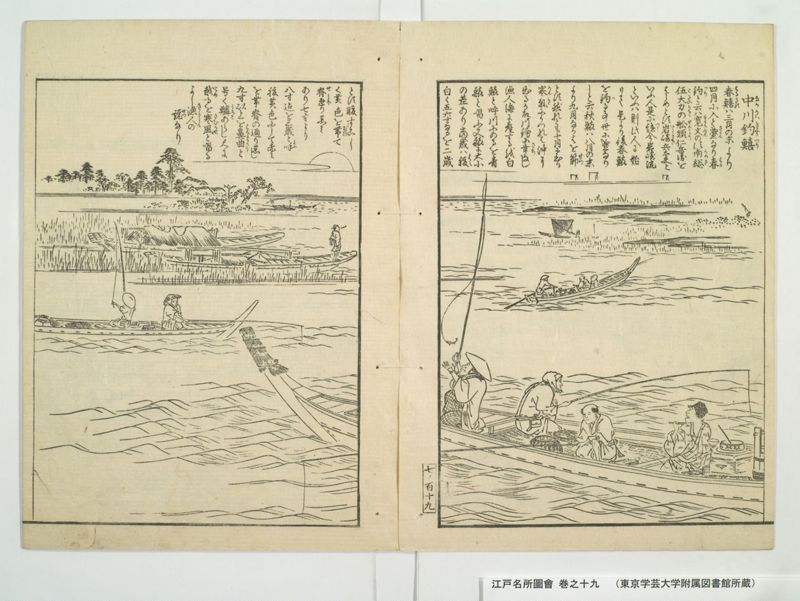
中川釣鱚(なかかはきすつり)
春鱚(はるきす)は三月の末より
四月に入て盛(さかん)なり春(はる)
釣(つり)と云は寛文(くわんふん)の頃 南総(かつさ)
伍大力(こたいりき)の船頭(せんとう)仁兵衛を
はしめとす岩崎(いわさき)兵太夫と
いふ人是に継(つく)今岩崎流
といふは則此人に始
りて是より後春鱚
を釣(つ)る事世に盛なり
しと云秋鱚は八月の末
より九月なかはを節(せつ)
とす然れとも十月に至り
寒気(かんき)にうつれは沖に
出るか故川釣に幸(さち)なし
漁人海に産するを白
鱚と呼川にあるを青
鱚と唱ふ又鱚に大小
の差あり當歳は腹(はら)
白く五六寸なるを二歳
とす腹すこし
く黄色を帯(おひ)て
背(せ)通(とほ)り黒み
あり七寸より
八寸迄を三歳と呼(よふ)
腹黄色にして赤み
を帯背の通り黒し
九寸以上を鼻曲(はなまかり)と
号く鱗(うろこ)あらし尺に
越(こゆ)るを寒風(さむかせ)と唱る
よし漁人(きよしん)の
説(せつ)なり
現代語訳
【挿絵】
中川鱚釣り(なかがわきすつり)
春鱚(はるきす)は三月の末から四月に入って盛んになる。春釣りというのは寛文の頃、南総(房総)の伍大力という船の船頭仁兵衛を始祖とする。岩崎兵太夫という人がこれに続き、今の岩崎流というのはすなわちこの人に始まる。これより後、春鱚を釣ることが世に盛んになったという。秋鱚は八月の末から九月中頃を最盛期とする。しかし十月に至り寒気に移ると沖に出るので、川釣りでは釣果がない。漁師は海に産するものを白鱚と呼び、川にあるものを青鱚と唱える。また鱚には大小の差がある。当歳(一歳)は腹が白く五、六寸のものを二歳とする。腹が少し黄色を帯び、背筋に黒みがあり、七寸から八寸までのものを三歳と呼ぶ。腹が黄色で赤みを帯び、背筋が黒い九寸以上のものを鼻曲(はなまがり)と号する。鱗が粗く、一尺を超えるものを寒風(さむかぜ)と唱えるとのこと。これは漁師の説である。
英語訳
[Illustration]
Nakagawa Whiting Fishing (Nakagawa Kisu-tsuri)
Spring whiting (haru-kisu) becomes abundant from the end of March into April. Spring fishing is said to have originated around the Kanbun era (1661-1673) with a boatman named Jinbei from the ship Gotairiki in Nansō (Bōsō Peninsula). A man named Iwasaki Hyōdayū continued this tradition, and the current Iwasaki school of fishing began with this person. From this time onward, spring whiting fishing became popular in society. Autumn whiting season runs from the end of August to mid-September. However, when October arrives and the cold weather sets in, the fish move to deeper waters offshore, so river fishing yields no catch. Fishermen call those born in the sea "white whiting" and those found in rivers "blue whiting." There are also size differences among whiting. Current-year fish have white bellies and are five to six sun long; these are considered two years old. Those with slightly yellowish bellies and blackish backs, measuring seven to eight sun, are called three years old. Those nine sun or longer with yellow bellies tinged with red and black backs are called "nose-bent" (hanamakari). Those with coarse scales exceeding one shaku in length are called "cold wind" (samukaze). This is according to the fishermen's explanation.