翻刻
【右丁】
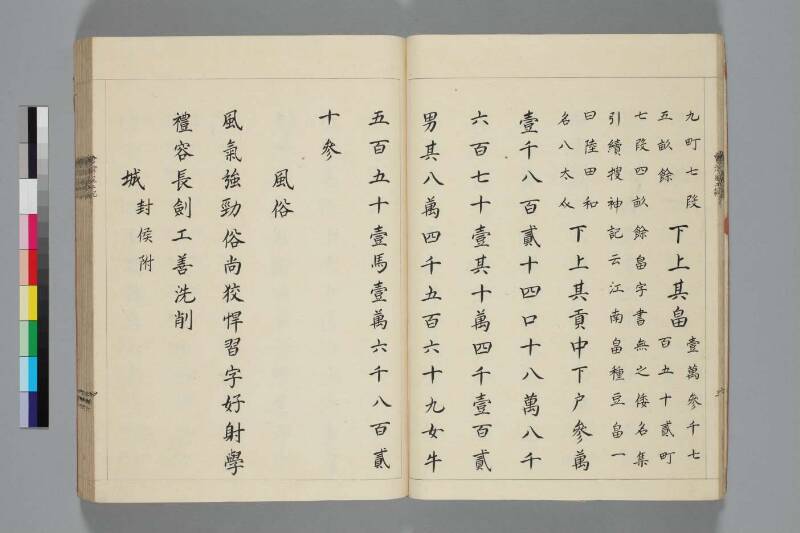
《割書:九町七段|五畝餘》下上其畠《割書:壹萬参千七|百五十貳町》
《割書:七段四畝餘畠字書無之倭名集|引續搜神記云江南畠種豆畠一》
《割書:曰陸田和|名八太介》下上其貢中下戸参萬
壹千八百貳十四口十八萬八千
六百七十壹其十萬四千壹百貳
男其八萬四千五百六十九女牛
【左丁】
五百五十壹馬壹萬六千八百貳
十参
風俗
風氣強勁俗尚狡悍習字好射𭓕#1
禮󠄁容長劍工善洗削
城《割書:封侯附》
現代語訳
【右丁】
〔割書:九町七段五畝余〕上下〔に分けられ〕、その畠は〔割書:壱万三千七百五十二町七段四畝余。「畠」の字は字書には見えないが、『倭名類聚抄』が引く『続捜神記』に「江南では畠に豆を種う、畠を一に陸田と曰う」とあり、和名は「はたけ」〕と上下に分けられる。その貢〔租税〕は中下。戸〔数〕は三万一千八百二十四口〔人口〕は十八万八千六百七十一、そのうち男は十万四千百二、女は八万四千五百六十九。牛は
【左丁】
五百五十一、馬は一万六千八百二十三。
風俗
風気は強勁〔強くたくましく〕、俗は狡悍〔勇猛果敢〕を尚び、字を習い弓射を好む。礼容〔礼儀作法〕を重んじ、長剣を帯び、洗削〔刀剣を磨き整えること〕に巧みである。
城〔割書:封侯附〕
英語訳
[Right folio]
[割書: Nine chō, seven tan, five se and remainder] divided into upper and lower grades. The upland fields [割書: thirteen thousand, seven hundred and fifty-two chō, seven tan, four se and remainder. The character "hata" (畠) does not appear in character dictionaries, but the Wamyō Ruijushō, citing the Zoku Soushinki, states: "In the Jiangnan region, beans are sown in hata; hata is also called rikuden (upland field)"; the Japanese reading is "hatake"] are likewise divided into upper and lower grades. The tax assessment is "middle-lower" (chūge). The number of households is thirty-one thousand, eight hundred and twenty-four; the population is one hundred and eighty-eight thousand, six hundred and seventy-one, of whom one hundred and four thousand, one hundred and two are male, and eighty-four thousand, five hundred and sixty-nine are female. Cattle:
[Left folio]
Five hundred and fifty-one; horses: sixteen thousand, eight hundred and twenty-three.
Customs
The spirit of the people is strong and robust; the customs favor boldness and valor. The people practice calligraphy and are fond of archery. They observe proper decorum and etiquette, wear long swords, and are skilled in the polishing and dressing of blades.
Castles [割書: Feudal lords appended]