翻刻
【コマ19】
【右丁】
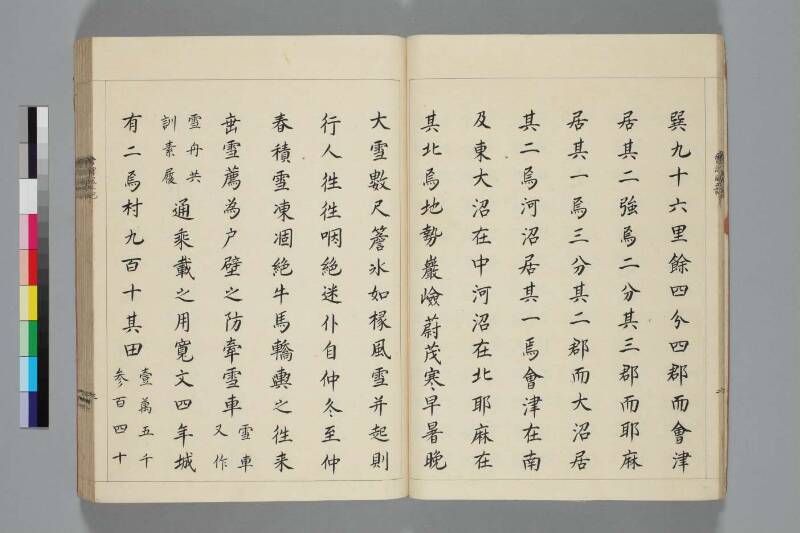
巽󠄀#1九十六里餘四分四郡而㑹津
居其二強焉二分其三郡而耶麻
居其一焉三分其二郡而大沼居
其二焉河沼居其一焉㑹津在南
及東大沼在中河沼在北耶麻在
其北焉地勢巖嶮蔚茂寒早暑晩
【左丁】
大雪數尺簷氷如椽風雪并起󠄁則
行人徃徃咽絶迷仆自仲冬至仲
春積雪凍凅絶牛馬轎輿之徃来
𡸁雪薦為戸壁之防牽雪車《割書:雪車|又作》
《割書:雪舟共|訓素履》通乘載之用寬文四年城
有二焉村九百十其田《割書:壹萬五千|参百四十》
現代語訳
【コマ19】
【右丁】
巽(たつみ)〔南東〕から〔北西へ〕九十六里余り。〔会津の地は〕四郡に分かれており、会津郡がその二強〔半分以上〕を占める。〔残り〕三郡の二分のうち、耶麻郡がその一を占める。〔また〕その二郡の三分のうち、大沼郡がその二を占め、河沼郡がその一を占める。会津郡は南および東に位置し、大沼郡は中央に、河沼郡は北に、耶麻郡はさらにその北に位置する。地勢は岩険しく、草木は鬱蒼と茂り、寒さは早く来て、暑さは遅く訪れる。
【左丁】
大雪は数尺に及び、軒の氷柱は垂木ほどの太さになる。風雪が一度に吹き起これば、旅人はしばしば息が詰まり、道に迷って倒れることもある。仲冬〔旧暦十一月〕から仲春〔旧暦二月〕にかけては、積雪が凍り固まり、牛馬・駕籠・輿の往来が絶える。雪を積んだ薦〔こも〕を戸や壁の防ぎとし、雪車〔そり〕を引いて〔割書:雪車はまた「雪舟」とも書き、いずれも「そり」と訓ずる〕乗り物や荷物の運搬に用いる。寛文四年〔1664年〕、〔この地には〕城が二つあり、村は九百十、田畑は〔割書:壱万五千三百四十〕…
英語訳
[Frame 19]
[Right folio]
From the southeast (tatsumi) to [the northwest], the distance is over ninety-six ri. The land is divided into four districts (gun), of which Aizu district occupies more than two-thirds [lit. "two-strong"]. Of the remaining three districts, Yama district occupies one half. Of those two districts, Ōnuma occupies two-thirds and Kawanuma occupies one-third. Aizu district lies to the south and east, Ōnuma district lies in the center, Kawanuma district lies to the north, and Yama district lies yet further north. The terrain is rocky and precipitous, the vegetation dense and lush; cold comes early and heat comes late.
[Left folio]
Snow accumulates to several feet in depth, and icicles hanging from the eaves grow as thick as rafters. When wind and snowstorm arise together, travelers frequently find their breath cut off, lose their way, and collapse. From mid-winter [the eleventh month of the lunar calendar] through mid-spring [the second month], accumulated snow freezes solid and all travel by ox, horse, palanquin, and litter is suspended. Straw mats packed with snow are used as protection for doors and walls, and snow-sleds [割書: "yukiguruma," also written "yukifune," both read as "sori"] are drawn for use in transport of passengers and goods. In the fourth year of Kanbun [1664], there were two castles in the region, nine hundred and ten villages, and the paddy fields [割書: fifteen thousand, three hundred and forty]…