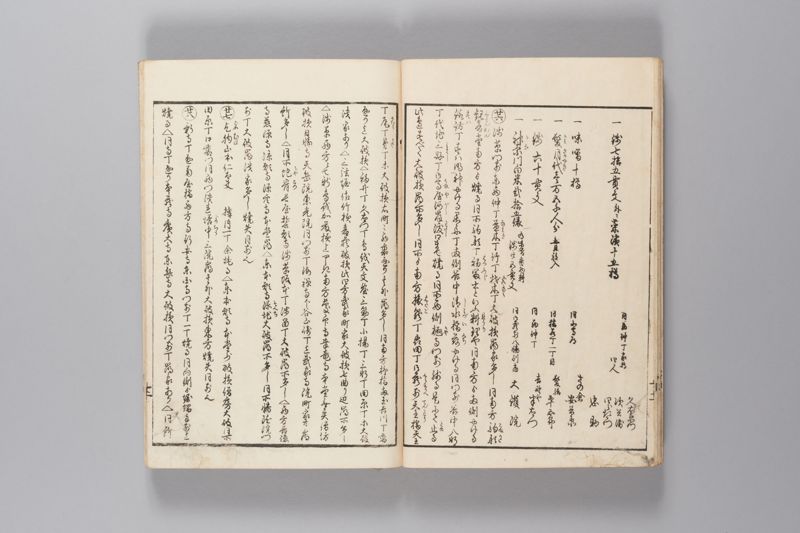
翻刻
【右丁】
一 銭七拾五貫文《割書:外ニ|》菜漬十五樽 《割書:同西仲丁家持| 四人》 《割書:久右衛門|次兵衛|四郎佐衛門|忠助》
一 味噌十樽 同北馬道 さの倉 安兵衛
一 髪月代(かみさかやき)壱万五千人分 毎日施入 同猿若丁一丁目 髪結 平五郎
一 銭六十貫文 同西仲丁 吉野や 半右衛門
一 神奈(かな)川白米弐拾五俵 《割書:為味噌香物料| 銭廿五貫文》 同御蔵前八幡別当 大護院
【漢数字丸囲み】廿六 浅草門前東西仲丁 並木(なみき)丁竹丁 材木(ざいもく)丁大破損崩家多し同南方 駒形(こまかた)
観音(くわんおん)堂南方ゟ焼る同所駒形丁 初冨士(はつふじ)といふ料理(りうり)や同南方ゟ両側やける
諏訪(すは)丁すは明神やける黒舟丁両側谷中 清水稲荷(しみづいなり)やける同門前谷中八軒
丁代地 三好(みよし)丁御 馬屋河岸(うまやがし)渡(わたし)口まで焼る同所西側 榧(かや)寺門前残る是にて止(とま)る
此辺すべて大破損崩所多し同所ゟ南方 旅籠(はたご)丁森田丁御 蔵前(くらまへ)天王(てんわう)橋天王
【左丁】
丁 瓦(かはら)丁 茅(かや)丁等大破損右町々西裏通り其外崩多し同南方柳橋両国吉川丁裏
通り迄大破損△福井丁久右衛門丁鳥越天文台三筋丁小揚丁三軒丁田原丁等大破
潰家あり△三弦堀佐竹様表蔵破損此四方武家町家大破損七曲り辺崩所多し
△浅草西方にて新鳥越加藤様上やしき南方慶印寺幸竜寺本堂無異僧坊
破損日輪寺天岳院東光院同門前丁海禅寺下谷山崎丁迄武家寺院町家共崩
所多し△同所 蛇骨(じやこつ)長家誓願寺浅草坂本丁浅留丁大破崩所多し△西方善徳
寺慈源寺涼願寺源空寺本堂崩△東本願寺 添地(そへち)大破崩所多し同所幡随院門
前丁大破崩潰家多し焼失同前也
【漢数字丸囲み】廿七 乞胸(ごふむね)山本仁太夫 構内一丁余焼る△東本願寺本堂少破損僧房大破同所
田原丁口裏門同西門潰れ塔中(だつちう)三院崩其外大破損東方焼失同前也
【漢数字丸囲み】廿八 新寺丁通菊屋橋西方寺行安寺東国寺門前丁一丁焼る同向側ゟ堀端手前迄
焼る△同寺丁通り本蔵寺広大寺東岳寺大破損同門前丁崩家あり△同所
現代語訳
【右丁】
一、銭七十五貫文(別に、菜漬け十五樽) (同西仲丁の家持ち四人)久右衛門・次兵衛・四郎左衛門・忠助
一、味噌十樽 同北馬道 さの倉 安兵衛
一、髪月代(散髪・月代剃り)一万五千人分、毎日施し入れる 同猿若町一丁目 髪結い 平五郎
一、銭六十貫文 同西仲丁 吉野屋 半右衛門
一、神奈川産白米二十五俵(味噌・漬物料として銭二十五貫文) 同御蔵前八幡別当 大護院
㉖ 浅草門前・東西仲丁・並木町・竹町・材木町は大破損にして崩れた家が多い。同南方、駒形観音堂の南方より焼け出す。同所駒形町の「初冨士」という料理屋の南方より両側が焼ける。諏訪町の諏訪明神が焼ける。黒舟町の両側、谷中・清水稲荷が焼ける。同門前・谷中八軒町代地・三好町・御馬屋河岸渡し口まで焼ける。同所の西側、榧寺門前が残り、ここで(延焼が)止まる。この辺りはすべて大破損・崩壊箇所が多い。同所より南方、旅籠町・森田町・御蔵前・天王橋・天王
【左丁】
町・瓦町・茅町等は大破損で、右の町々の西裏通りをはじめその他の崩壊箇所も多い。同南方、柳橋・両国・吉川町裏通りまで大破損。△福井町・久右衛門町・鳥越・天文台・三筋町・小揚町・三軒町・田原町等にも大破・潰家あり。△三弦堀(さんげんぼり)・佐竹様表蔵が破損。この四方の武家・町家は大破損で、七曲り辺りにも崩壊箇所が多い。
△浅草西方では、新鳥越・加藤様上屋敷南方・慶印寺・幸竜寺本堂に異状なし(ただし)僧坊は破損。日輪寺・天岳院・東光院・同門前町・海禅寺・下谷山崎町まで、武家・寺院・町家ともに崩壊箇所が多い。△同所、蛇骨長屋・誓願寺・浅草坂本町・浅留町は大破・崩壊箇所が多い。△西方、善徳寺・慈源寺・涼願寺・源空寺本堂が崩壊。△東本願寺添地は大破・崩壊箇所が多い。同所、幡随院門前町は大破・崩壊・潰家が多く、焼失も同様(前述のとおり)。
㉗ 乞胸(大道芸人統括)の山本仁太夫の構内で一町余が焼ける。△東本願寺本堂は小破損、僧坊は大破損。同所、田原町口裏門・同西門が潰れ、塔中三院が崩壊、その他は大破損。東方の焼失は同前のとおり。
㉘ 新寺町通り菊屋橋の西方、寺行安寺・東国寺門前町が一町焼ける。同向かい側より堀端手前まで焼ける。△同寺町通り、本蔵寺・広大寺・東岳寺は大破損。同門前町に崩家あり。△同所
英語訳
**[Right Page]**
- One item: 75 kanmon in cash (plus 15 barrels of pickled vegetables) — [donated by] four property owners of Nishi-Nakachō: Kyūemon, Jihei, Shirōzaemon, and Chūsuke
- One item: 10 barrels of miso — Sanokura, Yasubei, of Kita-Umamichi in the same district
- One item: Hairdressing and head-shaving services for 15,000 persons, provided daily — Hairdresser Heigoro, of Saruwaka-chō 1-chōme
- One item: 60 kanmon in cash — Yoshino-ya, Han'emon, of Nishi-Nakachō
- One item: 25 bales of polished rice from Kanagawa (plus 25 kanmon in cash for miso and pickles) — Daigoin, the steward of the Okura-mae Hachiman Shrine
---
**㉖** The areas of Asakusa Monzen, Higashi-Nishi Nakachō, Namiki-chō, Take-chō, and Zaimoku-chō suffered extensive damage with many collapsed buildings. In the southern part of the same area, fire broke out from south of the Komagata Kannon Hall. On both sides of Komagata-chō, fire spread from the south of a restaurant called "Hatsufuji." In Suwa-chō, the Suwa Myōjin shrine burned. Both sides of Kurofune-chō, Yanaka, and the Shimizu Inari shrine burned. The fire spread through the same monzen area, Yanaka Hachiken-chō, Daichi, Miyoshi-chō, and all the way to the ferry landing at Omaya-gashi, where the west side's Kaya-dera (Kayaji) temple grounds were spared and the fire stopped. Throughout this entire vicinity, there was severe damage and many collapsed structures. Further to the south — Hatagochō, Morita-chō, Okura-mae, Tennō Bridge, Tennō-
**[Left Page]**
chō, Kawara-chō, Kaya-chō, and similar areas suffered extensive damage, with many collapses along the western back streets of these neighborhoods as well. To the south, the areas of Yanagibashi, Ryōgoku, and the back streets of Yoshikawa-chō sustained heavy damage. △ Fukui-chō, Kyūemon-chō, Torigoe, the Astronomical Observatory, Misuji-chō, Koage-chō, Sangen-chō, and Tawara-chō also suffered severe damage and building collapses. △ The surface storehouses of the Sangen-bori and Lord Satake's estate were damaged. The samurai residences and townspeople's homes throughout this entire area sustained heavy damage, with many collapses around the Nanakuari district as well.
△ To the west of Asakusa: in the area of Shin-Torigoe and south of Lord Katō's upper mansion, Keiin-ji and the main hall of Kōryū-ji were undamaged, though the monks' quarters suffered damage. From Nichirin-ji, Tengaku-in, and Tōkō-in through the monzen district, Kaizen-ji, and down to Shitaya Yamazaki-chō, samurai residences, temples, and townspeople's homes alike all had many areas of collapse. △ In the same area, the Jakotsu tenement row, Seigan-ji temple, Asakusa Sakamoto-chō, and Asatome-chō sustained severe damage and many collapses. △ To the west, the main halls of Zentoku-ji, Jigen-ji, Ryōgan-ji, and Genkū-ji all collapsed. △ The annexed land of Higashi Hongan-ji was severely damaged with many collapses. The same applies to the monzen district of Banzuin-in, which suffered heavy damage, collapses, and total building losses, with fire damage as previously noted.
**㉗** In the grounds of Yamamoto Jintayū, the supervisor (gōmune) of street performers, more than one chō of land was burned. △ The main hall of Higashi Hongan-ji sustained minor damage, while the monks' quarters sustained major damage. In the same location, the rear gate at the Tawara-chō entrance and the western gate collapsed; three sub-temples in the tōchū compound also collapsed, and the remainder suffered extensive damage. Fire damage to the east was as previously described.
**㉘** Along Shin-Dera-chō-dōri to the west of Kikuya Bridge, the Tera Gyōan-ji and the monzen district of Tōkoku-ji burned for a distance of one chō. The fire spread from the opposite side all the way to just before the canal bank. △ Along the same Tera-chō-dōri, Honzō-ji, Kōdai-ji, and Tōgaku-ji sustained heavy damage. There were collapsed buildings in the same monzen district. △ In the same area —