翻刻
【右丁】
所甚だ多し△不忍池弁天社無異境内破損当社地は池中 孤(はなれ)島なれ共同所四
方は甚だ揺強くして上野池の端までの間は崩所甚だ多し
【漢数字丸囲み】卅二 池の端仲丁此辺 最(いと)揺強(ゆれつよく)くして家庫とも安体なるは少し然れども仲丁通は
前年焼失家居新造に付崩所はなし近辺古家の分は多く崩△同所茅丁
壱丁目弐丁目 堺稲荷(さかいいなり)まで焼る但し西方松平備後様御門外構安寺【講安寺か?】門前迄焼
東方池の端限やける△同北方根津権現社内所々破損
【漢数字丸囲み】卅三 根津権現本社無異境内所々破損同七軒丁三丁焼る此辺武家町家崩所
多く焼失同前也同所 曙里(あけぼのゝさと)千駄木(せんだぎ)下丁権太坂辺迄大破損 最(もつとも)多し
【漢数字丸囲み】卅四 ■谷坂本丁壱丁目大破損二丁目より両側焼東方たこ善横丁迄焼る小野
照(てる)明神前にて止る西方三丁目横御 箪笥(たんす)丁西方 前裁場(せんざいば)迄焼る北方は同四丁
目焼る△同所 東叡(とうえい)山御領地同所西念寺西蔵院永称寺千歳院要伝寺同西北
方御行松の辺迄大破損にて焼失も同前也△金杉辺武家方小屋敷民家とも
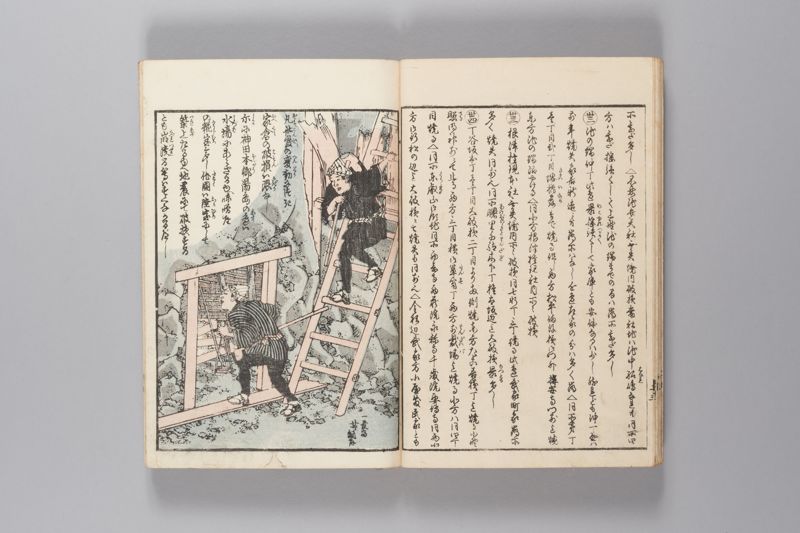
【左丁・挿絵】
一登斎
芳綱画
凡(およそ)今度(こんど)の変動(へんどう)につき
家(いへ)倉(くら)の破損(はそん)は限(かぎり)なし
尓(しかる)に神田 本郷(ほんがう)湯島の辺(あたり)は
水場(みづば)にあらざるゆへ味噌屋
の糀室(かうじむろ)多し他国(たこく)は陸室(おかむろ)にして
築上(つきあげ)たるゆへ地震にて破損する
とも崩(くづれ)潰(つぶれ)る等はすくなかるべし
現代語訳
【右丁】
被害箇所は非常に多い。△不忍池の弁天社は無事であったが、境内は破損した。当社の地は池の中の孤島であるが、周囲四方は揺れが非常に強く、上野・池の端までの間は崩れた箇所が非常に多い。
【三十二】池の端仲町この辺りは揺れが極めて強く、家屋・土蔵ともに無事なものは少なかった。しかし仲町通りは前年の火災で焼失した後、家屋を新築していたため崩れた箇所はなかった。近辺の古い家屋は多く崩れた。△同所の茅町一丁目・二丁目は堺稲荷まで焼けた。ただし西方の松平備後様の御門外の構、講安寺門前まで焼け、東方は池の端の限りまで焼けた。△同所北方の根津権現社内は所々破損した。
【三十三】根津権現の本社は無事であったが、境内は所々破損した。同所七軒町三丁が焼けた。この辺りは武家・町家ともに崩れた箇所が多く、焼失についても同様であった。同所の曙里・千駄木下町・権太坂辺りまで大きく破損し、被害が最も多かった。
【三十四】■谷坂本町一丁目は大破損。二丁目より両側が焼け、東方はたこ善横丁まで焼け、小野照明神の前で止まった。西方は三丁目横の御箪笥町西方の前栽場まで焼けた。北方は同四丁目が焼けた。△同所・東叡山の御領地・同所の西念寺・西蔵院・永称寺・千歳院・要伝寺・同所西北方の御行松の辺りまで大破損となり、焼失についても同様であった。△金杉辺りの武家方の小屋敷・民家ともに
【左丁・挿絵】
一登斎 芳綱 画
およそ今度の変動(地震)につき、家屋・土蔵の破損は限りない。しかるに神田・本郷・湯島の辺りは水はけの悪い場所ではないため、味噌屋の糀室が多い。他国(江戸以外の地域)では陸室(地面より高く盛り土をして建てた室)にして築き上げるため、地震で破損することはあっても、崩れ潰れるようなことは少ないはずである。
英語訳
**[Right Page]**
There were an extremely large number of damaged locations. △ The Benzaiten Shrine at Shinobazu Pond was undamaged, but the precincts suffered damage. Although the shrine grounds are on an isolated island in the middle of the pond, the shaking was extremely violent in all directions around it, and there were very many collapsed sites between Ueno and Ikenohata.
**[32]** In the Ikenohata Nakachō area, the shaking was exceedingly strong, and there were few houses or storehouses that escaped unscathed. However, along the Nakachō thoroughfare, since the buildings had been newly constructed after a fire the previous year, there were no collapsed structures. Many of the older houses in the vicinity did collapse. △ In the same area, Kayachō 1-chōme and 2-chōme burned as far as Sakai Inari Shrine. To the west, the fire burned to the outer gate of Lord Matsudaira Bingo's residence and as far as the front of Kōanji Temple; to the east, it burned to the edge of Ikenohata. △ To the north of this area, the precincts of Nezu Gongen Shrine suffered damage in various locations.
**[33]** The main hall of Nezu Gongen Shrine was undamaged, but various locations within the precincts were damaged. Shichikenchō 3-chō in the same area burned. In this vicinity, both samurai residences and townspeople's houses suffered many collapses, and the extent of fire damage was similar. From the same area through Akebono-no-Sato (Akebono Village) and Sendagi Shitachō, and extending to the area around Gonta-zaka, there was extensive damage, with the greatest concentration of damage.
**[34]** ■ Valley Sakamotochō 1-chōme suffered major damage. From 2-chōme onward, both sides burned; to the east, the fire burned as far as Tako-zen Yokochō, stopping in front of the Ono Teru Myōjin shrine. To the west, the fire burned as far as the Senzaiba (garden plot area) west of Otansu-chō, which runs alongside 3-chōme. To the north, 4-chōme also burned. △ The same area, the landholdings of Tōeizan (Kan'eiji Temple), and in the same area, Sainennji, Saizōin, Eishōji, Chizaiin, and Yōdenji temples—extending as far northwest as the area around Ogyōmatsu—all suffered major damage, and the extent of fire damage was likewise severe. △ In the Kanasugi area, both the small samurai residences and the commoners' houses...
**[Left Page · Illustration]**
*Painted by Ittōsai Yoshitsuna*
In general, regarding the damage from this catastrophe, the destruction of houses and storehouses is beyond measure. Now, in the areas of Kanda, Hongō, and Yushima, since the ground is not waterlogged, there are many miso brewers' kōji rooms (fermentation chambers). In other provinces, these rooms are built as raised "oka-muro" (above-ground chambers) constructed atop raised earthworks, and so even if they are damaged by an earthquake, they are unlikely to completely collapse and crumble.