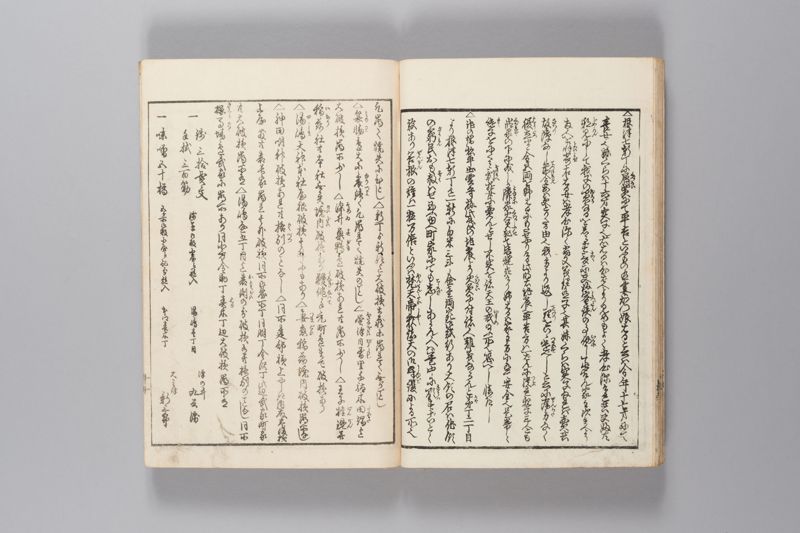
翻刻
【右丁】
△根津七軒丁に屑買(くづかい)にて平吉といふもの有妻かつ娘はると云は今年十七才にて
養女也妹くらは十六才実子也右はるは心ばへより見めもよく孝心深けれ共夫婦共
邪見(じやけん)にして我子の愚(おろか)なるをしらず爰(こゝ)に夫婦 密談(みつだん)の事 何(いかに)して聞けん家主次兵也より
両人を呼寄(よびよせ)右はる女は孝心深く尚又義理有子也其妹くらは実子なれば売共
故障(さはり)なし前金(てづけきん)おは受とりたる由也我方より返し理(ことはり)をいゝ遣(つかはす)べしと云に為方(せんかた)なく
腹立(はらたち)由金五両を姉はるにもたせやりける此時右地震也平吉方は一ばんに潰(つぶ)れ親子三人とも
崩家(くづれや)の下に成しが隣(となりに)家 火災(くはじ)起(でき)て皆焼死けり姉はるは家主方に有て安全也是常々
継(まゝ)子をにくみ剰(そのうへ)遊女に売んとせし不実を諸天王の戒(いましめ)給ふ所也恐べし慎べし
△池の端松平出雲守様此度の地震より火災(くはさい)に付諸人難義ならんと茅(かや)丁二丁目
より根津七軒丁迄一軒に白米三斗金壱両宛御施行あり大領の君は他領
の窮民(きうみん)おも救(すく)はせ玉ふゆへ町家にても志(こゝろざ)しあらん人は巻中に顕(あらは)すごとく
施あり善根(ぜんごん)の種は一粒万倍といふは梵天(ほんてん)帝釈(たいしやく)諸天の御 守護(しゆご)による所也
【左丁】
凡崩て焼失にひとし△新丁ゟ新住迄大破損土蔵等崩れて無がごとし
△箕輪(みのわ)辺大に震(ゆり)強(つよ)く凡崩れて焼失のごとし△蛍沢(ほたるざは)日暮(びくらし)里千駄木 田端(たばた)迄
大破損崩所少し△染井(そめゐ)巣鴨(すがも)辺破損あれ共崩所少し△王子 権現(ごんげん)并
稲荷(いなり)社共本社無異 境内(けいだい)破損あり鰻縄手(うなぎなはて)元町辺まで破損あり
△湯島(ゆしま)天神本社屋根破損其外にもあり△妻恋(つまごひ)稲荷境内破損崩所なし
△神田明神破損あれ共 格別(かくべつ)のことなし△同所建部様上やしき内藤豊後様
上屋敷共表長家崩れ其外破損同所御台所丁同朋丁金沢丁此辺武家町家
共大破損崩所有△湯島通五丁目迄 表側(おもてがは)の分破損有共格別のことなし同所
桜馬場(さくらばゝ)辺武家に崩所あり同北方金助丁 春(はる)木丁辺大破損崩所有
一 銭三拾貫文 浅草御救小屋え施入 湯島壱丁目 沢の井
手拭三百筋 九兵衛
一 味噌五十樽 五ケ所御救小屋え配分施入 本郷春木丁 大三津
新三郎
現代語訳
【右丁】
△根津七軒町に、屑買いをなりわいとする平吉というものがいた。妻のかつ、娘のはるという者は今年十七歳で養女であり、妹のくらは十六歳で実の子である。このはるは、心がけも良く器量も優れ、孝心が深かったが、夫婦ともに(継子に対して)意地悪で、わが子(くら)の愚かさをわきまえなかった。ここに夫婦が密かに話し合っていたことが何らかの形で知れたのか、家主の次兵衛から両人が呼び寄せられ、「このはるという娘は孝心深く、義理をわきまえた子である。妹のくらは実子であるから売っても差し支えはないかもしれないが、すでに前金を受け取っているとのこと、こちらから話をつけてやり返すべきである」と言われ、仕方なく腹立たしく思いながらも、金五両を姉のはるに持たせてやった。ちょうどそのとき、例の地震が起きた。平吉の家は真っ先に潰れ、親子三人ともに崩れた家の下敷きとなったが、隣家から火災が起きて、皆焼け死んでしまった。姉のはるは家主の家にいたため無事であった。これは、常々継子を憎み、しかもその上に遊女として売ろうとした不実な行いを、諸天王が戒め給うたところである。恐れるべきであり、慎むべきことである。
△池の端の松平出雲守様は、今度の地震ならびに火災により、諸人が難儀しているであろうと、茅町二丁目から根津七軒町まで、一軒につき白米三斗・金一両ずつお施しがあった。大きな領地を持つ殿様は、他の領地の窮民をも救ってくださるのであるから、町家においても志ある人は、この巻の中に示すように施しをなし、善根の種は一粒万倍というのは、梵天・帝釈・諸天の御守護によるものである。
【左丁】
おおよそ(この辺りは)崩れて焼失したも同然である。△新町から新住(しんじゅう)まで大きな破損があり、土蔵などが崩れてほとんどないも同然である。△箕輪辺りは大いに揺れが強く、おおよそ崩れて焼失したも同然である。△蛍沢・日暮里・千駄木・田端まで大きな破損があり、崩れた箇所は少ない。△染井・巣鴨辺りには破損はあるが、崩れた箇所は少ない。△王子権現ならびに稲荷社ともに本社は異常なく、境内に破損あり。鰻縄手・元町辺りまで破損あり。△湯島天神は本社の屋根が破損し、その他にも被害あり。△妻恋稲荷は境内に破損あるが、崩れた箇所はなし。△神田明神は破損あるも、格別のことはなし。△同所、建部様の上屋敷・内藤豊後様の上屋敷ともに、表長屋が崩れ、その他にも破損あり。同所の御台所町・同朋町・金沢町、この辺りの武家・町家ともに大きな破損があり、崩れた箇所あり。△湯島通り五丁目まで、表側の分は破損はあるが格別のことはなし。同所の桜馬場辺りの武家に崩れた箇所あり。同じく北方の金助町・春木町辺りに大きな破損があり、崩れた箇所あり。
一 銭三十貫文 浅草御救小屋へ施入 湯島一丁目 沢の井
手拭三百筋 九兵衛
一 味噌五十樽 五か所の御救小屋へ配分施入 本郷春木町 大三津
新三郎
英語訳
**[Right Page]**
△ In Nezu Shichikenchō there lived a man called Heikichi, who made his living as a rag-and-refuse dealer. His wife was named Katsu; his daughter Haru was seventeen years old that year and was an adopted child; and his younger daughter Kura, aged sixteen, was their natural-born child. Haru was both virtuous in character and pleasant in appearance, and was deeply devoted to her parents. Yet the couple treated her with contempt — as stepparents are wont to do — without recognizing the foolishness of their own natural child. Somehow it came to light what the couple had been secretly plotting, and the landlord, Jibei, summoned them both and said: "This daughter Haru is a deeply filial and dutiful child. As for the younger, Kura, since she is your own flesh and blood, perhaps you might do as you wish with her — but I understand you have already taken an advance payment for her. I will send word to have this matter settled and the money returned." Left with no choice, and seething with resentment, they nonetheless gave five *ryō* in gold to the elder daughter Haru to take with her. It was at precisely that moment that the earthquake struck. Heikichi's house was among the very first to collapse, and all three of the family — parents and child — were buried beneath the ruins. A fire then broke out in a neighboring house, and they all perished in the flames. Elder sister Haru, being at the landlord's house, escaped unharmed. This was surely the admonishment of the Heavenly Kings upon the couple's wickedness — their habitual cruelty toward a stepchild, and their intention, beyond that, to sell her into prostitution. One should fear such retribution; one should take heed.
△ Lord Matsudaira Izumo-no-Kami, of Ikenohata, judging that all manner of people must be suffering as a result of this earthquake and its fires, distributed to every household from Kayachō Second Block to Nezu Shichikenchō a gift of three *to* of polished rice and one *ryō* of gold apiece. A lord of great domain extends his relief even to the destitute of other domains; and similarly, among the townspeople too, those with the means to help have made donations, as recorded in this volume. It is said that the seed of good works yields ten-thousandfold — and this is by virtue of the divine protection of Brahmā, Indra, and the Heavenly Deities.
**[Left Page]**
For the most part, [this area] is as if collapsed and burned to the ground alike. △ From Shinmachi to Shinjū, there was extensive damage; storehouses and earthen *kura* collapsed and are as if reduced to nothing. △ In the vicinity of Minowa, the shaking was extremely powerful, and the area is much as if collapsed and burned away. △ From Hotarusawa through Nippori, Sendagi, and as far as Tabata, there was extensive damage, with some collapsed structures. △ In the Somei and Sugamo areas, there was damage but few complete collapses. △ At the Ōji Gongen Shrine and its associated Inari shrine, the main sanctuaries suffered no harm, but there was damage within the precincts. Damage also extended to the Unaginawate and Motomachi areas. △ At the Yushima Tenjin Shrine, the roof of the main sanctuary was damaged, along with other structures. △ At the Tsumagoi Inari Shrine, there was damage within the precincts but no collapse. △ At the Kanda Myōjin Shrine, there was damage but nothing of particular severity. △ In the same area, both the upper residence (*kami-yashiki*) of Lord Takebe and the upper residence of Lord Naitō Bungo suffered collapses of their front tenement rows, with additional damage elsewhere. In the same area, the districts of Odaidokoro-chō, Dōbō-chō, and Kanazawa-chō all saw extensive damage to both samurai residences and townspeople's houses, with some collapsed structures. △ Along Yushima Street as far as Fifth Block, the structures on the front side suffered damage but nothing of particular gravity. In the Sakurababā area of the same district, some samurai residences collapsed. In the northern reaches — Kinsukedō and Harukichō — there was extensive damage and collapsed structures.
> One item: 30 *kanmon* in coin donated to the Asakusa relief shelter; 300 hand towels — *Sawanoi Kyūbei*, Yushima First Block
> One item: 50 barrels of miso, distributed and donated to five relief shelters — *Ōmitsu Shinzaburō*, Hongō Harukichō