翻刻
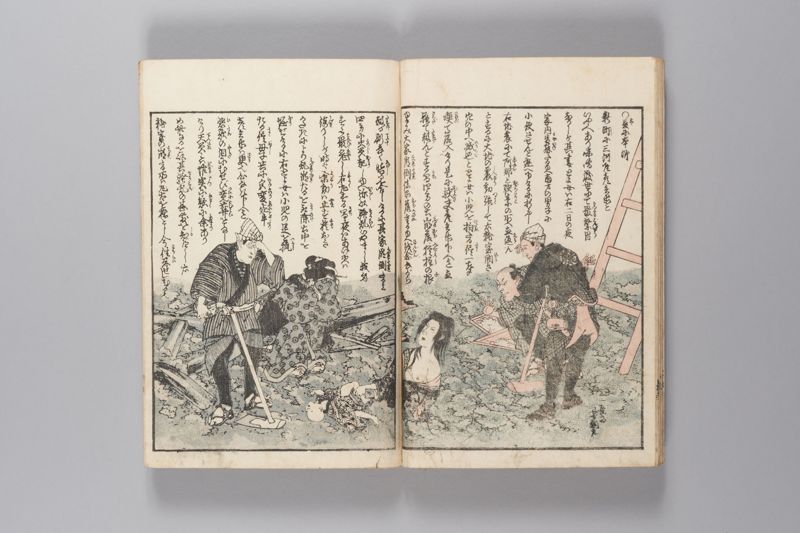
【右丁・挿絵】
一登斎
芳綱画
○爰(こゝ)に本郷
新町に三河屋彦兵衛と
いふ人あり味噌渡世にて最(もつとも)繁昌(はんぜう)
なりしが其妻とよ女は右二日の夜
家内皆 寝(いね)たるゆへ当方の男子に
小便させんと庭へ下けるに折ふし
右地震にて阿那(あなや)と駚(おどろき)素(もと)の所へ立 返(かへら)ん
とするに大地の震動(しんどう)強(つよく)して右糀室 開(ひら)き
穴の中へ滅込(めりこむ)ととよ女は小児を拍(いたき)たる侭(まゝ)一声
喚(さけび)て落入けり是に駚(おどろき)夫彦兵衛下人迄立
騒(さはぎ)て赦(たすけ)んとする間(うち)四方の土 崩落(くづれおち)猶(なを)柱(はしら)の根(ね)
ゆるみ大家 崩倒(くつれたふれ)諸品 落重(おちかさな)るゆへ残念(さんねん)ながら
【左丁・挿絵】
赦(たすけ)る術(てたて)なく暫(しばし)見合しけるに其家 崩倒(くつれたふれ)たる上
四方に火災(くはじ)起(おこり)しゆへ弥(いよ〳〵)以 騒乱(そうらん)いやまし我身
すら最(はなはだ)危(あやう)し右左(とやかく)する間(うち)夜はあけ火は
鎮(しづま)りしが時々 余動(よどう)は止(やま)ず捨(すて)おき
かたきにより乱崩(みだれくつれ)たるを取除(とりのけ)土中を
堀(ほり)せけるに右とよ女は小児の足を㧓(つかみ)
たる侭(まゝ)母子(ぼし)共に色(いろ)変(かはり)死卒(しにはてたり)
彦兵衛は更(さら)也心なき下人迄
悲歎(ひだん)の泪(なみだ)にむせび竟(つひに)葬(とむらひ)をなし
けり天災(てんさい)とは雖(いへとも)実(じつ)に歎(なげく)に余(あまり)あり
如此なるを以其 騒乱(そうらん)の甚敷を知(しる)べし右
糀室の崩(くつれ)たる所は丸太を橋とし今 往来(わうらい)せしむる也
現代語訳
【右丁・挿絵】
一登斎 芳綱 画
○ここに本郷新町に三河屋彦兵衛という人がいた。味噌の商売をしており、大変繁盛していたが、その妻・とよは、地震の二日(十月二日)の夜、家中の皆が寝ていたため、当家の男児に小用をさせようと庭へ下りた。折しも地震が起こり、「あなや(あっ!)」と驚き、元の場所へ立ち返ろうとしたが、大地の震動が激しく、糀室の蓋が開き、穴の中へめり込んだ。とよは幼子を抱いたまま一声叫んで落ちてしまった。これに驚いた夫・彦兵衛は、下人に至るまで立ち騒ぎ、助けようとするうちに、四方の土が崩れ落ち、さらに柱の根がゆるんで、大きな家屋が崩れ倒れ、諸々の品物が折り重なって落ちてきたため、残念ながら
【左丁・挿絵】
助ける手立てもなく、しばらく様子を見ているうちに、その家が崩れ倒れた上に、四方に火災が起こったため、いよいよもって騒乱はいや増し、我が身でさえ甚だ危うい有様であった。あれこれしているうちに夜は明け、火は鎮まったが、時折余震は止まず、捨ておきがたいことから、乱れ崩れたものを取り除き、土中を掘り進めたところ、とよは幼子の足をつかんだまま、母子ともに顔色が変わり、息絶えていた。彦兵衛はもとより、心なき下人までも悲嘆の涙にむせび、ついに弔いを行った。天災とはいえ、まことに嘆くに余りあることである。このようなことをもって、その騒乱の甚だしさを知るべきである。なお、糀室の崩れた箇所には、丸太を橋として渡し、今は往来させている。
英語訳
**[Right Page — with illustration]**
*Painting by Ittōsai Yoshitsuna*
○ In Hongō Shinmachi there lived a man by the name of Mikawaya Hikobei, who ran a prosperous miso business. On the night of the second day [of the tenth month], while all members of the household were asleep, his wife Toyo went down into the garden to let the young boy of the house relieve himself. Just at that moment the earthquake struck. Crying out "Anaya!" in shock, she attempted to return to where she had been standing, but the ground shook so violently that the cover of the kōji chamber burst open, and she was swallowed into the pit. Toyo fell in with a single scream, still clutching her infant child. Her husband Hikobei and even the servants were thrown into a panic and tried desperately to rescue her, but as they did so, the earth on all sides came crashing down, the footings of the pillars gave way, the great house collapsed, and all manner of objects fell in upon one another — and so, to their great sorrow,
**[Left Page — with illustration]**
— there was no means of saving her, and they could only stand by helplessly. As the house lay in ruin all around them, fires broke out on every side, throwing everything into even greater chaos, and their own lives were in grave peril. By the time they had managed to get through the night, dawn had broken and the fires had subsided — yet aftershocks continued without pause. Unable to leave the matter as it was, they cleared away the scattered debris and dug into the earth, where they found Toyo still clutching the child's feet, both mother and child having changed color and breathed their last. Hikobei's grief goes without saying, but even the unfeeling servants were choked with tears of sorrow, and in the end they held a funeral for the deceased. Though it was a natural disaster, it is truly a matter for profound lamentation. From such an account, one may grasp the severity of the chaos that prevailed. As for the place where the kōji chamber collapsed, logs have been laid across it as a bridge, and people now pass over it in their daily comings and goings.