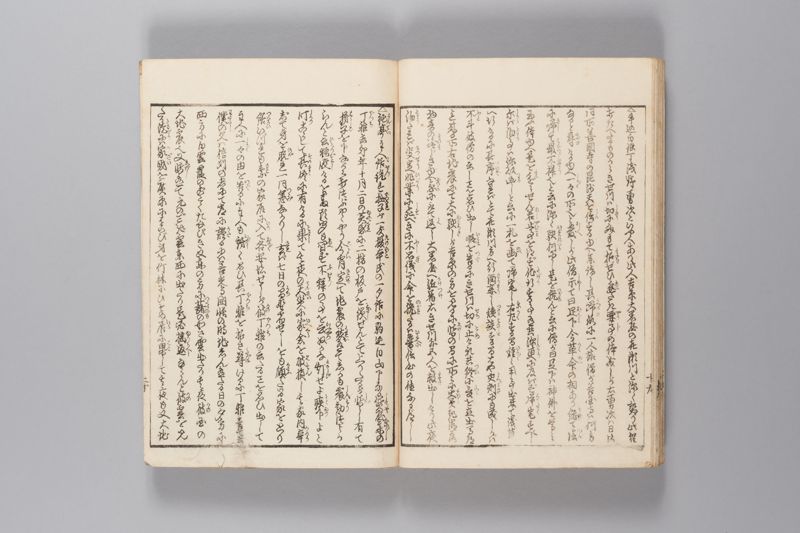
翻刻
【右丁】
△牛込白銀丁浅野勇次といふ人あり此人吉原大黒屋の喜瀬川と深く契り此程
打たへたるものからきせ川は切(しきり)に文もて招(まねき)ぜひ逢(あい)たき要事(やうじ)の体成しが右勇次は日比
同所善国寺の毘沙天を信(しん)ずるゆへ参詣し其 帰路(かへるさ)に一人旅僧が善国寺は何方
なると尋(たづね)けるゆへ一々(しか〳〵)の所也と教(おしへ)しが此僧 示(しめし)て曰 足下(おんみ)今 革命(かくめい)の相あり総(そうじ)て陰(いん)
に帰(きし)て最(はなはだ)不祥(ふせう)也と云に深く駭(おどろき)何(いか)にし是を脱(のがれ)んと云に僧が曰足下は神仏を尊み
玉ふ体ゆへ是を進(まい)らせん若(もし)止事(やむこと)を得ず他行(たげう)する事有共 深更(しんかう)に及ばず帰宅(きたく)すべし
尓(しから)ば泊(とまる)事は弥以 凶(わる)しと云に一礼を述(のべ)て帰宅し右左(とにかく)する間 種々(いろ〳〵)用事出来て浅草
へ行けるに其 序(ついで)なればとて喜瀬川方へ行 酒宴(さかもり)し積(つもる)談(はなしを)する間はや亥刻(よつどき)にも成しかば
不斗(ふと)彼僧の云しことを思ひ出し暇(いとま)を告(つぐ)るにきせ川は切(せつ)に止(とめ)けれ共 終(つひ)に爰(こゝ)を立出馬道
迄来る所右地震にて大に駭(おとろき)しが吉原の方を見るに暫(しはし)の間に所々に火災(くはし)起崩落
物音の冷(すさま)じきゆへ急(にはか)に取て返(かへ)し大黒屋へ駈着(かけつけ)右きせ川外五人を救(たすけ)出しけり此夜
泊(とまり)たれば決定(けつぜう)非業(ひがう)に死(しす)べきに不思儀(ふしぎ)に命を脱(のがれ)たるは普(ひとへに)信心の徳なるべし
【左丁】
△鈍亭(とんてい)主人 話説(わせづ)す拙子(やつかれ)が一度 榎本(えのもと)氏の一夕話に駒込白山下なる質屋(しちや)某(なにがし)の
丁稚(でつち)去卯年十月二日の黄昏(ゆふぐれ)に二階の板戸を鎖(とざし)せんとて上りたるが暫(しば)し有て
梯子(はしご)を下ながら打つぶやくやう今宵(こよい)定(きはめ)て地震の愁(うれい)有てしかも震動(しんとう)つよか
らんと《振り仮名:云独■|ひとりごとし》けるを番頭聞も肎(あへ)ず不祥(ふせう)の事を云(いふやり)ぬるな灯(ともしび)せよ疾(とく)下(おり)よと
叮(しかり)こらして其侭(そのまゝ)に有けるに果(はたし)て其夜の天災(てんさい)に家(いへ)倉(くら)を破損(はそん)し其家内 辛(かろう)
じて身を脱(のが)れ一同 恙(つつが)なかりし去(され)ば七日の間(うち)野宿せしをも傾(かたふ)たる家をとり
繕(つくろひ)いづれも素(もと)の家居に入(いり)て各(おの〳〵)安堵せしが彼(かの)丁稚(でつち)の云たるを思ひ出して
主人に一々(しか〳〵)の由を告(つぐ)るに主人も訝(いぶかし)く思ひ其 丁稚(でつち)を招き尋(たづね)けるに丁稚答て云
僕(わたくし)の父は信州の者にて常に談(かた)るには善光寺開帳の時地しん有たる日の夕方に
西方に白雲霞のごとくたなびき又東の方に藷(つくねいも)の如き雲出たり其夜 彼(かの)国の
大地震也又 暫(しばし)有て元のごとぎ雲東西に出たり是必 揺返(ゆりかへし)ならんと彼(かの)雲を見
たる徒(ともがら)には家財(かざい)を広原にはこび身を竹林にひそめ居(いる)に果(はた)して其夜も又大地
現代語訳
【右丁】
△牛込白銀町に浅野勇次という人物がいた。この人は吉原の大黒屋の喜瀬川と深く契りを結んでおり、しばらく途絶えていたものの、喜瀬川は盛んに手紙で招き、ぜひ逢いたい用事があるという様子であった。しかし勇次は日頃から同所の善国寺の毘沙門天を信仰していたため参詣し、その帰り道に一人の旅の僧が「善国寺はどちらですか」と尋ねてきたので、「それはこういう場所です」と丁寧に教えた。するとこの僧が示して言うには、「あなたには今、激変の相が出ています。総じて陰に傾いており、大変不吉です」と言った。勇次は深く驚き、「どうすればこれを免れられるか」と言うと、僧は「あなたは神仏を尊んでおられる様子ゆえ、これをお伝えしましょう。もしやむを得ず外出することがあっても、深夜に及ばず帰宅なさいませ。泊まることはますます凶と出ます」と言った。勇次は一礼して帰宅し、あれこれしているうちにさまざまな用事が出来て浅草へ行くことになり、その序でとばかりに喜瀬川のもとへ行って酒宴を開き、積もる話をしているうちに、もはや亥の刻(夜十時頃)にもなった。ふとあの僧の言ったことを思い出し、暇を告げると、喜瀬川は切に引き留めたが、ついにそこを立ち出て、馬道まで来たところで例の地震に遭い、大いに驚いた。吉原の方を見れば、しばらくの間に所々に火災が起き、崩れ落ちる物音のすさまじいことから、急いで引き返し、大黒屋へ駆けつけ、喜瀬川はじめ五人を救い出した。もしあの夜泊まっていれば、決して非業の死を遂げていたであろうに、不思議にも命を救われたのは、ひとえに信心の徳によるものであろう。
【左丁】
△鈍亭主人が語る。拙者がかつて榎本氏の夕話の席に招かれた際のことである。駒込白山下にある質屋の某の丁稚が、去る卯年十月二日の夕暮れに、二階の板戸を閉めようとして上がったが、しばらくして梯子を下りながら独り言のように「今夜はきっと地震の憂いがあって、しかも揺れが強いだろう」とつぶやいた。それを番頭が聞いて取り合わず、「不吉なことを言うものではない。灯りをつけろ、早く下りろ」と叱りつけてそのままにしていたところ、はたしてその夜の天災によって家や蔵が破損した。その家の者たちはかろうじて身を逃れ、一同無事であった。しかし七日の間は野宿し、その後傾いた家を取り繕い、いずれも元の家居に入ってそれぞれ安堵した。そこであの丁稚の言ったことを思い出し、主人に一部始終を告げると、主人も不思議に思い、その丁稚を招いて尋ねたところ、丁稚は答えて言った。「私の父は信州の者で、常々語るには、善光寺の開帳の時に地震があった日の夕方に、西の方に白い雲が霞のようにたなびき、また東の方に自然薯のような雲が出た。その夜、あの国で大地震があった。またしばらくして元のような雲が東西に出た。これはきっと揺り返しであろう、と。あの雲を見た人々は家財を広い原に運び、身を竹林に潜めていたところ、はたしてその夜もまた大地(震があった)……」
英語訳
**[Right Page]**
△ In Shiroganechō, Ushigome, there lived a man by the name of Asano Yūji. He had formed a deep attachment to a courtesan called Kisegawa of the Daikoku-ya establishment in the Yoshiwara. Though some time had passed since they had last met, Kisegawa had been persistently sending letters urging him to come, and appeared to have urgent matters she wished to discuss in person. However, as Yūji was a devout everyday worshipper of the Bishamonten at Zenkokuji Temple in the same area, he went there first to pay his respects. On his way home, a lone traveling monk asked him, "Which way is Zenkokuji Temple?" and Yūji carefully gave him directions. The monk then told him: "You currently show signs of imminent calamity. Overall, you are inclined toward the shadow, which is most inauspicious." Yūji was deeply alarmed and asked how he might escape this fate. The monk replied: "As you appear to be a devout person who reveres the gods and Buddhas, I will share this with you. Even if you must go out for unavoidable reasons, return home before the late hours of the night. To spend the night away from home would be all the more inauspicious." Yūji gave a polite bow and returned home. While attending to this and that, various errands came up and he had occasion to go to Asakusa, and thinking it a convenient opportunity, he visited Kisegawa's quarters, where they held a drinking party and talked of things that had accumulated between them. Before long it had already reached the Hour of the Pig (around 10 p.m.). Suddenly remembering what the monk had told him, he took his leave, but Kisegawa urgently pressed him to stay. Nevertheless, he finally departed, and had come as far as Umamichi when the earthquake struck, giving him a tremendous fright. Looking toward the Yoshiwara, he saw fires breaking out in various spots within moments, and the crashing sounds of things collapsing were terrible to hear. He hurriedly turned back, rushed to the Daikoku-ya, and rescued Kisegawa and five others. Had he spent the night there, he would surely have met a violent death; that he was saved so miraculously must be attributed entirely to the virtue of his faithful devotion.
---
**[Left Page]**
△ The Master of Dontei relates the following account. At a one-evening gathering at the residence of Mr. Enomoto, I once heard the following: A shop boy (*detchi*) employed at a pawnbroker's in Komagome Hakusan-shita, on the evening of the second day of the tenth month of that Year of the Hare, had gone upstairs to close and bolt the second-floor wooden shutters, when, after a short while, as he descended the ladder, he muttered to himself: "Tonight there will surely be the sorrow of an earthquake, and a strong one at that." The head clerk heard this but paid it no heed, and scolded the boy harshly: "Don't say such ominous things! Light the lamp and get down quickly!" And so things were left as they were. But sure enough, that night's disaster damaged the house and the storehouse. The members of the household barely escaped with their lives and all emerged unharmed. They spent seven days sleeping outdoors, after which they repaired the tilted house, and eventually everyone moved back into their original homes and settled in with relief. It was then that people recalled what the shop boy had said, and reported the matter in full detail to the master of the house. The master found it remarkable and called the shop boy to question him. The boy answered and said: "My father is from Shinshū province and often told the following story: On the evening of the day when a great earthquake struck during the period of the Zenkōji Temple's open display of its sacred image, white clouds trailed across the western sky like wisps of haze, and in the eastern sky appeared a cloud shaped like a Japanese mountain yam (*tsukuneimo*). That night a great earthquake struck the province. Then after a short while, similar clouds appeared again in the east and west. Thinking this must surely be a major aftershock, those who had seen the clouds carried their household goods out to open fields and hid themselves among bamboo groves — and indeed, that very night once again a great earth-[quake struck]…"