翻刻
【右丁】
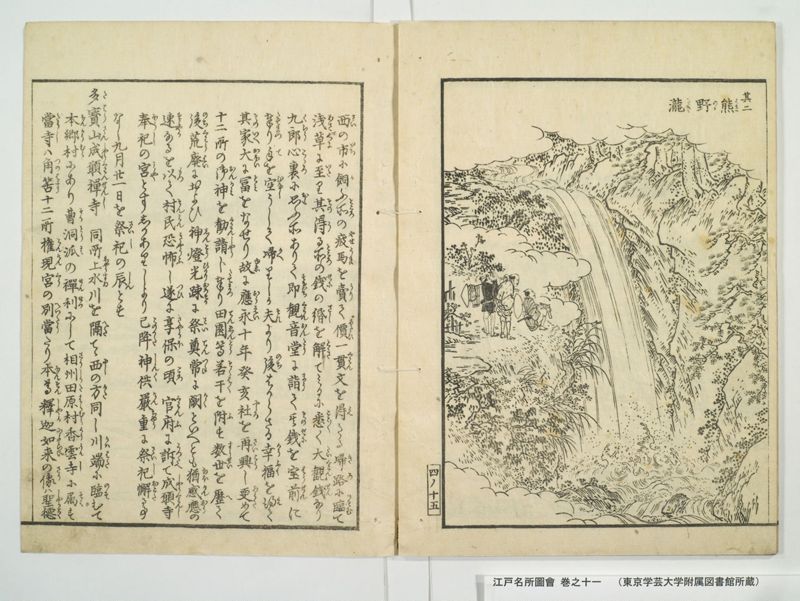
其二
熊(くま)
野(のゝ)
瀧(たき)
【左丁】
西(さい)の市(いち)に飼(か)ふ所(ところ)の疲馬(やせうま)を売(うり)て価(あたひ)一貫文( くわん )を得(え)たる 帰路(きろ)に臨(のそむ)て
《振り仮名:浅草|あさくに#1》に至(いた)り其(その)得(う)る所(ところ)の銭(せに)の緡(さし)を解(とき)てみるに悉(こと〳〵)く大観銭(たいくわんせん)なり
九郎(くらう)心裏(こゝろ)に思(おも)ふ所ありて即(すなはち)観音堂(くわんおんたう)に詣(まう)て其銭(そのせに)を宝前(はうせん)に
奉(たてまつ)り手(て)を空(むなし)うして帰(かへ)りしか夫(それ)より後(のち)はからさる幸福(かうふく)を得(え)て
其家(そのいへ)大(おほい)に富(とみ)をなせり故(ゆゑ)に応永(おうえい)十年癸亥 社(やしろ)を再興(さいこう)し更(あらた)めて
十二所の御神(おんかみ)を勧請(くわんしやう)し奉(たてまつ)り田園(てんゑん)等(とう)若干(そくはく)を附(ふ)す数世(すうせい)を歴(へ)て
後(のち)荒廃(くわうはい)におよひ神燈(しんとう)光疎(ひかりおろそか)に祭奠(さいてん)常(つね)に闕(かく)といへとも猶(なほ)感応(かんおう)の
速(すみやか)なるを以(もつ)て村民(そんみん)恐怖(きやうふ)し遂(つひ)に享保(きやうほ)の頃(ころ) 官府(くわんふ)に訴(うつたへ)て成願寺(しやうくわんし)
奉祀(ほうし)の宮(みや)とすしかありしより已降(このかた)神供(しんく)厳重(けんちゆう)に祭祀(さいし)懈(おこた)る事
なし九月廿一日を祭祀(さいし)の辰(しん)とす
多宝山(たはうさん)成願禅寺(しやうくわんせんし) 同所 上水川(しやうすゐ )を隔(へた)てゝ西(にし)の方(かた)同し川端(かははた)に臨(のそ)むて
本郷村(ほんかうむら)にあり曹洞派(そうとうは)の禅刹(せんせつ)にして相州(さうしう)田原村(たはらむら)香雲寺(かううんし)に属(そく)す
当寺(たうし)は角筈(つのはす)十二所権現宮( こんけんくう)の別当(へつたう)たり 本尊(ほんそん)釈迦如来(しやかによらい)の像(さう)は聖徳(しやうとく)
現代語訳
【右丁】
その二
熊野滝
【左丁】
西の市で飼っていた痩せ馬を売って、代金一貫文を得た。帰路に浅草に立ち寄り、得た銭の緡(さし)を解いて見ると、すべて大観銭であった。九郎は心中思うところがあって、すぐに観音堂に参詣し、その銭を仏前に奉納して、手ぶらで帰った。それ以後は思いがけない幸福を得て、その家は大いに富を成した。そのため応永十年癸亥に社を再興し、あらためて十二所の御神を勧請申し上げ、田園等若干を寄進した。数世代を経た後、荒廃に及び、神燈の光も疎かになり、祭礼も常に欠けるようになったが、なお霊験が速やかであることから村民は畏敬し、ついに享保の頃、官府に訴えて成願寺を奉祀の宮とした。それ以来、神供は厳重に、祭祀を怠ることがない。九月二十一日を祭祀の日とする。
多宝山成願禅寺 同所、上水川を隔てて西の方、同じ川端に臨んで本郷村にある。曹洞派の禅刹で、相州田原村香雲寺に属する。当寺は角筈十二所権現宮の別当である。本尊釈迦如来の像は聖徳...
英語訳
【Right Page】
Part Two
Kumano Waterfall
【Left Page】
A man sold an emaciated horse he had been keeping at the western market and obtained one kan-mon in payment. On his way home, he stopped at Asakusa, and when he untied the string of coins he had received, he found they were all Taikan coins. Kuro had some thoughts about this in his heart, so he immediately went to worship at the Kannon Hall and offered those coins before the Buddha, returning home empty-handed. From then on, he gained unexpected good fortune, and his household became very wealthy. Therefore, in the 10th year of Oei, year of the Metal Pig (1403), he rebuilt the shrine and once again invited the twelve deities to reside there, donating various rice fields and gardens. After several generations, it fell into ruin, the sacred lamps grew dim, and festivals were often neglected. However, because divine responses remained swift, the villagers held it in awe. Finally, around the Kyoho era, they petitioned the government to make Jogansji Temple responsible for its worship. Since then, divine offerings have been made strictly, and religious ceremonies are never neglected. September 21st is designated as the festival day.
Tahozan Jogan Zen Temple: Located in the same area, across the aqueduct to the west, facing the same riverbank in Hongo Village. It is a Zen temple of the Soto sect, belonging to Koun-ji Temple in Tahara Village, Soshu Province. This temple serves as the betto (administrator) of Tsunohazu Junisho Gongen Shrine. The statue of the principal deity, Shakyamuni Buddha, is by Shotoku...