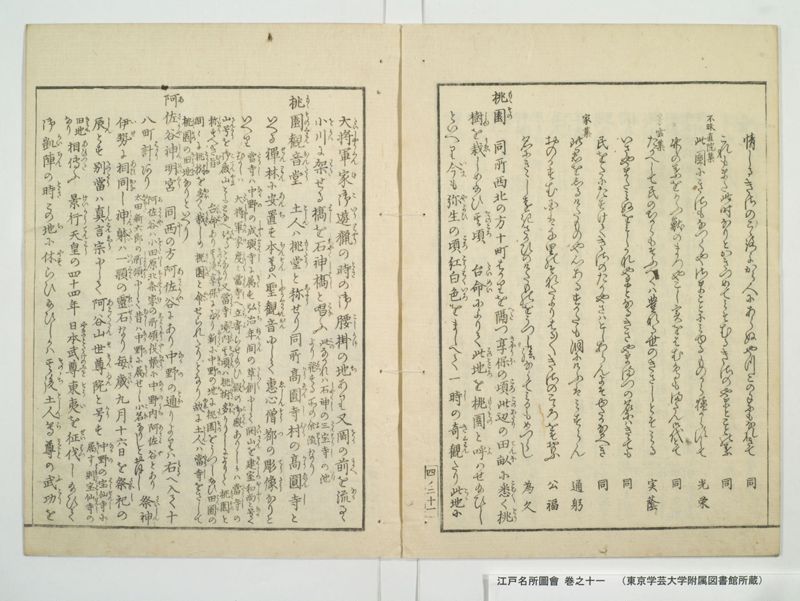
翻刻
【右丁】
情しるきさのこゝろよから人にあらぬやつこの手にもなれきて 同
これもまた此時なりとかきつめてみそむるきさのやまとことの葉 同
《割書:不昧直院集》
此国にきさもなつくやさまことにみゆるものから猛からすして 光栄
竹の葉をかふ獣のまつやこし実をはむ鳥もまたん御代とて 同
《割書:芳雲集》
たかへして民のちからもそふへくは豊なる世のきさしとそみる 実蔭
いさやまたみぬをみしかなやまとなるきさやままつの名にはきゝても 同
民をたにたすけてきさのたかやさはとしあらんよそゆたかなるへき 同
《割書:家集》
此君をしるけたものや心あるすかたも洞にけふはみすらん 通躬
おのかすむ国は千里のそなたよりはる〳〵きさのこゝろをそおもふ 公輻
名にきゝし遠きさかひのけたものをうつし絵ならてみるもめつらし 為久
桃園(もゝその) 同所西北の方十町はかりを隔(へた)つ享保(きやうほ)の頃(ころ)此辺(このあたり)の田畝(てんほ)に悉(こと〳〵)く桃(とう)
樹(しゆ)を栽(うゑ)しめ給ひ其頃(そのころ) 台命(たいめい)によりて此地(このところ)を桃園(もゝその)と呼(よ)はせ給ひし
といへり今(いま)も弥生(やよひ)の頃(ころ)紅白(こうはく)色(いろ)をましへて一時( し)の奇観(きくわん)たり此地(こゝ)に
【左丁】
大将軍家(たいしやうくんけ)御遊猟(こいうりやう)の時(とき)の御腰掛( こしかけ)の地(ち)あり又 岡(をか)の前(まへ)を流(なか)るゝ
小川(をかは)に架(わた)せる橋(はし)を石神橋(しやくしはし)と唱(とな)ふ《割書:此(この)なかれは石神(しやくし)の三宝寺(さんはうし)の池(いけ)|より発(はつ)する所の余流(よりう)なり》
桃園観音堂(もゝそのくわんおんたう) 土人(としん)は桃堂(もゝたう)と称(しよう)せり同所 高円寺村(かうゑんしむら)の高円寺(かうゑんし)と
いへる禅林(せんりん)に安置(あんち)す本尊(ほんそん)は聖観音(しやうくわんおん)にして恵心僧都(ゑしんそうつ)の彫像(てうさう)なりと
いへり《割書:当寺(たうし)は中野(なかの)の成願寺(しやうくわんし)に属(そく)す弘治年間(こうちねんかん)の草創(さう〳〵)にして開山(かいさん)を建室和尚(けんしつおしやう)と号(なつ)く|むかしは 大将軍家(たいしやうくんけ)度々(たひ〳〵)当寺(たうし)へ立寄(たちよ)らせ給ひ仮(かり)の御殿(こてん)ありしかは当寺(たうし)の》
《割書:山号(さんかう)を御殿山(こてんやま)ともとなへ侍(はへ)るとなり又 当寺(たうし)境内(けいたい)其頃(そのころ)は桃樹(もゝのき)多(おほ)かりしによりて桃園(もゝその)と|称(しよう)すへき旨(むね) 台命(たいめい)あり其後(そのゝち)享保(きやうほ)に至(いた)り新(あらた)に中野(なかの)の地(ち)に桃園(もゝその)をうつし給ひ田圃(てんほ)の》
《割書:間々に桃樹(とうしゆ)を多(おほ)く栽(うゑ)しめ桃園(もゝその)と命(めい)せられたりとなり故(ゆゑ)に土人(としん)は当寺(たうし)をさして|桃園(もゝその)の旧地(きうち)なりといへり》
阿佐谷神明宮(あさかやしんめいくう) 同 西(にし)の方 阿佐谷(あさかや)にあり中野(なかの)の通(とほ)りよりは右(みき)へ入て十
八町 計(はかり)あり《割書:阿佐谷(あさかや)は小田原北条家(をたはらほうてうけ)の所領役帳(しよりやうやくちやう)に中野内(なかのうち)阿佐谷(あさかや)とあり|太田新六郎(おほた )の所領(しよりやう)にして昔(むかし)は中野(なかの)に属(そく)せし小名(こな)なりしとおほし》祭神(さいしん)
伊勢(いせ)に相同(あひおな)し神体(しんたい)は一顆(いつくわ)の霊石(れいせき)なり毎歳(まいさい)九月十六日を祭祀(さいし)の
辰(しん)とす別当(へつたう)は真言宗(しんこんしう)にして阿谷山(あこくさん)世尊院(せそんゐん)と号(かう)す《割書:中野(なかの)の宝仙寺(はうせんし)に|属(そく)す則(すなはち)宝仙寺(はうせんし)の》
《割書:旧地(きうち)|なり》相伝(あいつた)ふ 景行天皇(けいかうてんわう)の四十四年 日本武尊(やまとたけのみこと)東夷(とうい)を征伐(せいはつ)し給ひて
御凱陣( かいちん)の時(とき)この地(ち)に休(やす)らひ給ひしかは其後(そのゝち)土人等(としんら)尊(みこと)の武功(ふこう)を
現代語訳
【右丁】
情を知る象の心よ 唐人にあらぬ奴僕の手にも馴れきて 同
これもまた此の時なりと書き留めて 見初める象の大和言の葉 同
(不昧直院集)
この国に象も馴づくや 誠に見ゆるものから 猛からずして 光栄
竹の葉を飼う獣の待つや越し 実を食む鳥も待たん御代とて 同
(芳雲集)
民を助けて民の力も添うべくば 豊かなる世の兆しとぞ見る 実蔭
いざやまた見ぬを見しかな 大和なる象や真松の名には聞きても 同
民をだに助けて象の力さは 年あらん代々豊かなるべき 同
(家集)
この君を知る獣なや心ある 姿も共に今日は見すらん 通躬
己が住む国は千里の彼方より 遥々象の心をぞ思う 公輻
名に聞きし遠き境の獣なを 写し絵ならで見るも珍らし 為久
桃園 同所西北の方十町ばかりを隔てる。享保の頃、この辺りの田畑に悉く桃の木を植えさせ給い、その頃、台命によってこの地を桃園と呼ばせ給いしという。今も弥生の頃、紅白色を交えて一時の奇観である。この地に
【左丁】
大将軍家御遊猟の時の御腰掛けの地がある。また岡の前を流れる小川に架かる橋を石神橋と唱える(この流れは石神の三宝寺の池より発する所の余流である)。
桃園観音堂 土人は桃堂と称している。同所高円寺村の高円寺という禅林に安置する。本尊は聖観音にして恵心僧都の彫像なりという(当寺は中野の成願寺に属す。弘治年間の草創にして開山を建室和尚と号く。昔は大将軍家度々当寺へ立ち寄らせ給い、仮の御殿ありしかば当寺の山号を御殿山とも唱え侍るとなり。また当寺境内その頃は桃の木多かりしによりて桃園と称すべき旨、台命あり。その後享保に至り新たに中野の地に桃園を移し給い、田圃の間々に桃の木を多く植えさせ桃園と命せられたりとなり。故に土人は当寺をさして桃園の旧地なりという)。
阿佐ヶ谷神明宮 同じく西の方阿佐ヶ谷にあり。中野の通りよりは右へ入って十八町計りある(阿佐ヶ谷は小田原北条家の所領役帳に中野内阿佐ヶ谷とあり、太田新六郎の所領にして昔は中野に属せし小名なりしと思し)。祭神は伊勢に相同じ、神体は一顆の霊石なり。毎歳九月十六日を祭祀の辰とす。別当は真言宗にして阿谷山世尊院と号す(中野の宝仙寺に属す、則ち宝仙寺の旧地なり)。
相伝える、景行天皇の四十四年、日本武尊東夷を征伐し給いて御凱陣の時、この地に休らい給いしかば、その後土人等尊の武功を
英語訳
【Right Page】
The elephant knows emotions, its heart gentle; even in the hands of servants who are not Chinese, it has become tamed. — Same [author]
This too is noted as being of this time; the Japanese words first glimpsed of the elephant. — Same
(Fumyō Chokuin-shū)
In this country the elephant too becomes tame; truly it appears gentle, not fierce. — Kōei
The beast that feeds on bamboo leaves awaits; the birds that eat fruit also await this reign. — Same
(Hōun-shū)
If the people help and the people's strength is added, this is seen as a sign of a prosperous age. — Jitsuin
Come now, let us see what we have not seen; the elephant in Yamato, even if we know only the name of the true pine. — Same
If only the people are helped, with the elephant's strength, the generations to come should be prosperous. — Same
(Personal Collection)
Does this beast know our lord? With a heart that understands, its form too is seen today. — Tsugumi
From its homeland thousands of ri away, I think of the elephant's heart from afar. — Kōfuku
The beast from distant lands famous in name, rare to see not in painting but in reality. — Tamehisa
Momozono (Peach Garden): Located about ten chō northwest of the same place. During the Kyōhō period, peach trees were planted throughout all the rice fields in this area, and at that time, by imperial command, this place was ordered to be called Momozono. Even now, during the third month, red and white colors intermingle, creating a spectacular sight for a time. In this place there is
【Left Page】
a resting spot used by the Shogun during hunting excursions. Also, the bridge spanning the small river flowing in front of the hill is called Shakujin Bridge (this stream is the overflow from the pond at Sanpōji temple in Shakujin).
Momozono Kannon Hall: The locals call it Momo-dō. It is housed in the Zen temple called Kōenji in Kōenji Village at the same location. The principal image is Shō Kannon, said to be carved by the monk Eshin Sōzu (This temple belongs to Jōganji in Nakano. Founded during the Kōji period with Kenshitsu Oshō as the founding priest. In the past, the Shogun frequently stopped at this temple, and since there was a temporary palace, the temple's mountain name was also called Goten-yama. Also, since the temple grounds at that time had many peach trees, there was an imperial command to call it Momozono. Later, in the Kyōhō period, the peach garden was newly relocated to Nakano, with many peach trees planted among the rice fields and named Momozono. Therefore, locals refer to this temple as the old site of Momozono).
Asagaya Shinmei Shrine: Located in Asagaya to the west of the same area. It is about eighteen chō to the right from Nakano Street (Asagaya appears in the Odawara Hōjō family's domain register as "Asagaya within Nakano," part of Ōta Shinrokurō's domain, and was likely a small place name that formerly belonged to Nakano). The enshrined deity is the same as at Ise, and the sacred object is one sacred stone. Every year, September 16 is the day of ritual worship. The head priest follows Shingon Buddhism and is called Akokusan Sesonin (It belongs to Hōsenji in Nakano, which is the former site of Hōsenji).
According to tradition, in the 44th year of Emperor Keikō's reign, when Yamato Takeru no Mikoto conquered the eastern barbarians and was returning in triumph, he rested at this place, and afterwards the local people [honored] the prince's military achievements.