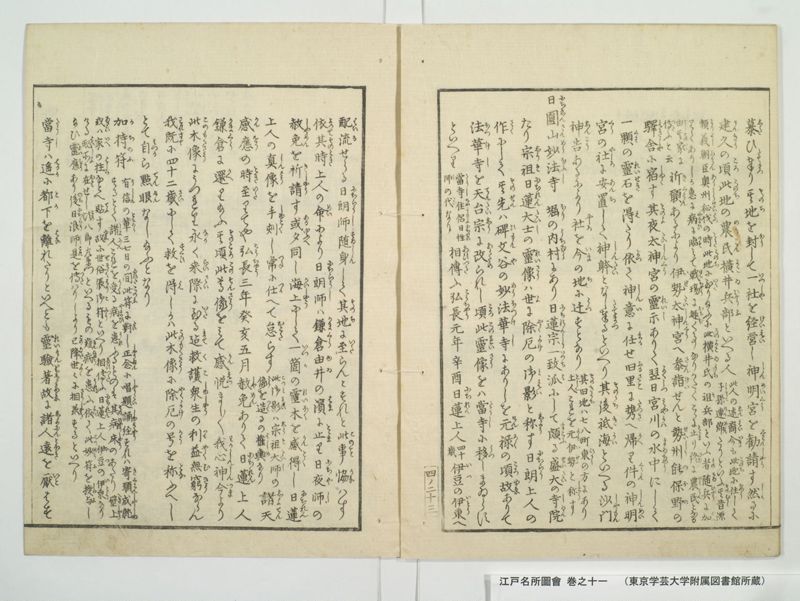
翻刻
【右丁】
慕(した)ひ奉(たてまつ)り其地(そのち)を封(ほう)して一社(いつしや)を経営(けいえい)し神明宮(しんめいくう)を勧請(くわんしやう)す然(しか)るに
建久(けんきう)の頃(ころ)此地(このち)の農民(のうみん)横井兵部(よこゐひやうふ)といへる人《割書:此人の遠裔(ゑんえい)今(いま)も此地(このち)に住(ちゆう)して|子孫(しそん)連綿(れんめん)たりといふ其昔(そのむかし)源》
《割書:頼義朝臣(よりよしあそん)奥州征伐(あうしうせいはつ)の時(とき)此地(このち)に至(いた)り給ふに此(この)横井氏(よこゐうち)の祖(そ)兵部といふ者(もの)随兵(ちゐひやう)#1に加(くは) |りてありしか急に病(やまひ)に臨(のそ)みて戦場(せんちやう)に趣(おもむ)く事なりかたくこゝに止(とゝま)り終(つひ)に農民(のうみん)となる》
《割書:由(よし)其家(そのいへ)に|伝(つた)ふと云》祈願(きくわん)あるにより伊勢太神宮(いせたいしんくう)へ参詣(さんけい)せんと勢州(せいしう)能保野(のほの)の
駅舎(えきしや)に宿(しゆく)す其夜(そのよ)太神宮(たいしんくう)の霊示(れいし)ありて翌日(よくしつ)宮川(みやかは)の水中(すゐちゆう)にして
一顆( くわ)の霊石(れいせき)を得(え)たり依(よつ)て神意(しんい)に任(まか)せ旧里(ふるさと)に携(たつさ)へ帰(かへ)り件(くたん)の神明(しんめい)
宮(くう)の社(やしろ)に安置(あんち)して神体(しんたい)となし奉(たてまつ)るといへり其後(そのゝち)祗海(きかい)といへる沙門(しやもん)
神告(しんこう)あるにより社(やしろ)を今(いま)の地(ち)に遷(うつ)すとなり《割書:其(その)旧地(きうち)は七八町 東(ひかし)の方にあり |土人(としん)これを元伊勢(もといせ)と称(しよう)す》
日円山(にちゑんさん)妙法寺(めうほふし) 《振り仮名:堀の内村|ほり うちむら》にあり日蓮宗一致派(にちれんしういつちは)にして頗(すこふ)る盛大(せいたい)の寺院(しゐん)
たり宗祖(しうそ)日蓮大士(にちれんたいし)の霊像(れいさう)は世(よ)に除厄(やくよけ)の御影(みえい)と称(しよう)す日朗上人(にちらう )の
作(さく)にして其先(そのせん)は碑文谷(ひもんや)の妙法華寺(めうほつけし)にありしを元禄(けんろく)の頃(ころ)故(ゆゑ)ありて
法華寺(ほつけし)を天台宗(てんたいしう)に改(あらため)られし頃(ころ)此(この)霊像(れいさう)をは当寺(たうし)に移(うつ)しまゐらす
といへり《割書:当寺(たうし)住侶(ちゆうりよ)日性(にちせい) |師(し)の代(たい)なり》相伝(あひつた)ふ弘長(こうちやう)元年辛酉 日蓮上人(にちれん )《割書:四十|歳》伊豆(いつ)の伊東(いとう)へ
【左丁】
配流(はいる)せらる日朗師(にちらうし)随身(すゐしん)して其地(そのち)に至(いた)らんとすれと此事(このこと)協(かな)はす
依(よつて)其時(そのとき)上人の命(めい)により日朗師(にちらうし)は鎌倉(かまくら)《振り仮名:由井の浜|ゆ ゐ はま》に止(とゝま)り日夜(にちや)師(し)の
赦免(しやめん)を祈請(きしやう)す或夕(あるゆふへ)同し海上(かいしやう)にして一箇(いつか)の霊木(れいほく)を感得(かんとく)し日蓮(にちれん)
上人の真像(しんさう)を手刻(しゆこく)し常(つね)に仕(つか)へて怠(おこた)らす《割書:此(この)御影(みえい)は宗祖(しうそ)大師(たいし)の|像(さう)を造(つく)るの権輿(はしめ)なり》諸天(しよてん)
感応(かんをう)の時(とき)至(いた)りてや弘長(こうちやう)三年癸亥五月 赦免(しやめん)ありて日蓮上人(にちれん )
鎌倉(かまくら)に還(かへ)り給ふ其頃(そのころ)此(この)尊像(そんさう)をみて感悦(かんえつ)まし〳〵我(わか)心神(しんしん)今(いま)より
此(この)木像(もくさう)にうつれり永(なか)く来際(らいさい)に至(いた)る迄(まて)救護(くこ)衆生(しゆしやう)の利益(りやく)無窮(むきう)ならん
我(われ)既(すて)に四十二歳( さい)にして救(すくひ)を得(え)しかは此(この)木像(もくさう)に除厄(やくよけ)の号(かう)を称(とな)ふへし
とて自(みつか)ら点眼(てんけん)なし給ふとなり
加持符(かちのふ)《割書:有信(うしん)の輩(ともから)三七日の間(あひた)此符(このふ)に対(たい)し正念(しやうねん)に唱題(しやうたい)誦経(しゆきやう)すれは寄願(きくわん)成就(しやうしゆ)|するとて諸人(しよにん)これを受(うく)る病(やまひ)を患(うれ)ふるものは其(その)病床(ひやうしやう)のあたり壁上(へきしやう)》
《割書:或(あるひ)は家(いへ)の柱(はしら)なとへ貼(てふ)す故(ゆゑ)に世俗(せそく)張御符(はりこふう)といへり相伝(あひつた)ふ日蓮上人(にちれん ) 伊豆(いつ)の伊東(いとう)なり|ける配所(はいしよ)に在(おは)せし頃(ころ)八郎右衛門といへるもの難病(なんひやう)を患(うれ)ふ依(よつ)て此(この)妙符(めうふ)を授与(しゆよ)し》
《割書:給ひ霊応(れいをう)あり後(のち)日浪師(にちらうし)#2是(これ)を伝(つた)はりしより已降(このかた)世々(よゝ)に相承(さうしやう)するといへり》
当寺(たうし)は遥(はるか)に都下(とか)を離(はな)れたりといへとも霊験(れいけん)著(いちしるき)故(ゆゑ)に諸人(しよにん)遠(とほき)を厭(いと)はす
現代語訳
【右丁】
…(神を)慕い奉り、その地を封じて一社を建て、神明宮を勧請した。しかるに建久の頃、この地の農民・横井兵部という人【注:この人の遠い子孫が今もこの地に住み、子孫が連綿と続いているという。その昔、源頼義朝臣が奥州征伐の折にこの地に至られた時、この横井氏の祖・兵部という者が随兵に加わっていたが、急に病にかかり戦場に赴くことができなくなったため、ここに留まり、ついに農民となった由、その家に伝わるという】が祈願があり、伊勢太神宮へ参詣しようと、勢州(伊勢国)能保野の宿駅に泊まった。その夜、太神宮の霊示があり、翌日、宮川の水中から一顆の霊石を得た。そこで神意に任せ、故郷に携えて帰り、かの神明宮の社に安置して神体として奉ったという。その後、祗海という沙門が神のお告げを受け、社を今の地に遷したという。【注:その旧地は七、八町東の方にある。土地の人々はこれを「元伊勢」と称している。】
日円山妙法寺【振り仮名:堀の内村にあり】 日蓮宗一致派であって、頗る盛大な寺院である。宗祖・日蓮大士の霊像は、世に「除厄の御影」と称される。日朗上人の作であって、もとは碑文谷の妙法華寺にあったが、元禄の頃、事情があって法華寺が天台宗に改められた折に、この霊像を当寺に移し奉ったという。【注:当寺住侶・日性師の代のことである。】伝えによれば、弘長元年辛酉、日蓮上人【四十歳】が伊豆の伊東へ
【左丁】
配流された際、日朗師が随身してその地へ向かおうとしたが、それが叶わなかった。そのため、その時、上人の命により、日朗師は鎌倉の由比ヶ浜に留まり、昼夜、師の赦免を祈り請うた。ある夕べ、同じ海上にて一箇の霊木を感得し、日蓮上人の真像を手ずから刻み、常に仕えて怠らなかった。【注:この御影は、宗祖大師の像を造ることの始まりとされている。】諸天の感応の時が至ってか、弘長三年癸亥五月に赦免があり、日蓮上人は鎌倉にお帰りになった。その頃、この尊像をご覧になり、感激なさって、「わが心神は今よりこの木像に移れり。永く来際に至るまで衆生を救護する利益は無窮であろう。我はすでに四十二歳にして救いを得たゆえ、この木像に除厄の号を称えるべし」とおっしゃって、自ら点眼なさったという。
加持符 【注:信心ある者が、二十一日の間、この符に向かって正念をもって唱題・誦経すれば、祈願が成就するとして、諸人これを受ける。病を患う者は、その病床のあたりの壁や、家の柱などへ貼り付けるので、世俗では「張り御符」という。伝えによれば、日蓮上人が伊豆の伊東の配所においでになった頃、八郎右衛門という者が難病を患い、そのため、この妙符を授与なさったところ霊応があった。後に日朗師がこれを受け継いでより以降、代々相承してきたという。】
当寺は遥かに都の中心部から離れているとはいえ、霊験が著しいゆえ、諸人は遠いことを厭わず…
英語訳
【Right Page】
…(The people) revered (the deity) and enclosed that land, establishing a shrine and enshrining the Shinmei-gū deity there. Around the Kenkyū era, a farmer in this area named Yokoi Hyōbu [Note: The distant descendants of this man are said to still live here today, with the family line continuing unbroken. Long ago, when Minamoto no Yoriyoshi, the Imperial Advisor, came to this land during his campaign to subjugate Ōshū, the ancestor of the Yokoi clan, a man named Hyōbu, had joined his forces, but was suddenly struck by illness and could not proceed to the battlefield. He therefore remained here and eventually became a farmer—so it is transmitted in that family.] had a wish to fulfill, and set out to make a pilgrimage to the Grand Shrine of Ise. He lodged at a post station at Nohono in Seishū (Ise Province). That night, he received a divine revelation from the Grand Shrine, and the following day obtained a sacred stone from the waters of the Miyagawa River. Entrusting himself to the divine will, he carried it back to his home village and enshrined it in the said Shinmei-gū shrine, where it became the sacred object of worship. Afterward, a Buddhist monk named Gikai received a divine revelation and moved the shrine to its present location. [Note: The former site is located seven or eight chō to the east. The local people call it "Moto-Ise" (the Original Ise).]
Nichienji Myōhōji Temple [Furigana: Located in Horinouichi Village] — This is a temple of the Itchi school of the Nichiren sect, and a particularly prosperous establishment. The sacred image of the sect's founder, the Great Teacher Nichiren, is known to the world as the "Yakuyoke no Miei" (the protective portrait against evil and misfortune). It was carved by the Venerable Nichirō, and was originally kept at Myōhōkkeji in Himonya. Around the Genroku era, for certain reasons, when Hokkkeji was converted to the Tendai sect, this sacred image was transferred to the present temple. [Note: This occurred during the abbacy of Nissē, a resident monk of this temple.] According to tradition, in the first year of Kōchō, the year of Kanoto-Tori, the Venerable Nichiren [age forty] was exiled to Itō in Izu.
【Left Page】
The Venerable Nichirō attempted to accompany him to that place, but was unable to do so. Therefore, by order of the Master at that time, Nichirō remained at Yuigahama in Kamakura and prayed day and night for the Master's pardon. One evening, from the same sea, he obtained a sacred piece of driftwood by divine grace, and with his own hands carved a true likeness of the Venerable Nichiren, which he served devotedly without ever slackening. [Note: This sacred image is considered to be the very first carved image of the founding Great Teacher.] When the time of the response from the heavenly deities arrived, a pardon was granted in the fifth month of the third year of Kōchō, the year of Mizunoto-I, and the Venerable Nichiren returned to Kamakura. Around that time, upon viewing this sacred image, he was deeply moved and declared: "My spirit shall henceforth dwell within this wooden image. For all time to come, its merit in protecting and saving sentient beings shall be without end. Since I myself received salvation at the age of forty-two, this wooden image shall be given the title of 'Yakuyoke' (protection against evil)." With these words, he personally performed the eye-opening ceremony (kaigen) for the image.
Kaji-no-fu (Talismanic Amulets) [Note: Those with sincere faith who, over the course of twenty-one days, face this talisman and recite the daimoku and sutras with right mindfulness are said to have their prayers fulfilled; thus people receive these. Those suffering from illness affix it to the wall near their sickbed or to a pillar of the house, which is why common people call it the "Hari-Mifū" (pasted sacred talisman). According to tradition, when the Venerable Nichiren was at his place of exile in Itō in Izu, a man named Hachirozaemon suffered from a serious illness; the Venerable accordingly granted him this wondrous talisman, and miraculous efficacy was witnessed. Since the Venerable Nichirō later inherited this practice, it has been transmitted from generation to generation.]
Although this temple is far removed from the heart of the city, its miraculous efficacy is so remarkable that people do not mind the distance…