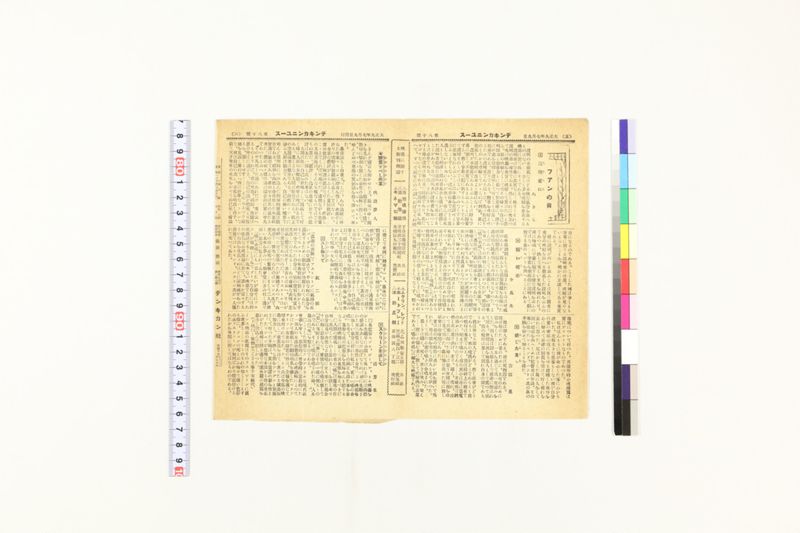
翻刻
【右枠外】
(五) 大正九年七月九日 デンキカンニユース 第八十號
【上段】
ファンの頁
説明者に
あきら
説明の不徹底なほど不快な気分を與へる
ものはない――少くも多少理解を要求する
映畫に於て殊にそうである。
説明者は字幕に忠実なれ!然り!それは
説明の第一条件である。然しそれに先立つ
て先づ映畫を充分に理解して貰ひたいと思
ふ。真の理解なくして只その時々の自己の
判断力と想像力とに依つて無意味に、勝手
に映畫を解釈し説明して行くことは甚しい
粗漏である。誤りである。観者を理解させ
るための説明者である以上は、先づ自己そ
のものから理解してかゝらねば到底、真に
徹底した説明の出来よう筈はない。
説明が不徹底であると云ふことは即ち字
幕に対して不忠実であると云ふことに帰着
する。然し字幕は劇に対するヒントであつ
て説明そのものではない。のみならず字幕
に忠実なれと云ふことは字幕を直訳せよと
云ふことでもない。説明者自身ではさう意
識しないかも知れないが往々、殆んど日本
人として解釈し得ぬ日本語を遥かに超越し
た説明者独特の説明者語によつて耳にする
ことがある。且つ説明者が説明書を有つこ
とは必要である。然しそれにカジリ附いて
する時の説明は常に甚だ曖昧であり、甚だ
ギゴチないものである。結局我々は耳を抑
へて、すべて視覚にのみ訴へねばならぬ破
【中段】
目になるのである。こうした例は少くとも
字幕に対する説明者の注意、理解が足りな
いと云ふことを、明かに立証してゐる事実
である。
故に説明が巧いと云ふことは真に観者に
充分の理解を與へる徹底した説明を云ふの
であつて、決して美しい文句を列ねたり、
或は極端に字幕に偏する様な説明を云ふの
ではない――字幕を徹底的に説明して劇に
対する真のヒントを與へることにある
鋭い暗示
夕鳥生
従来教訓劇として公開されたものは可成
沢山あるが、皆大きな思想問題を取扱つた
研究的態度に偏したものばかりであつて、
通俗的な民衆的なものは餘りなかつた。よ
しんばあつたとしても徹底した、強い印象
を有つたものは殆んどなかつたが、前週の
『囁の合唱』は真に教訓劇として立派な、そ
して通俗的に鋭い暗示を有つてゐた。何等
新味はないが、如何にもプロツトの按配が
巧妙に出来てゐる。ジヨンが運搬車の為に
生れもつかぬ不具者となつた場面等殊にさ
うで、極めて自然であつた。
それよりもそれよりも、泣きたい程哀れな
場面があつた。ジヨンが現在自分の母と知
りつゝ、自分の過古の罪悪のためお母様と
云はれず『御隠居さま!私は飢うて仕様が
ありません。何でもよろしう厶いますから
何卒お恵み下さいませ』と嘆願した。情ある
母親は哀れに思つて其乞食に『私の後につ
いてお出でなさい』と立上つた。其時おゝ
其時!彼は餘りの悲しさ嬉しさに堪へかね
て『お母様』と縋らうとしてならず、悄々と
【下段】
母親について行つた。其発作的心理描写は
実にデリケートなものであつた。
私はほんとうに彼が改心した事に心から
泣いた。左程大きな悪事もしない彼が自分
の妻の幸福の為に有らゆる錯雑した事件を
心に秘めて法律の制裁を受けて行く彼れを
哀れに思つた。私はかうした真に人をして
鋭い暗示を與へしめた監督者は勿論、その
衝に当つたレイモンド、ハツトン氏の真の
手腕を初めて知ることを得た。
感じたまゝ
吉江 勇
彼は罪人である。彼は死刑囚である。
彼は母のために妻のために、生活のために
盗みをした――一生を通じて只一度盗みを
した。而も彼は殺人犯として法律に問はれ
て居る。世間は彼を極悪人として罵つて居
る。彼の犯行は果して彼れ自身の罪であら
うか。
彼は善なる罪人である。然し社会がどう
であらうと、彼の境遇がどうであらうと彼
の犯行は事実である。彼は精神上の弱者で
あつた。絶えず囁やく彼の良心は遂に悪魔
の為めに汚されたのである――其時彼は飜
然と我に還り逃げ、走り、悶え、疲れ、泣
いて我家に帰つた時には最う世間は彼を冷
かに見て居つた。真に悔ひ改めた彼に対し
社会は尚冷酷であつた。
妻は彼の死の瞬間に温かい涙を濺いで呉
れた。母は彼を善なる罪人と見て居つた。
そうして彼の心霊の囁きは合唱された。
悪しきは悶え、死し、善きは笑み、栄え
て――実に心悩む者に対しての解決の言葉
である。『囁の合唱』は雄大な映畫である。
【中央部枠線部縦の文】
映畫に關す
る新刊雑誌
△活動倶楽部 下谷區南稲荷町 其社
△活動雑誌 京橋區三十間堀町 其社
△キネマ旬報 本郷區丸山新町 黒甕社
△スクリン、レツド 北品川新宿五四 其社
△ホートプレー 芝區三田四ノ三二 愛友社
△活動画報 京橋區八丁堀 飛行社
【左頁 上段外枠】
大正九年七月九日発行 デンキカンニユース 第八十號 (六)
【左側上段】
唾棄すべし南某
秋嶺夢人
さんざ寝言を聞かせた上、最後の申し開
きを見れば、こは如何――南某!前々號で
懇切に解剖を施した余輩の論點に對して、
【傍点ここから】殆んど同巧異曲の罵倒論を特【持】ち掛けて来
た【傍点ここまで】。
暴漢須らく自重すべしだ。あの論駁に用
ゐた文豪マキシムに浮身を俏し、此處ぞと
許りの突撃は無鐵砲も甚しいではないか。
余輩の批評がふらふらした妄同批評――
雷同批評――阿謏【諛】的批評なりと? 珍妙も
こゝまでくれば可成りだ。遺憾ながら余輩
の主義主張は、そんな安価なものではござ
らぬ筈だ。批評――真正の意味に於ての批
評は未だ一回も試みた事はない。
人間は真に自己を對稱として開拓して行
く時に人間の全価値、能率は現はれるので
ある。苦しまない人間は駄目である。机上
の空想論者は駄目である。自然のリヅムに
逆ふ人間は駄目である。自己の狭い境界で
殆んど慣用的につみ込んだ刹那的智識は駄
目である。精神を肉體と合理化した外套的
智識は駄目である。君の如きは其の最たる
者だ、僕の前々號の論は綜合的に實に平凡
であつたと云へる。
その平凡化した論にあれだけ、事が云へ
るものとすれば、君の邪推、嫉妬、猜疑は
思ひ半ばに過ぎる。自己の論が根底より覆
るを、潔しとせず―――その云ふべき餘
地を見出し兼ねて「彼は野卑なパトロンな
り、彼は自己の主義、主張を明白し得ず、
依て天才聖者の名文をかりて自己化し時論
【中段】
に應じて東西に翻弄す」と、最後の二行に
默思得ず――【傍点ここから】理解し徹底し明記するに何の
感か有らん【傍点ここまで】。南某――君は須らく浅草芸術
の表面の安価な境地に投ぜよ。君以て銘す
べく、人以て赦すべし==その裏面に美く
しき一道の光明あるを知らずして、高慢な
る尊大なる汝――はかなき者よ!自己を瞞
着し、自己の藝術を標榜し幾多の力を頼み
以て得々たる汝――悪むべき藝術中毒者
よ。自分は私見に依て此稿を起したくはな
かつたが、餘りに醜的な彼のセンスに、あ
きれて忙中一矢を報いた譯である。
久し振りで
紅二郎
『農園の薔薇』フアストシーンに気持の良
いパープルの染調色で、平和な村の気分を
描写するために教会堂が映写されてゐた。
そしてモンローの藝術衰頽に対し尠からず
研究中であつた自分は、彼の貧弱な素質を
見出したのである――あの嫌味な表情。芝
居氣な態度は何ぞ!過古とは云へ、それが
彼の素質であつたのだ。バリスケールは一
寸變つた役で面喰つたが無難であつた。此
映畫で一番光つてゐたのはジヨンス氏で、
愛人の為に必死の奮戦――そして二人が楽
しい未来を夢みつゝ教會堂に歩み行く邊り
淡い氣分に包まれてゐた。
『囁の合唱』にも一言したいが餘りにプロ
ツトが複雑してゐてプーアな自分には到
底批評することの出来ない映畫でした。あ
の猛烈な心理描写に於て、吾々か言々する
その自由を見出さぬほどに深刻味があつた
俳優ではレイモンド、ハツトン氏が一人優
れて光つてゐた。
【下段】
スクリーンを通して
淸芳生
○名監督セシル、ビー、デ、ミル映畫を
かくも失【矢】繼早に公開して呉れるDには滿腔
の感謝を表しなければならぬ。『神に見離さ
れた女』『悪魔石』『男性と女性』と一映畫毎
に新しい氣分に打れた私は、更に『囁の合
唱』を見て、より多くの滿足を得た事を喜
ぶ。眞摯な氏の監督振を見極めんと慾する
ならば該映畫に接して其眞價を知るべきだ
○人間の霊魂――作者の『囁』は霊魂の作
用を表現したものと思れる――を拉し來り
自分自身が非常なる窮境に立ち至つた場合
その抱く思想なり、愛情なりの囁は慨【概】して
『悪』に支配され『善』はその一端に觸るゝの
みである。そして囁が合唱された時、人生
最高の『美』を型るのである。
○こうした深刻なメロデイカルな現代社
會観を穿ち、思想的に哲学的に宗教的にた
ゞ一個人の生活状態或は心理過程によつて
かばかり徹底した劇的効果を齎したマクフ
アーソン女史の脚色の妙は、全篇を通じて
印象付けれてゐた。デ、ミル氏は今迄の映
畫に比し二重露出を以てし異りたる演出振
に努力し、ダレ勝ちな劇をグングンと緊張
さして行つた手腕は、實に賞讃の辭を惜ま
ぬ。たゞジヨンが悲惨な生活から母の身忘
れがたく故郷に歸る邊りの運命観の描写を
最少し突込んで慾しかつた。
(D坊曰く無惨やCutさる事千有餘呎)
インス映畫の眞價はそのラストシーンに負
ふ處多し――ハートのそれの如く――とす
る様に、ジヨンの死と云ふ極めて強い色彩
の此ラストシーンが如何ばかり價値付けら
れたかを等閑に附してはならぬのである。
【左頁 右端外枠】
《割書:定 價 一部 三 銭 郵税 二銭|広 告一行六號(十四字詰) 八十銭》 《割書:発行編輯|兼印刷人》森田 勝祐 《割書:浅草公園六|區三號八番》デンキカン社 電話下谷《割書:三六二二|五七七七》
現代語訳
【右枠外】
(五) 大正九年七月九日 デンキカンニュース 第八十号
【上段】
ファンのページ
説明者について
あきら
説明が不十分ほど不快な気分を与える
ものはない――少なくとも多少理解を要求する
映画において特にそうである。
説明者は字幕に忠実であれ!そうだ!それは
説明の第一条件である。しかしそれに先立っ
て、まず映画を十分に理解してもらいたいと思
う。真の理解なくして、ただその時々の自己の
判断力と想像力とに頼って無意味に、勝手
に映画を解釈し説明していくことは著しい
粗雑である。誤りである。観客を理解させ
るための説明者である以上は、まず自分自
身から理解してかからなければ到底、真に
徹底した説明ができるはずはない。
説明が不徹底であるということは、すなわち字
幕に対して不忠実であるということに帰着
する。しかし字幕は劇に対するヒントであっ
て説明そのものではない。のみならず字幕
に忠実であれということは字幕を直訳せよと
いうことでもない。説明者自身ではそう意
識しないかも知れないが、しばしば、ほとんど日本
人として解釈し得ない日本語をはるかに超越し
た説明者独特の説明者語によって耳にする
ことがある。かつ説明者が説明書を持つこ
とは必要である。しかしそれにかじりついて
するときの説明は常に甚だ曖昧であり、甚だ
ぎこちないものである。結局我々は耳を塞い
で、すべて視覚にのみ訴えなければならない破
【中段】
目になるのである。こうした例は少なくとも
字幕に対する説明者の注意、理解が足りな
いということを、明らかに立証している事実
である。
故に説明が巧いということは真に観客に
十分の理解を与える徹底した説明をいうの
であって、決して美しい文句を並べたり、
或いは極端に字幕に偏するような説明をいうの
ではない――字幕を徹底的に説明して劇に
対する真のヒントを与えることにある
鋭い暗示
夕鳥生
従来教訓劇として公開されたものはかなり
たくさんあるが、皆大きな思想問題を取り扱った
研究的態度に偏したものばかりであって、
通俗的な民衆的なものはあまりなかった。よ
しんばあったとしても徹底した、強い印象
を持ったものはほとんどなかったが、前週の
『ささやきの合唱』は真に教訓劇として立派な、そ
して通俗的に鋭い暗示を持っていた。何ら
新味はないが、いかにもプロットの配合が
巧妙にできている。ジョンが運搬車のために
生まれもつかない不具者となった場面など特にそ
うで、極めて自然であった。
それよりもそれよりも、泣きたいほど哀れな
場面があった。ジョンが現在自分の母と知
りつつ、自分の過去の罪悪のためお母様と
言われず『お隠居様!私は飢えて仕方が
ありません。何でもよろしゅうございますから
何とぞお恵み下さいませ』と嘆願した。情ある
母親は哀れに思ってその乞食に『私の後につ
いてお出でなさい』と立ち上がった。その時ああ
その時!彼はあまりの悲しさ嬉しさに堪えかね
て『お母様』と縋ろうとしてならず、しょんぼりと
【下段】
母親について行った。その発作的心理描写は
実にデリケートなものであった。
私は本当に彼が改心したことに心から
泣いた。それほど大きな悪事もしない彼が自分
の妻の幸福のためにあらゆる錯雑した事件を
心に秘めて法律の制裁を受けて行く彼を
哀れに思った。私はこうした真に人をして
鋭い暗示を与えしめた監督者は勿論、その
任に当たったレイモンド・ハットン氏の真の
手腕を初めて知ることを得た。
感じたまま
吉江 勇
彼は罪人である。彼は死刑囚である。
彼は母のために妻のために、生活のために
盗みをした――一生を通じてただ一度盗みを
した。しかも彼は殺人犯として法律に問われ
ている。世間は彼を極悪人として罵って
いる。彼の犯行は果たして彼自身の罪であろ
うか。
彼は善なる罪人である。しかし社会がどう
であろうと、彼の境遇がどうであろうと彼
の犯行は事実である。彼は精神上の弱者で
あった。絶えずささやく彼の良心は遂に悪魔
のために汚されたのである――その時彼は翻
然と我に返り逃げ、走り、もだえ、疲れ、泣
いて我が家に帰った時にはもう世間は彼を冷
やかに見ていた。真に悔い改めた彼に対し
社会はなお冷酷であった。
妻は彼の死の瞬間に温かい涙をそそいで
くれた。母は彼を善なる罪人と見ていた。
そうして彼の心霊のささやきは合唱された。
悪しきはもだえ、死し、善きは笑み、栄え
て――実に心悩む者に対しての解決の言葉
である。『ささやきの合唱』は雄大な映画である。
【中央部枠線部縦の文】
映画に関す
る新刊雑誌
△活動倶楽部 下谷区南稲荷町 同社
△活動雑誌 京橋区三十間堀町 同社
△キネマ旬報 本郷区丸山新町 黒瓶社
△スクリーン・レッド 北品川新宿五四 同社
△フォトプレー 芝区三田四ノ三二 愛友社
△活動画報 京橋区八丁堀 飛行社
【左ページ 上段外枠】
大正九年七月九日発行 デンキカンニュース 第八十号 (六)
【左側上段】
唾棄すべし南某
秋嶺夢人
さんざんたわごとを聞かせた上、最後の申し開
きを見れば、こはいかに――南某!前々号で
懇切に解剖を施した我々の論点に対して、
【傍点ここから】ほとんど同工異曲の罵倒論を持ち掛けて来
た【傍点ここまで】。
暴漢よ、すべからく自重すべしだ。あの論駁に用
いた文豪マキシムに身を寄せ、ここぞと
ばかりの突撃は無鉄砲も甚しいではないか。
我々の批評がふらふらした妄同批評――
雷同批評――阿諛的批評なりと? 珍妙も
ここまでくればかなりだ。遺憾ながら我々
の主義主張は、そんな安価なものではござ
らぬはずだ。批評――真正の意味においての批
評はまだ一回も試みたことはない。
人間は真に自己を対象として開拓して行
くときに人間の全価値、能率は現れるので
ある。苦しまない人間は駄目である。机上
の空想論者は駄目である。自然のリズムに
逆らう人間は駄目である。自己の狭い境界で
ほとんど慣用的に積み込んだ刹那的知識は駄
目である。精神を肉体と合理化した外套的
知識は駄目である。君のようなのはその最たる
者だ、僕の前々号の論は総合的に実に平凡
であったといえる。
その平凡化した論にあれだけ、ことが言え
るものとすれば、君の邪推、嫉妬、猜疑は
思い半ばに過ぎる。自己の論が根底より覆
るを、潔しとせず―――その言うべき余
地を見出しかねて「彼は野卑なパトロンな
り、彼は自己の主義、主張を明白し得ず、
よって天才聖者の名文を借りて自己化し時論
【中段】
に応じて東西に翻弄す」と、最後の二行に
黙思得ず――【傍点ここから】理解し徹底し明記するに何の
憾かあらん【傍点ここまで】。南某――君はすべからく浅草芸術
の表面の安価な境地に投ぜよ。君もって銘ずべ
く、人もって赦すべし==その裏面に美し
き一道の光明あるを知らずして、高慢な
る尊大なる汝――はかなき者よ!自己をごま
かし、自己の芸術を標榜し幾多の力を頼み
もって得々たる汝――憎むべき芸術中毒者
よ。自分は私見によってこの稿を起こしたくはな
かったが、あまりに醜的な彼のセンスに、あ
きれて忙中一矢を報いた訳である。
久し振りで
紅二郎
『農園の薔薇』ファーストシーンに気持の良
いパープルの染調色で、平和な村の気分を
描写するために教会堂が映写されていた。
そしてモンローの芸術衰退に対し少なからず
研究中であった自分は、彼の貧弱な素質を
見出したのである――あの嫌味な表情。芝
居気な態度は何ぞ!過去とはいえ、それが
彼の素質であったのだ。バリスケールは少
し変った役で面食らったが無難であった。この
映画で一番光っていたのはジョンズ氏で、
愛人のために必死の奮戦――そして二人が楽
しい未来を夢みつつ教会堂に歩み行くあたり
淡い気分に包まれていた。
『ささやきの合唱』にも一言したいがあまりにプロ
ットが複雑していてプアな自分には到
底批評することのできない映画でした。あ
の猛烈な心理描写において、我々が言々する
その自由を見出さないほどに深刻味があった
俳優ではレイモンド・ハットン氏が一人優
れて光っていた。
【下段】
スクリーンを通して
清芳生
○名監督セシル・B・デミル映画を
かくも矢継ぎ早に公開してくれるDには満腔
の感謝を表さなければならない。『神に見離さ
れた女』『悪魔石』『男性と女性』と一映画毎
に新しい気分に打たれた私は、更に『ささやきの合
唱』を見て、より多くの満足を得たことを喜
ぶ。真摯な氏の監督振りを見極めんと欲する
ならば該映画に接してその真価を知るべきだ
○人間の霊魂――作者の『ささやき』は霊魂の作
用を表現したものと思われる――を拉し来り
自分自身が非常なる窮境に立ち至った場合
その抱く思想なり、愛情なりのささやきは概して
『悪』に支配され『善』はその一端に触れるの
みである。そしてささやきが合唱されたとき、人生
最高の『美』を形るのである。
○こうした深刻なメロディカルな現代社
会観を穿ち、思想的に哲学的に宗教的にた
だ一個人の生活状態或いは心理過程によって
かばかり徹底した劇的効果をもたらしたマクファ
ーソン女史の脚色の妙は、全篇を通じて
印象付けられていた。デミル氏は今までの映
画に比し二重露出をもってし異なりたる演出振
りに努力し、だれがちな劇をグングンと緊張
させて行った手腕は、実に賞讃の辞を惜ま
ない。ただジョンが悲惨な生活から母の身忘
れがたく故郷に帰るあたりの運命観の描写を
もう少し突っ込んで欲しかった。
(D坊曰く無惨やカットされること千有余フィート)
インス映画の真価はそのラストシーンに負
う処多し――ハートのそれの如く――とす
るように、ジョンの死という極めて強い色彩
のこのラストシーンがいかばかり価値付けら
れたかを等閑に付してはならないのである。
【左ページ 右端外枠】
《定価 一部 三銭 郵税 二銭|広告一行六号(十四字詰) 八十銭》 《発行編集|兼印刷人》森田 勝祐 《浅草公園六|区三号八番》デンキカン社 電話下谷《三六二二|五七七七》
英語訳
[Right Frame Outside]
(5) July 9, Taisho 9 (1920) Denkican News No. 80
[Top Section]
Fan Page
On Narrators
Akira
Nothing gives a more unpleasant feeling than inadequate narration—this is especially true for films that require at least some understanding.
Narrators should be faithful to the title cards! Yes! That is the first condition of narration. But before that, I want them to fully understand the film first. Without true understanding, meaninglessly and arbitrarily interpreting and narrating films based solely on one's momentary judgment and imagination is grossly negligent. It is a mistake. Since narrators exist to help audiences understand, unless they themselves understand first, there is no way they can provide truly thorough narration.
Inadequate narration ultimately means being unfaithful to the title cards. However, title cards are hints for the drama, not the narration itself. Moreover, being faithful to title cards does not mean translating them literally. Narrators themselves may not realize it, but we often hear narration in a unique narrator language that far transcends Japanese, which Japanese people can hardly interpret. Also, it is necessary for narrators to have a script. But narration done while clinging to it is always very vague and very awkward. In the end, we must cover our ears and appeal only to our vision.
[Middle Section]
This becomes a disaster. Such examples are facts that clearly prove that narrators lack sufficient attention to and understanding of title cards.
Therefore, skillful narration means thorough narration that truly gives audiences sufficient understanding, and definitely not lining up beautiful phrases or extremely biased explanations toward title cards—it lies in thoroughly explaining title cards and giving true hints about the drama.
Sharp Suggestion
Yutorisei
Although there have been quite a few films released as moral lessons, they were all biased toward academic attitudes dealing with major ideological issues, with few that were popular or for the masses. Even if there were any, there were hardly any that were thorough and had strong impressions, but last week's "The Whispering Chorus" was truly excellent as a moral lesson and had sharp suggestions that were popular. There was nothing new, but the plot arrangement was skillfully done. The scene where John became disabled due to a freight car was particularly natural.
More than that, there was a scene so pitiful it made one want to cry. John, knowing she was his mother but unable to call her "Mother" due to his past sins, pleaded: "Honorable lady! I am starving. Please give me anything you can spare." The compassionate mother took pity on the beggar and stood up saying, "Follow me." At that moment, oh that moment! Unable to bear the overwhelming sadness and joy, he wanted to cling to her calling "Mother" but couldn't, and followed his mother dejectedly.
[Bottom Section]
That impulsive psychological depiction was truly delicate.
I truly wept from the heart at his reformation. I felt sorry for him, who hadn't committed any great evil, yet went to face legal punishment while keeping all sorts of complicated incidents in his heart for his wife's happiness. I was able to know for the first time the true skill of Raymond Hatton, who was responsible for this role, as well as the director who gave people such sharp suggestions.
As I Felt
Yoshie Yu
He is a criminal. He is on death row.
He stole for his mother, for his wife, for living—he stole just once in his entire life. Yet he is being tried as a murderer. Society curses him as a villain. Is his crime truly his own sin?
He is a good criminal. But regardless of what society is like, regardless of his circumstances, his crime is a fact. He was mentally weak. His constantly whispering conscience was finally corrupted by the devil—at that moment he suddenly came to his senses and fled, ran, agonized, grew tired, and when he returned home crying, society was already looking at him coldly. Society was still cruel to him who had truly repented.
His wife shed warm tears at the moment of his death. His mother saw him as a good criminal.
And his soul's whispers were chorused.
The evil suffer and die, the good smile and prosper—truly words of resolution for those who suffer in heart. "The Whispering Chorus" is a magnificent film.
[Central Frame Vertical Text]
New Magazines
About Films
△Activity Club Shimotan District Minami-Inari-cho Same Company
△Activity Magazine Kyobashi District Sanjukken-bori-cho Same Company
△Cinema Junpo Hongo District Maruyama-shinmachi Kokuame-sha
△Screen Red Kita-Shinagawa Shinjuku 54 Same Company
△Photo Play Shiba District Mita 4-32 Aiyusha
△Activity Pictorial Kyobashi District Hatchobori Hikosha
[Left Page - Top Frame Outside]
Published July 9, Taisho 9 Denkican News No. 80 (6)
[Left Side Top Section]
Despicable Mr. Minami
Shurei Mumejin
After making us listen to so much nonsense, when I see his final excuse, what is this—Mr. Minami! In response to our carefully dissected arguments in the issue before last,
【Emphasis starts】he has brought almost the same abusive argument【Emphasis ends】.
You ruffian should exercise self-restraint. Taking refuge in the literary giant Maxim used in that refutation and making such a reckless charge is extremely rash.
Our criticism is wavering, delusional criticism—bandwagon criticism—flattering criticism? Such absurdity has gone quite far enough. Regrettably, our principles and arguments are not such cheap things. Criticism—criticism in the true sense—has never been attempted even once.
When humans truly develop themselves as objects, human full value and efficiency appear. Humans who don't suffer are no good. Armchair theorists are no good. Humans who go against nature's rhythm are no good. Momentary knowledge accumulated almost habitually within one's narrow boundaries is no good. Superficial knowledge that rationalizes spirit with body is no good. People like you are the worst of these. My argument in the issue before last can be said to have been comprehensively quite ordinary.
If so much can be said about such an ordinary argument, your suspicions, jealousy, and distrust are more than half-wrong. Not accepting that one's argument is overturned from the foundation—unable to find room for what should be said, saying "He is a vulgar patron, he cannot clarify his own principles and arguments, therefore he borrows the famous writings of genius saints to make them his own and is swayed east and west according to current opinion,"
[Middle Section]
in the last two lines, unable to think silently—【Emphasis starts】what regret is there in understanding, being thorough, and clearly stating?【Emphasis ends】Mr. Minami—you should cast yourself into the superficial, cheap realm of Asakusa art. You should be remembered, and people should forgive==not knowing there is a beautiful ray of light on the other side, you arrogant and pompous one—you transient being! You who deceive yourself, advocate your own art, rely on many powers and are complacent—you detestable art addict. I didn't want to write this article based on personal views, but I was so appalled by his ugly sense that I fired back one arrow in my busy schedule.
After a Long Time
Benijiro
In the first scene of "The Rose of the Ranch," a church was shown with a pleasant purple tinted color to depict the peaceful village atmosphere. And I, who was studying Monroe's artistic decline to no small degree, discovered his poor qualities—that disgusting expression. What was that theatrical attitude! Though it was in the past, that was his true nature. Barryscale was confused by the somewhat different role but managed it safely. The one who shone brightest in this film was Mr. Jones, desperately fighting for his lover—and the scene where the two walked toward the church dreaming of a happy future was wrapped in a gentle mood.
I want to say something about "The Whispering Chorus" too, but the plot was too complex for poor me to critique. In that fierce psychological portrayal, among the actors, Raymond Hatton alone stood out brilliantly, with such depth that we couldn't find freedom to comment.
[Bottom Section]
Through the Screen
Seihōsei
○We must express our heartfelt gratitude to D Theater for showing the films of master director Cecil B. DeMille in such rapid succession. Having been struck by new feelings with each film—"The Woman God Forgot," "The Devil Stone," "Male and Female"—I was delighted to gain even more satisfaction from watching "The Whispering Chorus." If you want to see his sincere directorial work, you should see this film to know its true value.
○Human souls—the author's "whispers" seem to express the workings of the soul—when brought into situations where one finds oneself in extreme difficulty, the whispers of thoughts and feelings are generally dominated by "evil," with "good" only touching one end. And when whispers become a chorus, they form life's highest "beauty."
○The wonderful adaptation by Ms. MacPherson, who penetrated such profound melodical contemporary social views and brought such thorough dramatic effects through just one individual's living conditions or psychological processes—ideologically, philosophically, religiously—was impressive throughout the entire film. Compared to his previous films, DeMille's efforts with different direction using double exposure, and his skill in creating tension in what could have been a dull drama, truly deserve praise. I just wished he had delved a little deeper into the depiction of fate when John, unable to forget his mother despite his miserable life, returns to his hometown.
(D-bo says: How cruel, over 1,000 feet cut)
The true value of an Ince film largely depends on its last scene—like Hart's—so we must not neglect how much value was placed on this last scene with the extremely strong coloring of John's death.
[Left Page - Right Edge Outside Frame]
《Price per copy: 3 sen, postage: 2 sen | Advertisement per line No. 6 (14 characters): 80 sen》《Publisher/Editor and Printer》Morita Katsusuke《Asakusa Park District 6, No. 3-8》Denkican Company Phone Shitaya《3622, 5777》