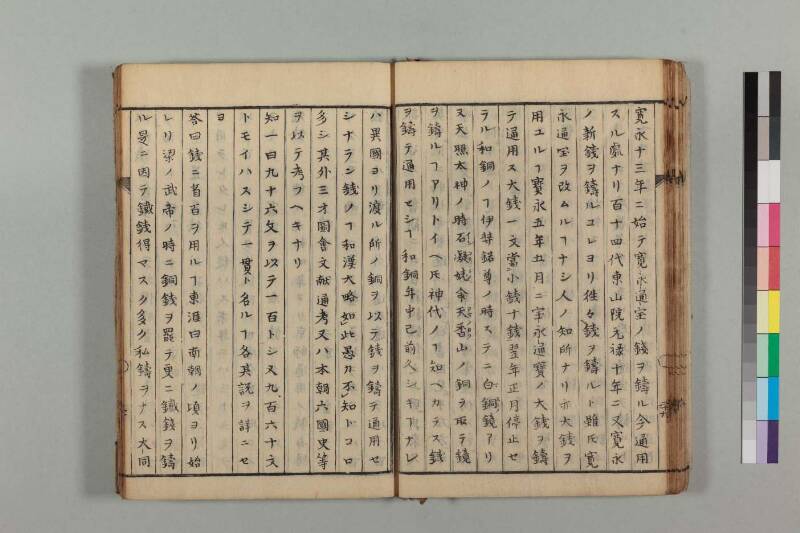
翻刻
寛永十三年ニ始テ寛-永-通-宝ノ銭ヲ鋳ル今通用
スル処ナリ百十四代東山院元禄十年ニ又寛永
ノ新銭ヲ鋳ルコレヨリ往々銭ヲ鋳ルト雖トモ寛
永通宝ヲ改ムルコトナシ人ノ知所ナリ亦大銭ヲ
用ユルコト宝永五年五月ニ宝-永-通-宝ノ大銭ヲ鋳
テ通用ス大銭一文当_二小銭十銭_一翌年正月停止セ
ラル和銅ノコト伊弉鍩尊ノ時ステニ白銅(マスミノ)鏡アリ
又天照太神ノ時/石凝姥(イシコリトメ)命/天香(アマノカク)山ノ銅ヲ取テ鏡
ヲ鋳ルコトアリトイヘトモ神代ノコト知ヘカラス銭
ヲ鋳テ通用セシコト和銅年中已前久シキコトナレ
ハ異国ヨリ渡ル所ノ銅ヲ以テ銭ヲ鋳テ通用セ
シナラン銭ノコト和漢大略如_レ此愚カ不_レ知トコロ
多シ其外三才図会文献通考又ハ本朝六国史等
ヲ以テ考フヘキナリ
知一曰九十六文ヲ以テ一百トシ又九百六十文
トモイハスシテ一貫ト名ルコト各其説ヲ詳ニセ
ヨ
答曰銭ニ省百ヲ用ルコト東涯曰南朝ノ頃ヨリ始
レリ梁ノ武帝ノ時ニ銅銭ヲ罷テ更ニ鉄銭ヲ鋳
ル是ニ因テ鉄銭得ヤスク多ク私鋳ヲナス大-同
現代語訳
寛永十三年(1636年)に初めて寛永通宝の銭を鋳造した。これが現在流通しているものである。第百十四代・東山天皇の元禄十年(1697年)に、また寛永の新銭を鋳造した。これ以降、たびたび銭を鋳造したとはいえ、寛永通宝を改めることはなかった。これは人々の知るところである。また大銭を用いることについては、宝永五年(1708年)五月に宝永通宝の大銭を鋳造して流通させた。大銭一文は小銭十文に相当した。翌年正月に廃止された。
和銅のことについて述べる。伊弉諾尊(いざなぎのみこと)の時代にすでに白銅(ますみの)鏡があった。また天照大神の時代に、石凝姥(いしこりとめ)命が天香山の銅を採って鏡を鋳たということがあったとはいえ、神代のことは知ることができない。銭を鋳て流通させたことは、和銅年間(708〜715年)以前から長い歴史があるので、異国より渡ってきた銅を用いて銭を鋳て流通させていたのであろう。銭のことについて、和漢の大略はこのようなものであるが、筆者が知らないところが多い。その他、『三才図会』・『文献通考』、あるいは『本朝六国史』などによって考察すべきである。
【問い】ある人(知一)が言う。九十六文をもって百文とし、また九百六十文とも言わずに一貫と称することについて、それぞれその説を詳しく述べよ。
【答え】銭に「省百」を用いることについて、東涯は「南朝の頃より始まった」と言っている。梁の武帝の時代に銅銭を廃止して新たに鉄銭を鋳造した。これによって鉄銭がますます多く出回り、私鋳(私的な鋳造)が盛んに行われた。大同……
英語訳
In the thirteenth year of Kan'ei (1636), the Kan'ei Tsūhō coins were first cast. These are the coins currently in circulation. In the tenth year of Genroku (1697), during the reign of the 114th Emperor Higashiyama, new Kan'ei coins were again cast. Although coins were cast on many occasions after this, the Kan'ei Tsūhō was never replaced. This is well known to the people.
Regarding the use of large coins: in the fifth month of the fifth year of Hōei (1708), large Hōei Tsūhō coins were cast and put into circulation. One large coin was equivalent to ten small coins. They were abolished in the first month of the following year.
Regarding native copper (wadō): In the age of the deity Izanagi no Mikoto, there already existed a white bronze (masumi) mirror. Also, during the age of Amaterasu Ōmikami, the deity Ishikoridome no Mikoto cast a mirror using copper from Mount Amanokagu — yet matters of the Age of the Gods cannot be known with certainty. Since the casting and circulation of coins had a long history predating the Wadō era (708–715), copper brought over from foreign lands was likely used to cast and circulate coins. Such, in broad terms, is the history of coinage in Japan and China, though there is much that this author does not know. For further study, one should consult works such as the *Sancai Tuhui* (Illustrated Compendium of Three Powers), the *Wenxian Tongkao* (Comprehensive Study of Literary Remains), and the *Honchō Rikkokushi* (Six National Histories of Japan).
**Question** (from "Chichi"): Ninety-six mon are counted as one hundred, and nine hundred and sixty mon are called one kan rather than being stated as such. Please explain each of these conventions in detail.
**Answer:** Regarding the use of "abbreviated hundreds" (shōhyaku) in coinage, Tōgai states that this practice began around the time of the Southern Dynasties (in China). During the reign of Emperor Wu of Liang, copper coins were abolished and iron coins were newly cast. As a result, iron coins spread in ever-increasing quantities, and private minting became widespread. [The text continues with] Daido...