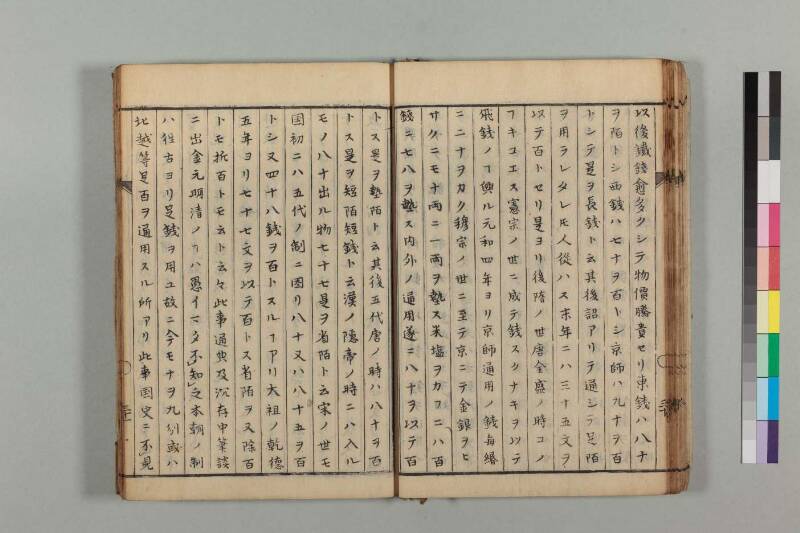
翻刻
以後鉄銭愈多クシテ物価騰貴セリ東銭ハ八十
ヲ陌トシ西銭ハ七十ヲ百トシ京師ハ九十ヲ百
トシテ是ヲ長銭ト云其後詔アリテ通シテ足陌
ヲ用ラレタレトモ人従ハス末年ニハ三十五文ヲ
以テ百トセリ是ヨリ後隋ノ世唐全盛ノ時コノ
コトキコエス憲宗ノ世ニ成テ銭スクナキヲ以テ
飛銭ノコト興ル元和四年ヨリ京師通用ノ銭毎緡
ニ二十ヲカク穆宗ノ世ニ至テ京ニテ金銀ヲヒ
サクニモ十両ニ一両ヲ墊ス米塩ヲカフニハ百
銭ニ七八ヲ墊ス内外ノ通用遂ニ八十ヲ以テ百
トス是ヲ墊陌ト云其後五代唐ノ時ハ八十ヲ百
トス是ヲ短陌短銭ト云漢ノ隠帝ノ時ニハ入ル
モノ八十出ル物七十七是ヲ省陌ト云宋ノ世モ
国初ニハ五代ノ制ニ因リ八十又ハ八十五ヲ百
トシ又四十八銭ヲ百トスルコトアリ大祖ノ乾徳
五年ヨリ七十七文ヲ以テ百トス省陌ヲ又除百
トモ折百トモ云ト云々此事通典及沈存中筆談
ニ出金元明清ノコトハ愚イマタ不_レ知_レ之本朝ノ制
ハ往古ヨリ足銭ヲ用ユ故ニ今モナヲ九州或ハ
北越等足百ヲ通用スル所アリ此事国史ニ不_レ見
現代語訳
大同年間以降、鉄銭はますます増加して物価が高騰した。東の地方では80文を一陌(百)とし、西の地方では70文を百とし、京師(都)では90文を百として、これを「長銭」と呼んだ。その後、詔が下って一律に足陌(満額の百文)を用いるよう命じられたが、人々はこれに従わなかった。末年には35文をもって百とするまでに至った。
これ以降、隋の世および唐の全盛期にはこのようなことは聞かれなくなった。しかし憲宗の治世になると、銭が不足したことから「飛銭」の制度が興った。元和4年(809年)より、京師で流通する銭は一緡(一貫)ごとに20文が不足するようになった。穆宗の治世に至っては、京において金銀を売買する際にも10両につき1両を上乗せし(墊し)、米や塩を買う際には100銭につき7・8文を上乗せするようになった。こうして内外の通用は遂に80文をもって百とするに至った。これを「墊陌(てんぱく)」と呼ぶ。
その後、五代の後唐の時代には80文を百とした。これを「短陌(たんぱく)」・「短銭」と呼ぶ。後漢の隠帝の時代には、受け取る際は80文、支払う際は77文とされた。これを「省陌(しょうはく)」と呼ぶ。宋の時代も、建国当初は五代の制度に倣い80文あるいは85文を百とし、また48文を百とすることもあった。太祖の乾徳5年(967年)より、77文をもって百とした。「省陌」はまた「除百」とも「折百」とも言うとのことである。
これらのことは『通典』および沈存中(沈括)の『筆談(夢渓筆談)』に記されている。金・元・明・清のことについては、筆者はいまだ知らない。
わが国(本朝)の制度は、往古より足銭(満額の銭)を用いてきた。それゆえ今もなお、九州あるいは北越などの地方では足百を通用させているところがある。このことは国史には見えないが……
英語訳
After the Datong era, iron coins proliferated ever further and commodity prices soared. In the eastern regions, 80 coins were counted as one *mò* (hundred); in the western regions, 70 coins were counted as a hundred; and in the capital, 90 coins were counted as a hundred — this was called "long coins" (*chángqián*). Thereafter, an imperial edict was issued ordering the uniform use of *zú mò* (full hundreds), but the people did not comply. By the final years, it had come to the point that 35 coins were counted as a hundred.
After this, during the Sui dynasty and the height of the Tang dynasty, such practices were no longer heard of. However, when Emperor Xianzong came to power, the shortage of coins gave rise to the system of "flying money" (*fēiqián*). From the 4th year of the Yuanhe era (809), coins in circulation in the capital fell 20 short per *mǐn* (string of 1,000 coins). By the reign of Emperor Muzong, even when buying and selling gold and silver in the capital, one liang was added on top of every ten liang; and when buying rice and salt, 7 or 8 coins were added for every 100 coins. Thus the exchange in use both inside and outside the capital came ultimately to count 80 coins as a hundred. This was called *diàn mò* ("padded hundred").
After this, during the Later Tang of the Five Dynasties period, 80 coins were counted as a hundred. This was called *duǎn mò* ("short hundred") or *duǎn qián* ("short coins"). During the reign of Emperor Yindi of the Later Han dynasty, 80 coins were received but only 77 paid out. This was called *shěng mò* ("abbreviated hundred"). In the Song dynasty as well, at the founding of the dynasty, following the system of the Five Dynasties, 80 or 85 coins were counted as a hundred, and in some cases 48 coins were counted as a hundred. From the 5th year of the Qiande era of Emperor Taizu (967), 77 coins were counted as a hundred. The *shěng mò* is also called *chú bǎi* ("deducted hundred") or *zhé bǎi* ("discounted hundred"), it is said.
These matters are recorded in the *Tongdian* (Comprehensive Institutions) and in Shen Cunzhong's (Shen Kuo's) *Bitan* (*Mengxi Bitan* / Dream Pool Essays). As for the Jin, Yuan, Ming, and Qing dynasties, this author has not yet acquired knowledge of them.
As for Japan's system, full-value coins (*zeni*) have been used since ancient times. For this reason, even today there are regions in Kyushu and Hokuetsu (northern Echigo Province) where full hundreds (*sokuhyaku*) remain in use. This matter does not appear in the national histories, but...