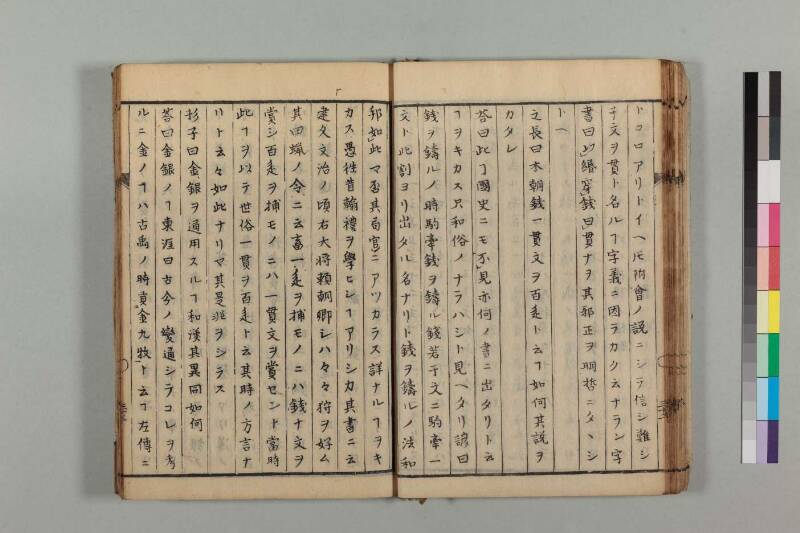
翻刻
トコロアリトイヘトモ附会ノ説ニシテ信シ難シ
千文ヲ貫ト名ルコト字義ニ因ラカク云ナラン字
書曰以_レ緡穿_レ銭曰_レ貫ナヲ其邪正ヲ明哲ニタヽシ
トへ
之長曰本朝銭一貫文ヲ百疋#1ト云コト如何其説ヲ
カタレ
答曰此コト国史ニモ不_レ見亦何ノ書ニ出タリト云
コトヲキカス只和俗ノナラハシト見ヘタリ諺曰
銭ヲ鋳ルノ時駒牽銭ヲ鋳ル銭若干#2文ニ駒牽一
文ト此割ヨリ出タル名ナリト銭ヲ鋳ルノ法和
邦如_レ此ヤ否其局官ニアツカラス詳ナルコトヲキ
カス愚往昔翰礼ヲ学ヒシコトアリシカ其書ニ云
建久文治#3ノ頃右大将頼朝卿シハ々々狩ヲ好ム
其田蝋ノ令ニ云畜一疋ヲ捕モノニハ銭十文ヲ
賞シ百疋ヲ捕モノニハ一貫文ヲ賞セント当時
此コトヲ以テ世俗一貫ヲ百疋ト云其時ノ方言ナ
リト云々如此ナリヤ其是非ヲシラス
杉子曰金銀ヲ通用スルコト和漢其異同如何
答曰金銀ノコト東涯曰古今ノ変通シテコレヲ考
ルニ金ノコトハ古禹ノ時貢_二金九牧_一ト云コト左伝ニ
現代語訳
(前頁より続き)それぞれに根拠があるとはいえ、いずれも付会(こじつけ)の説であって信じがたい。千文を「貫」と名付けることは、字義に基づいてそのように言うのであろう。字書に曰く、「銭を究(つら)ね(貫き通す)ことをもって『貫』という」と。なおその正否については、明哲(見識ある人)に正してもらいたいと思う。
(問)之長(これなが)が問うて言う、「本朝では銭一貫文を百匹と言うことがあるが、それはいかなることか。その説を語ってほしい」と。
(答)答えて言う、「このことは国史にも見えず、また何の書に出ているということも聞かない。ただ和俗(日本の習慣)として伝わってきたものと見える。諺に曰く、『銭を鋳る時、駒牽(こまひき)銭を鋳る。銭若干文につき駒牽一文』とあり、この割合から出た名称である」という。銭を鋳る方法が日本においてそのようであったかどうか、(筆者は)その局(鋳造所)の官職に携わったことがないため、詳しいことは聞いていない。
私(愚)は往昔、翰礼(かんれい・書礼の学)を学んだことがあったが、その書に言う、「建久・文治の頃、右大将・頼朝卿はしばしば狩りを好まれた。その田猟の令に言う、『獣一匹を捕らえた者には銭十文を賞し、百匹を捕らえた者には一貫文を賞せん』と。当時このことをもって、世俗に一貫を百匹と言うのはその時代の方言(慣用語)である」と云々。このようなことであるかどうか、その是非は知らない。
(問)杉子(すぎし)が問うて言う、「金銀を通用することについて、日本と中国の異同はいかがか」と。
(答)答えて言う、「金銀のことについて、東涯(とうがい)が曰く、『古今の変遷を通じてこれを考えるに、金のことは古く禹の時代に九州(九牧)より金を貢ぐということが左伝に……』(次頁へ続く)」
英語訳
(Continued from the previous page) Although each of these theories has some basis, they are all forced interpretations (*fukai*) and difficult to believe. The naming of one thousand *mon* as a *kan* (*貫*) likely comes from the meaning of the character itself. The character dictionary states: "Threading coins through [a string] is called *kan*." I would ask a person of wisdom and discernment to clarify whether this is correct or not.
(Question) Korenaga asks: "In our country, one *kanmon* of coins is sometimes called one hundred *hiki*. What is the reason for this? Please explain."
(Answer) In response: "This matter does not appear in national histories, nor have I heard from which text it originates. It appears to be simply a custom handed down in Japanese popular usage. There is a saying: 'When casting coins, one *komahiki* coin is cast; for every such-and-such number of coins cast, one coin goes to the *komahiki* [horse-leading fee].' The name is said to derive from this ratio." Whether the method of casting coins in Japan was indeed like this, I cannot say in detail, as I have never been involved in the official minting offices.
In my younger days, I once studied *kanrei* (the study of epistolary and ritual writing), and that text states: "Around the Kenkyū and Bunji eras [1190–1199; 1185–1190], the Right General, Lord Yoritomo, was frequently fond of hunting. His ordinance on field hunting (*denryō*) stated: 'Those who catch one animal shall be rewarded with ten *mon*, and those who catch one hundred animals shall be rewarded with one *kanmon*.' It is said that from this practice, the common people of that time came to call one *kan* 'one hundred *hiki*,' which was the parlance of that era." Whether this is truly the case, I cannot say with certainty.
(Question) Master Sugi asks: "What are the similarities and differences between Japan and China in the use of gold and silver as currency?"
(Answer) In response: "Regarding gold and silver, Tōgai states: 'Considering this through all the changes of past and present, concerning gold, there is a reference in the *Zuozhuan* to the tribute of gold from the nine provinces (*kyūboku*) during the time of the ancient sage-king Yu...'" (Continues on the next page)