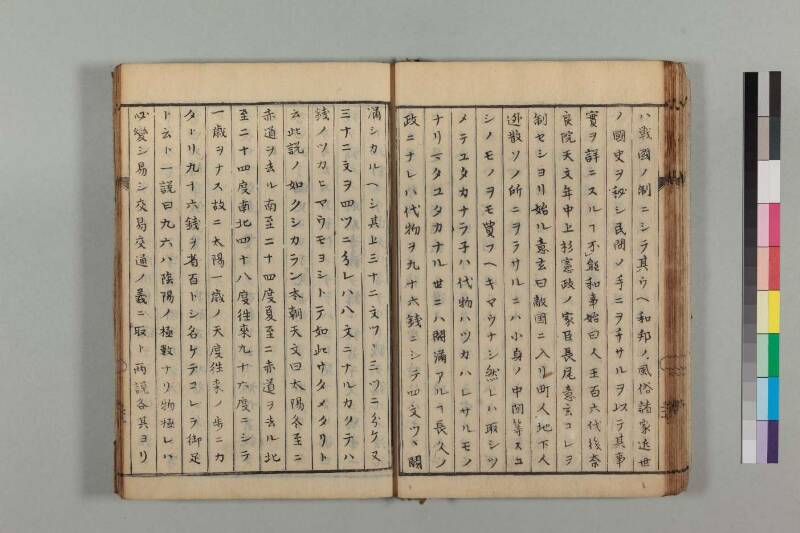
翻刻
ハ戦国ノ制ニシテ其ウヘ和邦ノ風俗諸家近世
ノ国史ヲ秘シ民間ノ手ニヲチサルヲ以テ其事
実ヲ詳ニスルコト不_レ能和事始曰人王百六代後奈
良院天文年中上杉憲政ノ家臣長尾意玄コレヲ
制セシヨリ始ル意玄曰敵国ニ入リ町人地下人
迯散ソノ所ニヲラサルニハ小身ノ中間等スコ
シノモノヲモ買フヘキヤウナシ然レハ取シツ
メテユタカナラネハ代物ハツカハレサルモノ
ナリマタユタカナル世ニハ闕満アルコト長久ノ
政ニナレハ代物ヲ九十六銭ニシテ四文ツヽ闕
満シカルヘシ其上三十二文ツヽ三ツニ分ケ又
三十二文ヲ四ツニ分レハ八文ニナルカクテハ
銭ノツカヒヤウモヨシトテ如此サタメタリト
云此説ノ如クシカラン本朝天文曰太陽冬至ニ
赤道ヲ去ル南至二十四度夏至ニ赤道ヲ去ル北
至二十四度南北四十八度往来九十六度ニシテ
一歳ヲナス故ニ太陽一歳ノ天度往来ノ歩ニカ
タトリ九十六銭ヲ省百トシ名ケテコレヲ御足
ト云ト一説曰九六ハ陰陽ノ極数ナリ物極レハ
必変シ易シ交易交通ノ義ニ取ト両説各其ヨリ
現代語訳
(前頁より続き)これは戦国時代の制度であり、また和邦(日本)の風俗や諸家の近世の国史は秘蔵されて民間の手に渡らないため、その事実を詳しくすることができない。
『和事始』に曰く、「人王第百六代・後奈良院の天文年中(1532〜1555年)に、上杉憲政の家臣・長尾意玄がこれを制定したことに始まる。意玄曰く、『敵国に入った際、町人や地下人(庶民)が逃げ散ってその場にいないときには、小身の中間(ちゅうげん)などはわずかな物すら買うすべがない。そうであれば、(銭を)取りまとめて手元に十分にないと、代金として支払うことができないものだ。また(平和で)豊かな世の中では、闕満(けつまん・端数の不足と過剰)があることが、長久の政(まつりごと)というものだ。だから代物(銭)を九十六銭として四文ずつ闕満させるのがよかろう。その上、三十二文ずつ三つに分け、また三十二文を四つに分ければ八文になる。このようにすれば銭の遣り繰りも都合がよい』とてこのように定めたのだ」という。
この説のとおりかもしれないが、(別の説として)『本朝天文』に曰く、「太陽は冬至に赤道を離れて南至二十四度、夏至に赤道を離れて北至二十四度、南北四十八度を往来し九十六度をもって一歳をなす。ゆえに太陽が一歳の天度を往来する歩みにかたどり、九十六銭を省百(しょうひゃく)とし、名付けてこれを『御足(おあし)』と言う」とある。
また一説に曰く、「九と六は陰陽の極数(きわまった数)である。物は極まれば必ず変化しやすい。(それゆえ)交易・交通の義に取ったのだ」という。二つの説はそれぞれに由来があり……
英語訳
(Continued from the previous page) This was a system of the Warring States period. Moreover, since the customs of Japan and the national histories of various houses in recent times are kept secret and do not fall into the hands of the common people, it is impossible to set forth the facts in detail.
The *Wagakoto-hajime* states: "This originated when Nagao Igen, a retainer of Uesugi Norizane, established this practice during the Tenbun era (1532–1555) of the reign of Emperor Go-Nara, the 106th human sovereign. Igen said: 'When one enters enemy territory and the townspeople and common folk (*jigenin*) have fled and are no longer present, men of low rank such as foot soldiers (*chūgen*) have no means to purchase even small quantities of goods. Therefore, unless one has gathered and accumulated sufficient funds, one cannot use them as payment. Furthermore, in a prosperous and peaceful world, having *ketsuman* (shortfalls and surpluses) is the way of enduring governance. Therefore, it would be proper to set 96 coins as the payment unit, with a 4-coin shortfall. Moreover, dividing by 32 coins into three parts, and further dividing 32 coins into four parts yields 8 coins. In this way, the use of coins will also be convenient.' And so it was established thus."
This explanation may well be correct. However, the *Honchō Tenmon* (Astronomy of Our Land) states: "The sun at the winter solstice is 24 degrees south of the equator, and at the summer solstice is 24 degrees north of the equator; it travels 48 degrees between north and south, making a round trip of 96 degrees to complete one year. Therefore, modelling this on the course of the sun's annual celestial journey, 96 coins are taken as the *shō-hyaku* (abbreviated hundred), and this is named *o-ashi* (honorable money)."
Yet another theory states: "Nine and six are the ultimate numbers (*kyokusū*) of yin and yang. When things reach their ultimate point, they inevitably change and transform easily. Therefore, this was taken from the meaning of exchange and circulation (*kōeki kōtsū*)." The two theories each have their respective origins...