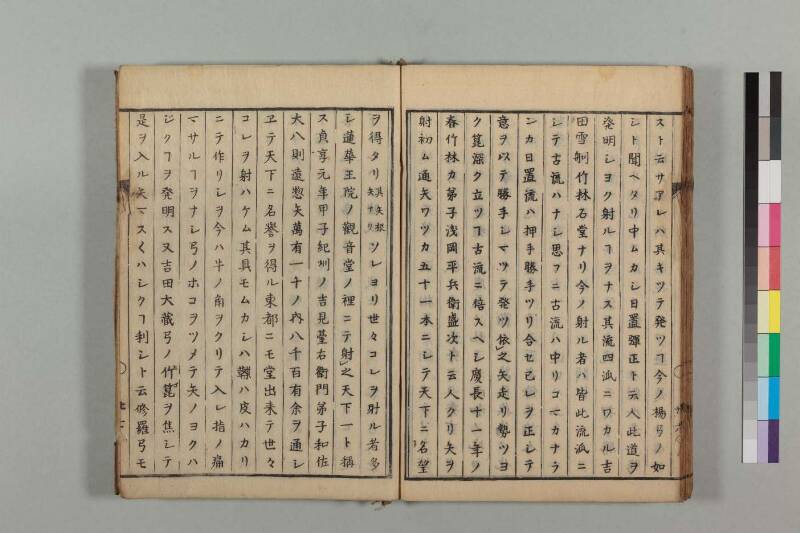
翻刻
スト云サアレハ其キツテ発ツコト今ノ楊弓ノ如
シト聞ヘタリ中ムカシ日置弾正ト云人此道ヲ
発明シヨク射ルコトヲナス其流四派ニワカル吉
田雪舸竹林石堂ナリ今ノ射ル者ハ皆此流派ニ
シテ古流ハナシ思フニ古流ハ中リコマカナラ
ンカ日置流ハ押手勝手ツリ合セ己レヲ正シテ
意ヲ以テ勝手シマツテ発ツ依_レ之矢走リ勢ツヨ
ク箟深ク立ツコト古流ニ倍スヘシ慶長十一年ノ
春竹林カ弟子浅岡平兵衛盛次ト云人クリ矢ヲ
射初ム通矢ワツカ五十一本ニシテ天下ニ名望
ヲ得タリ《割書:其矢根|矢ナリ》ソレヨリ世々コレヲ射ル者多
シ蓮華王院ノ観音堂ノ裡ニテ射_レ之天下一ト稱
ス貞享元年甲子紀州ノ吉見台右衛門弟子和佐
大八則遠惣失萬有一千ノ内八千百有余ヲ通シ
ヱテ天下ニ名誉ヲ得ル東都ニモ堂出来テ世々
コレヲ射ハケム其具モムカシハ鞢ハ皮ハカリ
ニテ作リシヲ今ハ半ノ角ヲクリテ入レ指ノ痛
マサルコトヲナシ弓ノホコヲツメテ矢ノヨクハ
ジクコトヲ発明ス又吉田大蔵弓ノ竹籠(ヒゴ)ヲ焦シテ
是ヲ入ル矢マスくハシクコト利シト云修羅弓モ
現代語訳
(前頁よりの続き)…こぼさずと言う。さあれば、その切って発つこと、今の楊弓のようだと聞こえたり。
中むかし、日置弾正という人がこの道を発明し、よく射ることをなす。その流れは四派に分かれ、吉田・雪荷・竹林・石堂である。今の射る者は皆この流派にして、古流はない。思うに、古流は的中が細かくないのであろうか。日置流は押手・勝手をつり合わせ、己を正して、意をもって勝手を締まって発つ。これによって矢走りの勢いが強く、箆が深く立つこと、古流の倍すべきであろう。
慶長十一年の春、竹林の弟子・浅岡平兵衛盛次という人が、栗矢を射始め、通し矢わずか五十一本にして天下に名望を得た(その矢は矢根〔矢尻〕のついた矢である)。それより世々これを射る者多し。蓮華王院の観音堂の裡にてこれを射て、天下一と称す。
貞享元年甲子、紀州の吉見台右衛門の弟子・和佐大八は、則ち遠惣失(通し矢)一万一千の内、八千百有余を通し得て、天下に名誉を得る。東都にも堂が出来て、世々これを射ばけむ。
その具(道具)も、昔は鞢(ゆがけ)は皮ばかりにて作りしを、今は半分に角を刳って入れ、指の痛まざることをなし、弓の穂(弰)をつめて矢のよく弾くことを発明す。また吉田大蔵(という人が)弓の竹籤(ひご)を焦がしてこれを入れる。矢ますます走ること利しという。修羅弓も(次頁へ続く)
英語訳
(Continued from previous page) ...without spilling it. It is said that the manner of cutting and releasing [the arrow] was thus like today's yōkyū (small indoor bow).
In the middle ages, a man called Heki Danjō invented this way and achieved great skill in archery. His tradition split into four schools: Yoshida, Sekka, Chikurin, and Sekidō. Those who shoot today all belong to these schools; the old school no longer exists. I surmise that perhaps the old school was not so precise in hitting the mark. The Heki school balances the bow hand (oshite) and releasing hand (katte), composes oneself properly, and releases with intention, firmly controlling the releasing hand. As a result, the arrow's flight is strong, and the shaft strikes deep—this should be double that of the old school.
In the spring of the eleventh year of Keichō (1606), a student of the Chikurin school named Asaoka Heibei Moritsugu began shooting chestnut-wood arrows in the tōshiya (distance archery) competition, and with merely fifty-one arrows passed through, he gained fame throughout the land. (These arrows were arrows with arrowheads attached.) From that time on, there were many who practiced this in successive generations. Shooting within the inner hall of the Rengeo-in (Sanjūsangen-dō) Temple's Kannon Hall, they were proclaimed "the best under heaven."
In the first year of Jōkyō, the year of Kinoe-Ne (1684), Wasa Daihachi, a disciple of Yoshimi Daemon of Kii Province, passed more than 8,100 arrows out of 11,000 total shots in the tōshiya (long-distance corridor archery), and thereby gained renown throughout the land. A hall was also constructed in the Eastern Capital (Edo), and people practiced this shooting in successive generations.
As for the equipment: in former times, the yugake (archer's glove) was made of leather alone, but now half of it is carved from horn and inserted, so that the fingers no longer hurt; and a method was devised of trimming the tip of the bow (hazu) to make the arrows spring off more effectively. Furthermore, a man named Yoshida Okura scorched the bamboo strips (higo) of the bow and inserted them—it is said that the arrow then flies ever more swiftly. As for the Shura-bow also... (continued on next page)