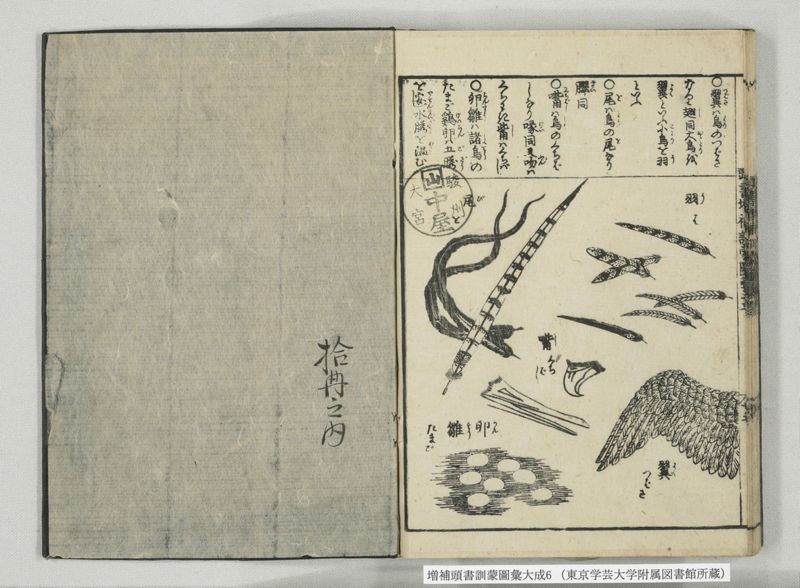
翻刻
【上段】
○翼(つばさ)は鳥(とり)のつばさ
なり翅(し)同 大鳥(おゝとり)を
翼(よく)といふ小鳥(ことり)を羽(う)
といふ
○尾(を)は鳥(とり)の尾(を)なり
臎(すい)同
○嘴(くちばし)は鳥(とり)のくちば
しなり喙(けい)同又 吻(ふん)は
くちわき觜(し)はくちばし
○卵雛(らんすう)は諸鳥(しよてう)の
たまご鶏卵(けいらん)は五臓(ござう)
を安(やすん)じ水臓(すいざう)を温(あたゝ)む
【下段】
羽(う) は
翼(よく)
つばさ
嘴(し) くちばし
尾(び)
を
卵雛(らんすう)
たまご
【手書き】
拾冊之内
現代語訳
【上段】
○翼(ツバサ)は鳥の翼のことである。翅(シ)も同じ意味。大きな鳥を翼(ヨク)といい、小鳥を羽(ウ)という。
○尾(オ)は鳥の尾のことである。臎(スイ)も同じ意味。
○嘴(クチバシ)は鳥のくちばしのことである。喙(ケイ)も同じ意味。また、吻(フン)はくちわき、觜(シ)はくちばしのこと。
○卵雛(ランスウ)は諸々の鳥の卵のこと。鶏卵(ケイラン)は五臓を安らげ、水臓を温める効果がある。
【下段】
羽(ウ) は
翼(ヨク)
つばさ
嘴(シ) くちばし
尾(ビ)
を
卵雛(ランスウ)
たまご
【手書き】
拾冊之内
英語訳
[Upper section]
○Tsubasa (wing) refers to a bird's wing. Shi has the same meaning. Large birds are called yoku, while small birds are called u.
○O (tail) refers to a bird's tail. Sui has the same meaning.
○Kuchibashi (beak) refers to a bird's beak. Kei has the same meaning. Also, fun refers to the corner of the mouth, and shi refers to the beak.
○Ransū (eggs and chicks) refers to the eggs of various birds. Chicken eggs (keiran) calm the five organs and warm the water organ.
[Lower section]
U (feather) - ha
Yoku (wing)
tsubasa
Shi (beak) - kuchibashi
Bi (tail)
o
Ransū (eggs and chicks)
tamago
[Handwritten note]
Among ten volumes