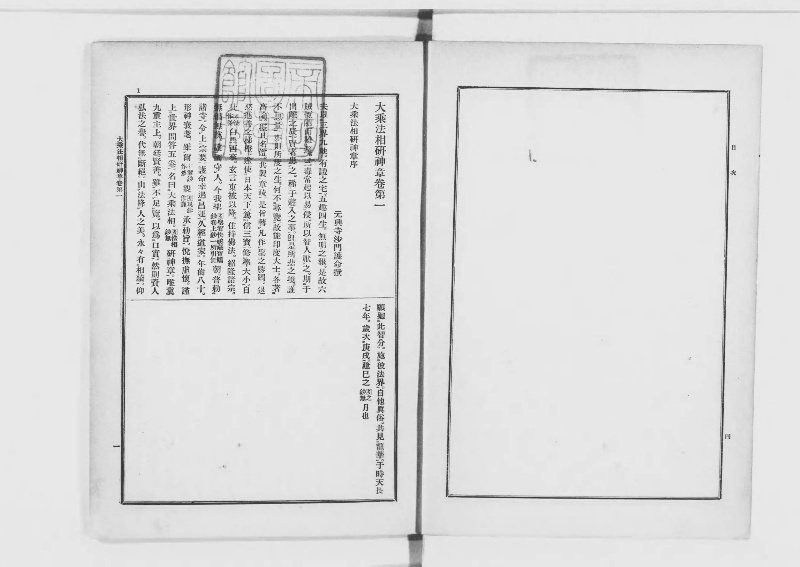
翻刻
【右頁】
【枠外右横上】
目次
【枠外右横下】
四
【この頁白紙】
【左頁】
【枠外左上】
一【但し算用数字】
【枠外左横上】
大乘法相硏神章卷第一
【枠外左横下】
一
【二段構成】
【上段】
大乘法相硏神章卷第一#2
大乘法相硏神章序
元興寺沙門護命撰
夫以_二 三界九地。有識之宅_一。五趣四生。無明之報。是故六
賊恆隨面難_レ避。三毒常起以易_レ侵。所以智人厭_レ之。期_二于
出離之辰_一。賢者患_レ之。稀_二于遊入之事_一。旣是所悲之境。誰
不_二思量_一。亦則所度之生。何不_二尋覽_一。故能印度大士。各著_二
高論_一。振旦名僧。共製_二章疏_一。是皆轉_レ凡作_レ聖之勝躅。退
惡進善之梯橙。遂使_二日本天下_一。篤_二-信三寶_一。修_二-學大小_一。自
徒《割書:考#1徒|作從》白馬西來。玄言東被以降。住持佛法。紹隆諸宗。
無偏無黨。護_レ國守_レ 人。今我聖《割書:考#1聖宥快祕藏寶鑰|鈔卷上鈔一所引無》朝。普勅_二
諸寺_一。令_レ 上_二宗要_一。護命幸遇_二昌運_一。久經_二道家_一。年齒八十。
形神衰耄。雖_レ爾《割書:考#1鈔|作然》親《割書:考#1親鈔|作謹》承_二勅旨_一。悅撫虛懷。謹
上_二世界問答五卷_一。名曰_二大乘法相。《割書:考#1法相|鈔無》硏神章_一。唯冀
九重主上。朝廷賢善。雖_レ不_レ足_レ覽。以爲_二口實_一。然則資人
弘法之譽。代無_二斷絕_一。由_レ法降_レ 人之美。永々有_二相續_一。仰
【下段】
願廻_二此智分_一。施_二彼法界_一。自他眞俗。共見_二龍華_一。于時天長
七年。歲次_二庚戌_一建巳之《割書:考#1之|鈔無》月也
【以下空白】
現代語訳
【右頁】
【枠外右横上】
目次
【枠外右横下】
四
【この頁白紙】
【左頁】
【枠外左上】
一
【枠外左横上】
大乗法相研神章巻第一
【枠外左横下】
一
【上段】
大乗法相研神章巻第一
大乗法相研神章序
元興寺沙門護命撰
そもそも三界九地は、識を有する者の住処であり、五趣四生は、無明の報いである。このため六賊は常に随い避け難く、三毒は常に起こって侵しやすい。だから智者はこれを厌い、出離の時を期待し、賢者はこれを患い、遊入の事を稀とする。既にこれは悲しむべき境界であるから、誰が思量しないであろうか。また度すべき衆生であるから、何故尋覧しないであろうか。故に印度の大士は各々高論を著し、振旦の名僧は共に章疏を製した。これらは皆、凡を転じて聖となす勝れた足跡であり、悪を退けて善に進む梯子である。遂に日本天下をして、三宝を篤く信じ、大小を修学せしめた。白馬が西から来て、玄言が東に被われて以来、仏法を住持し、諸宗を紹隆し、偏りなく党派なく、国を護り人を守っている。今我が聖朝は、普く諸寺に勅して、宗要を上らしめた。護命は幸いに昌運に遇い、久しく道家を経て、年齢八十、形神衰耄している。そうであっても勅旨を親しく承り、虚懐を悦び撫でて、謹んで世界問答五巻を上り、名づけて大乗法相研神章という。ただ願うのは九重の主上、朝廷の賢善が、覧るに足りないとしても、口実とすることである。然らば人を資けて仏法を弘める誉れは、代々断絶することなく、法によって人を降す美は、永々に相続がある。
【下段】
仰ぎ願わくは、この智分を廻らして、かの法界に施し、自他真俗が、共に龍華を見んことを。時に天長七年、歳次庚戌、建巳の月なり
英語訳
[Right Page]
[Outside frame, upper right]
Table of Contents
[Outside frame, lower right]
Four
[This page is blank]
[Left Page]
[Outside frame, upper left]
One
[Outside frame, upper left horizontal]
Daijō Hōsō Kenshin-shō, Volume One
[Outside frame, lower left horizontal]
One
[Upper section]
Daijō Hōsō Kenshin-shō, Volume One
Preface to the Daijō Hōsō Kenshin-shō
Composed by Monk Gomyō of Gangō-ji Temple
The three realms and nine stages are the dwelling places of sentient beings, and the five destinies and four births are the retribution of ignorance. Therefore, the six thieves constantly follow and are difficult to avoid, and the three poisons constantly arise and easily invade. Thus the wise detest this and anticipate the time of liberation, while the virtuous are troubled by this and rarely engage in spiritual practices. Since this is already a lamentable state, who would not contemplate it? Moreover, since these are beings to be saved, why would one not investigate and study? Therefore, the great masters of India each composed lofty treatises, and the renowned monks of China together produced commentaries and annotations. These are all the excellent footsteps of transforming the ordinary into the sacred, and the ladder for retreating from evil and advancing toward good. Thus they caused all of Japan to deeply believe in the Three Treasures and to cultivate and study both Mahayana and Hinayana teachings. Since the white horse came from the west and the profound teachings spread eastward, Buddhism has been maintained, all schools have flourished, without bias or partiality, protecting the nation and safeguarding the people. Now our sacred court has universally decreed to all temples to submit the essentials of their doctrines. Gomyō has fortunately encountered this prosperous time, having long followed the Buddhist path. At eighty years of age, with body and spirit weakened and aged, nonetheless I have personally received the imperial edict and, stroking my humble heart with joy, respectfully submit five volumes of questions and answers about the world, entitled "Daijō Hōsō Kenshin-shō." I only hope that His Majesty of the nine-fold palace and the virtuous officials of the court, though this may not be worthy of perusal, will consider it as material for discussion. If so, the honor of supporting people and propagating the Dharma will continue without interruption through the generations, and the virtue of the Dharma guiding people will have eternal continuity.
[Lower section]
I humbly pray that this wisdom may be turned toward and bestowed upon the dharma realm, so that self and others, sacred and mundane, may together witness the Dragon Flower Assembly. Written in the seventh year of Tenchō, the year of Metal-Dog, in the fourth month.