翻刻
【右丁・上段】
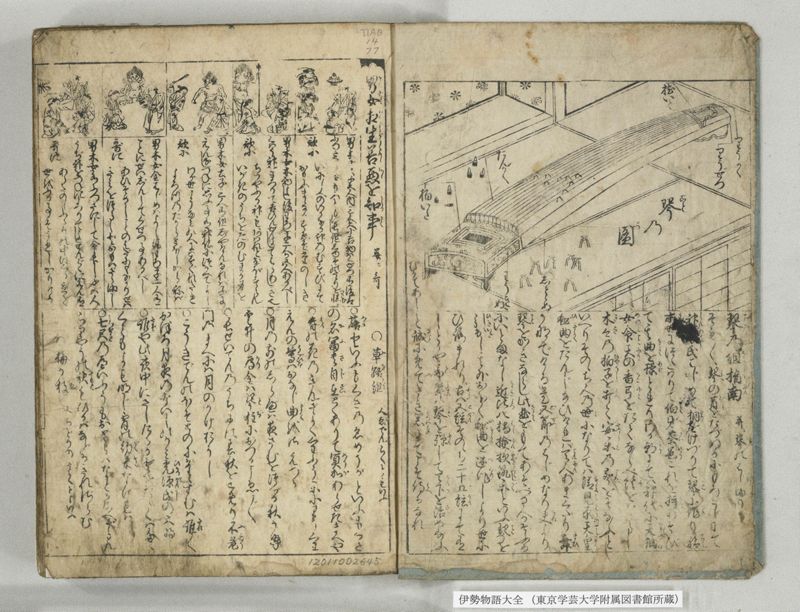
りうかく
りうぜつ
枕いと
琴(こと)
の
図(づ)
しとゝめ
たんかく わうきぬ
柏いた
むかてあし
【右丁・下段】
琴(こと)の組指南(くみしなん) 并 ̄ニ琴のはじまり
そも〳〵琴(こと)の昔(むかし)をたづぬるにもろこしにて
《振り仮名:神□氏|しんのうし》#1はじめて桐(きり)をけづりて琴(こと)に作(つく)り給(たまふ)
《振り仮名:末世|ま□□》#2につたはりて伯牙(はくが)蔡邑(さいゆう)これを持(もて)あそび
て其/曲(きよく)を操(あや)とれりわが朝(てう)にては《振り仮名:神代|□□よ》#3に天鈿(あまのうす)
女命(めのみこと)天(あま)の香弓(かこゆみ)をたてならべ絃(つる)をならし
木々(きき)の拍子(ひやうし)を打(うつ)て安楽(たのしみ)の声(こゑ)をそなふと
いへりそのゝち人の世(よ)になりては清見原天皇(きよみはらのてんわう)
秘曲(ひきよく)をたんじ給ひければ天人(てんにん)あまくだり舞(まひ)
かなでける是/五節(ごせつ)のはじめなり夫(それ)より
琴(こと)をかきならし此/曲(きよく)をもてあそべる人かそふる
にいとまなし近比(ちかきころ)八/橋検校(はしけんきやう)筑楽(つくしがく)といふ琴(こと)を
引出(ひきいた)し其外おほく秘曲(ひきよく)を述作(つくり)しより世に
ひろまれり古(いにしへ)は五絃(ごげん)そのゝち二十五/絃(げん)にて有
しとかや《振り仮名:帝舜|て□しゆん》#4は琴(こと)を弾(たん)じて天下(てんか)を治(おさ)め給ふ
と誠(まこと)にめてたき器(うつはもの)にてこそ侍(はへ)るなれ
【左丁・上段】
男女相生善悪(なんによあいしやうよしあし)を知事(しること) 并 ̄ニ哥
男木□□#5子五人内三人大に吉初はくせつ有後は
ふつきな□□もはともに長し但しゆそのたゝりを慎(つゝしむ)
歌に いにし人のいかなる神のむすびにて
おもふまゝなるすゑぞたのしき
男木女木初よし後わろし子二人か五人あるべし
くはう神をまつりて吉ひんぜんにしてはらあしき也
歌に ちはやふる神もあはれとおぼすらん
いがきのうちをたのむわが身を
男木女土子三人有但じやけんなれば子に
えんなしつねに思ふ事有神仏につかへてよし
歌に わが世よりなみの人にはすぐれたれ
よろつのたからとぼしからねば
男木女金はじめはよし後わろし子二人有
ことにせいじんしてくぜつ事あるべし
哥に あひそめしことのはだにもなかりせは
きみをつらしとおもはざらまし
男木女水ふつきにして命長し子五人
うぢ神をつねにまつりてよしでんばくにえん有
哥に あらたのしふたりの中にくら立て
世をふる事そうれしかりける
【左丁・下段】
○草路組(ふきくみ) 又ゑでんらくともいふ
○蕗(ふき)といふもくさの名めうがといふもくさ
の名(な)富貴自在(ふきじざい)とくありて冥加(めうが)あらせたまへや
○春(はる)の花のきんぎよくくわふう楽にりうくわ
えんの鶯(うぐひす)はおなじ曲(きよく)をさえつる
○月の前のしらべは夜さむをつぐる秋かせ
雲井の雁(かり)金は琴柱(ことぢ)におつるこゑ〴〵
○長せいてんのうちには春秋をとめり不老(ふらう)
門のまへには月のかけおかし
○こうきでんのほそとのにたゝすむは誰(たれ)〳〵
おぼろ月夜のないしのかみ光源氏(ひかるげんじ)の大将
○誰(たそ)や此夜中にさしたるかどをたゝくはたゝ
くともよも明じ宵の約束(やくそく)なけれは
○七尺(しちせき)のへいふうもおどらはなとかこへざらん
らりやうの袂(たもと)もひかばなどかきれざらむ
○梅か枝(ゑ) 又ちどりのきよくともいふ
現代語訳
【右丁・上段】※琴の図(各部位の名称図)
- 龍角(りゅうかく)
- 龍舌(りゅうぜつ)
- 枕(まくら)
- 琴(こと)の図
- 鴫留め(しとどめ)
- 王絹(おうきぬ)
- 柏板(かしわいた)
- 蜈蚣足(むかであし)
- 丹覚(たんかく)
【右丁・下段】
**琴の組(調弦)の手引き、ならびに琴の起源について**
そもそも琴の昔をたずねると、中国において神農氏がはじめて桐の木を削って琴をお作りになり、後の世に伝わって、伯牙・蔡邕がこれを愛で、その曲をたくみに奏でた。わが国においては、神代に天鈿女命(あめのうずめのみこと)が天の香弓を立て並べて絃を鳴らし、木々の拍子を打って楽しみの声を備えたと伝えられている。その後、人の世となっては、清見原天皇(天武天皇)が秘曲をお弾きになったところ、天人が天より降りてきて舞い奏でた。これが五節(ごせち)の舞の始まりである。それより、琴をかき鳴らしこの曲を楽しんだ人を数えればきりがない。近頃では、八橋検校が筑楽(筑紫琴)という琴の弾き方を世に広め、そのほか多くの秘曲を作ったことから、世に広まった。古くは五絃であり、その後二十五絃になったとか。帝舜は琴を弾じて天下をお治めになったという。まことにめでたき器(楽器)でございます。
【左丁・上段】
**男女の生まれ合わせの善し悪しを知ること、ならびに和歌**
男・木×女・木:子五人、うち三人は大いに吉。初めは苦節があるが、後は富貴にして共に長命。ただし湯所(ゆどころ)のたたりを慎むこと。
歌:いにし人のいかなる神のむすびにて
おもふままなるすゑぞたのしき
男・木×女・木(初):初め良く、後に悪し。子二人か五人あるべし。
火旺神をまつって吉。貧賤にして腹の悪い性質あり。
歌:ちはやふる神もあはれとおぼすらん
いがきのうちをたのむわが身を
男・木×女・土:子三人あり。ただし邪険(じゃけん)なれば子に縁なし。常に思うことあり、神仏に仕えて吉。
歌:わが世よりなみの人にはすぐれたれ
よろつのたからとぼしからねば
男・木×女・金:初めは良く、後に悪し。子二人あり。特に精進して口舌(くぜつ)のことあるべし。
歌:あひそめしことのはだにもなかりせは
きみをつらしとおもはざらまし
男・木×女・水:富貴にして長命。子五人。氏神を常にまつって吉。田畑に縁あり。
歌:あらたのしふたりの中にくら立て
世をふる事そうれしかりける
【左丁・下段】
**○草路組(ふきぐみ) 別名えでんらくともいう**
○「蕗(ふき)」という草の名、「茗荷(みょうが)」という草の名。富貴自在(ふきじざい)と徳があり、冥加(みょうが)あらせてください。
○春の花の金玉花風楽に、龍花苑(りゅうかえん)の鶯は同じ曲をさえずる。
○月の前の調べは、夜寒を告げる秋風。雲井の雁の音は、琴柱に落ちる声々。
○長生殿(ちょうせいでん)の内には春と秋を留め、不老門の前には月の影が置かれている。
○光琴殿(こうきでん)の細殿に佇んでいるのは誰か誰か。おぼろ月夜の内侍の督(ないしのかみ)、光源氏の大将よ。
○誰ぞ、この夜中に差した門を叩くのは。叩いたとしても、よもや(夜は)明けるまい。宵の約束もないのだから。
○七尺の塀風(へいふう)も、踊ればなぜ越えられないことがあろうか。羅綾(らりょう)の袂(たもと)を引けばなぜ切れないことがあろうか。
**○梅が枝 別名千鳥の曲ともいう**
英語訳
**[Right Folio, Upper Section]** *(Diagram of the koto with labeled parts)*
- Ryūkaku (dragon horn)
- Ryūzetsu (dragon tongue)
- Makura (pillow/nut)
- Diagram of the Koto
- Shitodome (string fastener)
- Ōkinu (silk wrapping)
- Kashiwa-ita (oak board)
- Mukade-ashi (centipede feet)
- Tankaku (cinnabar angle)
**[Right Folio, Lower Section]**
**Guide to Koto Tuning, and the Origins of the Koto**
Tracing the ancient origins of the koto, in China it is said that the Divine Farmer (Shennong) first shaved paulownia wood to create the koto. It was passed down through later generations, and Bo Ya and Cai Yong cherished it, skillfully performing its melodies. In our country, in the Age of the Gods, Ame-no-Uzume-no-Mikoto lined up heavenly fragrant bows, plucked their strings, beat out the rhythm of the trees, and provided the sounds of joy, as it is told. Thereafter, in the age of humanity, Emperor Kiyomihara (Emperor Tenmu) played a secret melody, whereupon celestial beings descended from heaven and danced and played. This was the origin of the Gosechi dance. Since then, the number of people who have played the koto and enjoyed its melodies is beyond counting. In recent times, Kengyō Yatsuhashi introduced a style of playing called Tsukushi-goto (Tsukushi koto), and composed many secret pieces, from which it spread throughout the world. In antiquity, the koto had five strings; later it came to have twenty-five strings. Emperor Shun is said to have governed the realm by playing the koto. Truly, it is a most auspicious instrument.
**[Left Folio, Upper Section]**
**On Knowing the Good and Bad of Compatibility Between Men and Women by Element, with Waka Poems**
*Man Wood × Woman Wood:* Five children; three of the five greatly auspicious. There are hardships at first, but later they prosper and both live long. However, one must be careful of the curse of hot-spring places.
Poem: *By what god's binding was this person of the past / so led that a future so pleasing to one's heart could be?*
*Man Wood × Woman Wood (First):* Good at first, bad later. Likely to have two or five children. Auspicious if one worships the fire-deity. Poor and of ill temper.
Poem: *Even the mighty god must find this pitiable — / my body that trusts in the sacred fence's interior.*
*Man Wood × Woman Earth:* Three children. However, due to a harsh nature, no bond with children. Constant worry. Auspicious to serve the gods and Buddha.
Poem: *From my generation, I have surpassed ordinary people — / for the treasures of ten thousand things are not lacking.*
*Man Wood × Woman Metal:* Good at first, bad later. Two children. Particularly devout, but quarrels and disputes are likely.
Poem: *If it had not been that the words of love first spoken / were even on the skin, I would not have thought you cruel.*
*Man Wood × Woman Water:* Wealthy and long-lived. Five children. Auspicious to always worship the clan deity. Blessed with connection to farmland.
Poem: *Ah, how joyful — between the two of us, a storehouse is built, / and spending one's life thus is truly a happiness.*
**[Left Folio, Lower Section]**
**○ Kusaji-gumi (Fuki Kumi) — also called Edenraku**
○ "Fuki" (butterbur) is the name of a plant; "Myōga" (Japanese ginger) is the name of a plant. May you be granted wealth and freedom (*fuki jizai*) and divine favor (*myōga*).
○ In the spring flower piece of *Kingyoku Kafū-raku*, the warblers of the Dragon Flower Garden sing the same melody.
○ The tune played before the moon tells of the cold night — an autumn wind. The sound of the wild geese in the distant clouds falls upon the koto bridges, voice upon voice.
○ Within the Chōsei-den (Hall of Long Life), spring and autumn are preserved; before the Gate of No Aging, the shadow of the moon is laid.
○ Who is it that stands in the narrow corridor of the Kōki-den? It is the Mistress of the Wardrobe on a hazy moonlit night — and the great general Hikaru Genji.
○ Who is it that knocks on the barred gate in the middle of this night? Even if you knock, the night will surely not give way to dawn — for no promise was made at dusk.
○ Were one to leap over a seven-foot wall, why could one not cross it? Were one to pull the sleeve of gauze, why would it not yield?
**○ Ume ga E — also called Chidori no Kyoku (The Melody of the Plovers)**