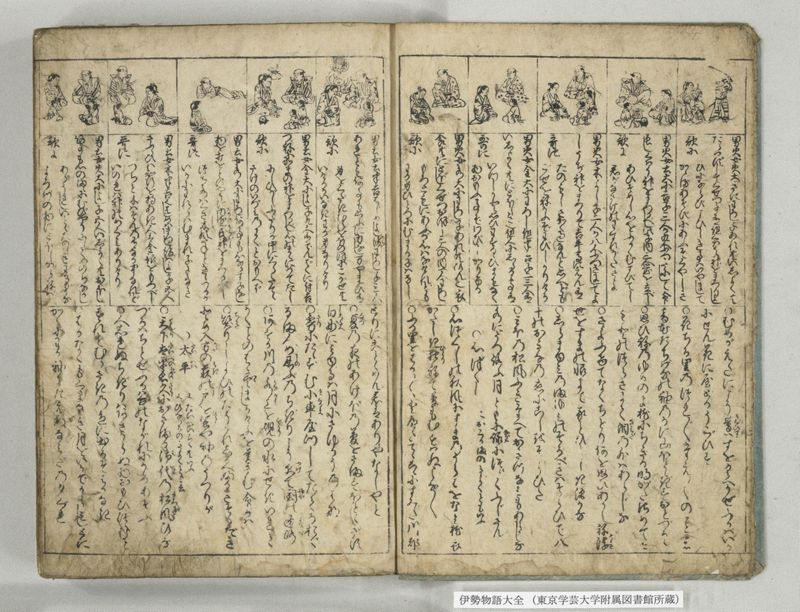
翻刻
【右丁・上段】
男火女火大きにわろし子あれ共いしよくは
たらかずしてくぜつ事有但くわう神をまつりよし
歌に ひにならびこひしき事はいやまして
かゝるあそびにあふぞくやしき
男火女土大に吉子三人か九人ふつきにして命
長しくわう神をまつるべし此子内三人置を立べし
歌に あひそめし心をふかくむすびてし
君がなさけのわすれがたさよ
男火女木よし子二人か八人ふつきにしてよ
しうぢ神をまつりて吉牛馬にえん有
歌に たのもしさかく過なんと思へども
ごせをねがふぞわびしかりける
男火女金大にわろし但半吉子二三人有
いしよく共にとぼしき也但人にしらる事有
歌に いつしかと思ひわするゝひまもなく
物おもふ事ぞわびしかりける
男火女水大にわろし子あれ共ひん也衣
食共にとぼしくぜつおほし三人の内一人わろし
歌に もろともにあふが心はなけれども
わか身ひとつにむまる子はなし
【右丁・下段】
○むめがえだにこそ鶯(うぐひす)はすをくへかぜふかばいか
にせん花にやどるうぐひす
○花ちる里のつれ〴〵たえ〳〵のことの
音花たちばなの袖のかに山ほとゝぎすおとづるゝ
○思ひねのゆめのま枕にちぎる明がたさめてそ
もとのつらさにて泪(なみだ)の外はあらじな
○さよふけてなくちどり何を思ひあかしね浮(うき)
世をすまの恨にて我とひしき源かな
○しらまゆみのまゆみのそるべきはそらひで八
十のおきなの恋にこしをそらひた
○みほの松風ふきたへておきつなみもあらじな
水にうつろふ月ともに詠(ながめ)につゞくふじさん
〇心づくし 又おこかまのきよくともいふ
○心づくしの秋風にすまのうらはをなみ枕衣
かたしき独(ひとり)ねて夢もむすはぬよな〳〵
○ふる里をはる〴〵とへたてゝこゝにすみた川都
【左丁・上段】
男土女土半吉はじめよし後(のち)わろし子三人
あれども何事も思ふに力なし万やまひ有
歌に 身をくだきむねをほのほにこがせ共
いけるかいなきわが身なりけり
男土女金大によし子九人有でんばくに付吉
つねにかまの神をまつるべし心のまゝにめてたし
歌に にしひがしふたりが中にくらたてゝ
さけのいづみのわくとおもへば
男土女水大にわろし何事も心ならす子なし
物を打をとすやうに力(ちから)なし氏神(うぢがみ)をまつるべし
歌に つち水はくさ木のたねときゝつるが
いかにわれらはむまれ子もなき
男土女木半吉也はじめはまつし後はよし子五人
さふらひは知行を持あき人は金銀をもつべし
歌に つちと木はそんの有なる中なれど
いのれば神のめぐみありけり
男土女火大によし子五人いしよく共おほし
何事も心のまゝにむびやうにしていのちながし
歌に あらうれしいとゞたのしきわか身もかな
よろづの物にとほしからねば
【左丁・下段】
とりにことゝはん君はありやなしやと
○夏(なつ)の夜のあけぼの夢をさますほとゝざす
白妙(しろたへ)にみゆるは月にさゆるうのはな
○霧(きり)にたゝずむ小車(をくるま)やつしてたてるおぐ
るま人め忍ぶのちぎりこそ受(うけ)て閨(ねや)の通路(かよひぢ)
○あすか川の水上(みなかみ)を硯(すゞり)の水にせきいれて
かくことのはゝ尽(つく)まじかけふを暮さむ命かは
○契(ちき)りしよひのたそかれしるべふかきそらだき
とめ入/方(かた)の荻(はぎ)の戸(と)を開(ひらく)や袖のうつりが
○太平(たいへい) 又たいへいらく共いふ
又ひなつちのきよくとも云
○天下太平長久(てんかたいへいちやうきう)におさまる御代(みよ)の松風(まつか)ひな
づるはちとせふるは谷のながれにかめあそぶ
○人しれぬちぎりはあさからぬ物おもひつゝむと
すれどむらさきの色に出るそはかなき
○はかなくもくまなき月をいかでうらみしとに
かくにわか袖にたえぬなみだの夕ぐれ
現代語訳
【右丁・上段】
**男・火×女・火:** 大いに悪し。子はあるが、衣食ともに十分に働かず、口論のことが多い。ただし火旺神をまつれば吉。
歌:火のように燃え上がる恋しい思いはいよいよ募って、
こんな(楽しい)遊びの席に会うのが悔しいことよ。
**男・火×女・土:** 大いに吉。子三人か九人。富貴にして長命。火旺神をまつるべし。この子のうち三人を跡継ぎとして立てるべし。
歌:恋い初めた心を深く結びとめて、
あなたの情けの忘れがたいことよ。
**男・火×女・木:** 良し。子二人か八人。富貴にして良し。氏神をまつれば吉。牛馬に縁あり。
歌:たのもしくこのまま過ぎてゆくかと思えども、
後世(来世)を願うのが侘しいことよ。
**男・火×女・金:** 大いに悪し。ただし半吉。子二、三人あり。衣食ともに乏しい。ただし人に知られることがある。
歌:早くも(あの人のことを)思い忘れる間もなく、
物思いにふけることが侘しいことよ。
**男・火×女・水:** 大いに悪し。子はあるが貧しい。衣食ともに乏しく、口論が多い。三人のうち一人は悪し。
歌:共に(相思相愛で)逢う心はないけれど、
わが身一つに生まれる子はいない(子はできてしまう)。
---
【右丁・下段】
**○梅が枝(の段)**
○梅が枝にこそ鶯は巣を組むべきなのに、風が吹いたらどうしよう。花に宿る鶯よ。
○花散る里の物寂しさ。途切れ途切れの琴の音。花橘の袖の香り。山時鳥(ほととぎす)が訪れる。
○思い寝の夢の間の枕元に(あなたと)契る夜明け前、目覚めればもとの辛さで、涙の外には何もないことだよ。
○小夜(さよ)が更けて鳴く千鳥よ、何を思って夜を明かすのか。浮き世を須磨の恨みとして、我と引き付ける「源」(光源氏)よ。
○白真弓(しらまゆみ)の真弓の木のように反り返るはずが、(滑稽にも)八十の翁の恋で腰を反り返らせている。
○三保の松風が吹き絶えて、沖の波もないことだろう。水に映る月と共に詠み続ける富士山よ。
---
**○心づくし(の段) 別名おこかまの曲ともいう**
○心づくしの秋風に、須磨の浦の波を枕に、衣を片敷いて独り寝て、夢も結べぬ夜ごとよ。
○ふるさとをはるばる隔てて、ここに澄んだ川(住吉・住之江)に。都の鳥に(この曲を)問うてみよう、君はいるのかいないのかと。
---
【左丁・上段】
**男・土×女・土:** 半吉。初めは良く、後に悪し。子三人あるが、何事も思うように力が出ない。何かと病気がある。
歌:身を砕き、胸を炎で焦がしても、
生きている甲斐のないわが身であることよ。
**男・土×女・金:** 大いに吉。子九人あり。田畑を持つことで吉。常に竃(かまど)の神をまつるべし。心のままにめでたし。
歌:西と東に(二人で)力を合わせて蔵を建てて、
酒の泉が湧くかと思われるほど(豊かである)。
**男・土×女・水:** 大いに悪し。何事も心のままにならず。子なし。物を打ち落とすように(力なく)頼りにならない。氏神をまつるべし。
歌:土と水は草木の種と聞いているが、
どうして我らは生まれた子もないのか。
**男・土×女・木:** 半吉。初めは貧しく、後は良し。子五人。侍は知行を持ち、商人は金銀を持つべし。
歌:土と木は損のある仲だけれども、
祈れば神のめぐみがあることよ。
**男・土×女・火:** 大いに吉。子五人。衣食ともに多し。何事も心のままにかない、無病にして命長し。
歌:ああ嬉しい、いよいよたのしいわが身よ。
万物に乏しいことがないので。
---
【左丁・下段】
(鳥に言伝てよう、君はそこにいるのかいないのかと。)
○夏の夜の明け方、夢を覚ます時鳥(ほととぎす)よ。白妙に見えるのは月に映える卯の花か。
○霧の中にたたずむ小車(牛車)よ、(恋人のもとへ)やつして(目立たぬよう)立てておく車よ。人目を忍ぶ契りを受けて、閨(ねや)への通い路よ。
○飛鳥川の水上(みなかみ)を硯の水として引き入れて、書き記す言の葉は尽きるまい。今日を暮らしているこの命のある限り。
○契った宵の夕暮れ、道案内の深い空薫きを(頼りに)訪ね入る先の萩の戸を開く、袖の(移り)香よ。
---
**○太平(の段) 別名太平楽ともいう、また雛土(ひなつち)の曲ともいう**
○天下泰平長久に治まる御代の松風よ。雛鶴は千歳(ちとせ)経て、谷の流れには亀が遊ぶ。
○人知れぬ契りは浅からぬもの。物思いを包もうとするけれど、紫の色に(心が)表れてしまうのははかないことよ。
○はかなくも、雲一つない月をどうして恨もうかとも思うけれど、とかく(やはり)わが袖に絶えない涙の夕暮れよ。
英語訳
**[Right Folio, Upper Section]**
*Man Fire × Woman Fire:* Greatly inauspicious. Children may be born, but clothing and food are insufficient; quarrels are frequent. However, worshipping the fire deity brings good fortune.
Poem: *The longing that burns like fire only grows stronger — / how vexing it is to meet at such a merry gathering.*
*Man Fire × Woman Earth:* Greatly auspicious. Three or nine children. Wealthy and long-lived. Should worship the fire deity. Three of these children should be established as heirs.
Poem: *The heart that first fell in love is deeply bound — / how unforgettable is your kindness.*
*Man Fire × Woman Wood:* Auspicious. Two or eight children. Wealthy and fortunate. Auspicious if one worships the clan deity. A connection with cattle and horses.
Poem: *I think things may pass by hopefully like this — / yet yearning for the afterlife is a forlorn feeling.*
*Man Fire × Woman Metal:* Greatly inauspicious, though half-auspicious. Two or three children. Both clothing and food are scarce. However, they may become known to others.
Poem: *Without even a moment to forget one's thoughts of them, / to be lost in brooding is such a sorrowful thing.*
*Man Fire × Woman Water:* Greatly inauspicious. Children may be born but poverty prevails. Both clothing and food are scarce, and quarrels are numerous. Of three children, one turns out badly.
Poem: *Though neither of us has a heart inclined to meeting, / a child born of my body alone there cannot be.*
---
**[Right Folio, Lower Section]**
**○ Ume ga E (Plum Branch) section**
○ It is on the plum branch that the warbler should make its nest — but what shall become of it when the wind blows? O warbler who lodges in the blossoms.
○ The loneliness of the village where blossoms fall. The faint, intermittent sounds of the koto. The scent of tachibana orange blossoms on one's sleeve. The mountain cuckoo (hototogisu) pays a visit.
○ At the pillow of a love-dream in the moment of drowsy sleep, pledging vows in the hour before dawn — waking, the original sorrow returns, and there is nothing but tears.
○ O plover crying as the night deepens — what do you brood over through the night? Taking the floating world as the grief of Suma, how close you draw "Minamoto" (Hikaru Genji) to me.
○ Like the white-bark bow-wood (shira-mayumi) that ought to spring back, an eighty-year-old elder bends his back forward in a fit of lovesickness.
○ The pine wind of Miho blows and ceases; the offshore waves, too, must have calmed. Together with the moon reflected on the water, one composes verses gazing at Mount Fuji.
---
**○ Kokoro Zukushi (Heart's Devotion) section — also called Okogama no Kyoku**
○ In the autumn wind that consumes the heart, with the waves of Suma Bay as one's pillow, lying alone with one's robe spread beneath, unable to weave even a dream — night after night.
○ Far, far away from one's hometown, here by the clear river (Sumida / Suminoe). Let me ask the birds of the capital — do you dwell there, or not?
---
**[Left Folio, Upper Section]**
*Man Earth × Woman Earth:* Half-auspicious. Good at first, bad later. Three children, but in all things one lacks the strength to act as one wishes. Prone to various illnesses.
Poem: *Though I crush my body and scorch my breast with flames, / my life is one in which living seems without purpose.*
*Man Earth × Woman Metal:* Greatly auspicious. Nine children. Blessed through farmland. Should always worship the deity of the hearth. All things go as one's heart desires — truly fortunate.
Poem: *Building a storehouse together between east and west — / it is as though a spring of sake wells up.*
*Man Earth × Woman Water:* Greatly inauspicious. Nothing goes as one wishes. No children. Like dropping and losing something, there is no strength. Should worship the clan deity.
Poem: *I have heard that earth and water are the seeds of plants — / then why are we without a child born to us?*
*Man Earth × Woman Wood:* Half-auspicious. Poor at first, good later. Five children. A samurai should hold a domain; a merchant should hold gold and silver.
Poem: *Though earth and wood make a pairing prone to loss, / if one prays, the blessings of the gods are bestowed.*
*Man Earth × Woman Fire:* Greatly auspicious. Five children. Both clothing and food are plentiful. All things go as one's heart desires; free from illness and long-lived.
Poem: *Ah, what joy — how increasingly happy my own life is! / For in the ten thousand things, I am not wanting.*
---
**[Left Folio, Lower Section]**
(…let me ask the bird — are you there, or not?)
○ At the break of a summer night, the cuckoo (hototogisu) that wakes one from sleep — what appears white is the deutzia blossoms gleaming in the moonlight.
○ A small ox-cart standing in the mist, drawn up discreetly — a cart kept waiting in secret. Accepting vows sworn in secrecy from others' eyes, the path to the bedchamber.
○ Drawing the waters of the upper reaches of the Asuka River into the inkstone's well, the words I write will never be exhausted — for as long as I have this life to spend this day.
○ In the dusk of the evening when our vow was pledged, guided by the deep incense burning in the night air, I open the lespedeza-reed gate of the place I have come to visit — and there is the scent that has transferred to my sleeve.
---
**○ Taihei (Great Peace) section — also called Taiheiraku, and also known as Hinatsuchi no Kyoku**
○ The pine wind of an age that has long settled into heavenly peace. The young crane lives a thousand years; in the valley stream, the tortoise plays.
○ A secret pledge is never a shallow thing. I try to conceal my longing thoughts, but that they show in the color of violet — how fleeting and frail.
○ How ephemeral — yet how could I bring myself to resent a moon without a single cloud? And yet, somehow, the tears on my sleeve will not stop — in this evening dusk.