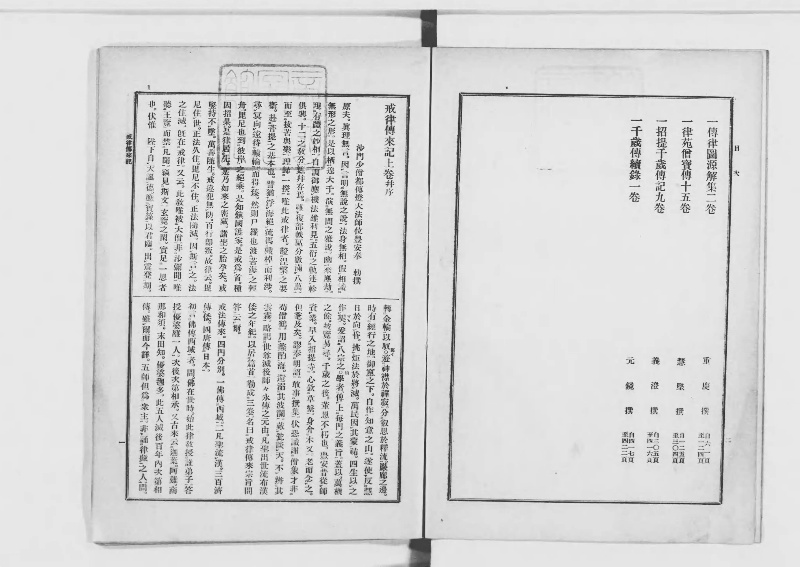
翻刻
【右頁:目次のつづき】
一傳律圖源解集二卷 重 慶 撰 自 六一頁
至一二四頁
一律苑僧寶傳十五卷 慧 堅 撰 自一二五頁
至三〇四頁
一招提千歲傳記九卷 義 澄 撰 自三〇五頁
至四一六頁
一千歲傳續錄一卷 元 鏡 撰 自四一七頁
至四二二頁
【一頁】
【上段】
《題:戒律傳來記上卷《割書:幷序》》
沙門少僧都傳燈大法師位豐安奉 勅撰
原夫。眞理無言。因_レ言明_二無說之說_一。法身無相。假_レ相識_二
無形之形_一。是以栖_二-遑大千_一。演_二無問之雅說_一。幽_二-來塵劫_一。
現_二有體之妙相_一。自_二調御應_レ機法雄利見_一。五衍之軌連_レ軫
俱興。十二之敎分_レ鏣幷存焉。雖_下復部帙區分數滿_中 八萬_上。
而至_二拔苦與樂_一。理歸_二 一揆_一。唯此戒律者。證_二𣵀槃_一之要
衞。赴_二菩提_一之基本也。譬猶_下浮_レ海絕_レ流馮_二檝棹_一而利渉。
尋_レ冥向_レ遠待_二轅輪_一。而得_上レ臻。然則尸羅也【。脱】渡_二苦海_一之輕
舟。毘尼也到_二彼岸_一之絕乘。是知鎭國護家。是戒爲_レ首。種
因招果。是律居_レ先。寔乃如來之密藏。諸聖之胎孕矣。戒
竪持不_レ墜。萬善隨生。戒違犯無_レ防。百行卽叛。故律云。毘
尼住_レ世。正法久住。毘尼不_レ住。正法隨滅。因_レ斯言_レ之。法
之住滅。旣在_二戒律_一。又云。此敎唯被_二大僧_一。非_二沙彌聞_一。唯
聽_二王覽_一【。脱】而禁_二凡聞_一。竊見_二斯文_一。玄覽之閑。實足_二 一思_一者
也。伏惟 陛下自_レ 天誕_レ德。應_二寶籙_一以君臨。出_レ震登_レ期。
【下段】
轉_二金輪_一以馭◦(寓イ)遊_二神襟於禪寂_一。分_二叡思於釋流_一。巖廊之邊。
時有_二經行之地_一。御窻之下。自作_二知意之山_一。遂使_下反_二慧
日於向_一レ昏。挑_中炬法於將_上レ滅。萬民因_レ其蒙_レ祐。四生以_レ之
作_レ娱(マヽ)。爰詔_二 八宗之◦(碩)學者_一。俾_レ 上_二每門之義旨_一。蓋以。萬機
之餘。披覽易_レ尋。千歲之後。董恩不_レ朽也。豊安昔從_レ師
資_レ業。早入_二招提寺_一。心欽_二草繫_一。身介_二木叉_一。老而念_レ之。
但耄及矣。謬奉_二明詔_一。敢事_二撰集_一。伏恐識謝_二僧象_一才非_二
苟僧鶴_一。用_レ蠡酌_レ海。還溺_二其波瀾_一。戴_レ瓫談_レ 天。不_レ辨_二其
雲霧_一。略記_二世尊滅後師々永傳之元由。凡聖出世流布漢
倭之年紀_一。以居_二篇首_一。勒成_二 三卷_一。名曰_二戒律傳來宗旨問
答_一云_レ爾。
戒法傳來。四門分別。一佛傳_二西域_一。二凡聖流_レ漢。三百濟
傳_レ倭。四唐傳_二日本_一。
初言_二佛傳西域_一者。問。佛在世時。始此律敎授_二誰弟子_一。答
授_二優婆離一人_一。次後次第相承。又古來云_二【一点無】迦葉。阿難。商
那和須。末田知。優婆毱多。此五人滅後百年内次第相
傳。雖_レ爾而今詳。五師但爲_二衆主_一。非_下誦_二律藏_一之人_上。問。
現代語訳
【右頁:目次の続き】
一伝律図源解集二巻 重慶撰 六一頁から
一二四頁まで
一律苑僧宝伝十五巻 慧堅撰 一二五頁から
三〇四頁まで
一招提千歳伝記九巻 義澄撰 三〇五頁から
四一六頁まで
一千歳伝続録一巻 元鏡撰 四一七頁から
四二二頁まで
【第一頁】
【上段】
《題:戒律伝来記上巻《付記:序文を含む》》
沙門少僧都伝燈大法師位豊安が勅命により撰述
そもそも真理は言語を超えたものであるが、言葉によって無説の説を明らかにし、法身は形を超えたものであるが、形によって無形の形を認識する。そのために大千世界に栖息し、無問の雅やかな説法を演じ、塵劫の昔から現れて、有体の妙なる相を現している。調御師(仏陀)が機に応じて現れ、法雄が利見してから、五乗の教えの軌道が連なって興り、十二部経の教えが分かれて並び存している。経典の部帙は区分されて数は八万に満ちているけれども、苦を抜き楽を与えることにおいて、道理は一つに帰する。ただこの戒律は、涅槃を証する要衛であり、菩提に赴く基本である。譬えるなら、海に浮かび流れを絶って檝棹に頼って順調に渡り、闇を尋ね遠方に向かって轅輪を待って到達を得るようなものである。そうであれば尸羅(戒)は苦海を渡る軽舟であり、毘尼(律)は彼岸に到る絶妙な乗り物である。これによって知られることは、国を鎮め家を護ることは戒を首とし、因を種え果を招くことは律が先に立つということである。まことに如来の密蔵であり、諸聖の胎孕である。戒を堅持して墜ちなければ万善が随って生じ、戒に違犯して防ぎがなければ百行はただちに叛く。故に律に云う、「毘尼が世に住すれば正法は久しく住し、毘尼が住さなければ正法は随って滅する」と。この言葉によれば、法の住滅は既に戒律にある。また云う、「この教えはただ大僧にのみ被らせ、沙弥の聞くところではない。ただ王の覧ることを聴し、凡人の聞くことを禁ずる」と。この文を見るに、玄覧の間において、実に一思するに足るものである。伏して惟んみるに、陛下は天より徳を誕生され、宝籙に応じて君臨され、震宮より出でて期に登り、
【下段】
金輪を転じて世を統治される。神襟を禅寂に遊ばせ、叡思を釈流に分かたれる。巌廊の辺には時に経行の地があり、御窓の下には自ら知恵の山を作られる。遂に恵日を昏に向かうところから反し、法の炬火を将に滅せんとするところから挑げしめられる。万民はその庇護を蒙ることによって、四生はこれを以て娯楽とする。ここに八宗の�碩学者に詔して、各門の義旨を上進させられる。蓋し、万機の余暇に披覧し尋ねやすくし、千歳の後にも恩恵が朽ちないためである。豊安は昔師に従って業を学び、早くに招提寺に入った。心は草繋(戒)を欽慕し、身は木叉(戒)を介している。老いてこれを念ずるに、ただ耄及んでいる。謬って明詔を奉じ、敢えて撰集を事とする。伏して恐れるのは、識見は僧象に及ばず才能は苟僧鶴に非ず、蠡を用いて海を酌めば却ってその波瀾に溺れ、瓫を戴いて天を談ずればその雲霧を弁じないことである。世尊滅後の師々永伝の元由、凡聖出世し漢土倭国に流布した年紀を略記して篇首に置き、三巻に勒成して「戒律伝来宗旨問答」と名づける。
戒法の伝来を四門に分別する。一つは仏が西域に伝えたこと、二つは凡聖が漢土に流したこと、三つは百済が倭国に伝えたこと、四つは唐が日本に伝えたことである。
初めに仏が西域に伝えたことを言えば、問う、仏の在世の時、この律教を始めて誰の弟子に授けたか。答える、優婆離一人に授けた。次に後の次第相承について、また古来より迦葉、阿難、商那和須、末田知、優婆毱多と云う。この五人の滅後百年内の次第相伝である。そうであるけれども今詳しく検討すると、五師はただ衆主となっただけで、律蔵を誦する人ではない。問う、
英語訳
[Right page: Table of Contents continued]
One volume of "Denritsu Zugen Kaishu" (Commentary Collection on the Origins of Transmitted Precepts) - 2 volumes, compiled by Jukei, from page 61 to page 124
One volume of "Ritsuen Soho Den" (Biography of Monk Treasures in the Precept Garden) - 15 volumes, compiled by Eken, from page 125 to page 304
One volume of "Shotei Senzai Denki" (Records of the Thousand-Year Tradition of Shotei Temple) - 9 volumes, compiled by Gicho, from page 305 to page 416
One volume of "Senzai Den Zokuroku" (Continued Records of the Thousand-Year Tradition) - 1 volume, compiled by Genkyo, from page 417 to page 422
[Page 1]
[Upper section]
Title: Records of the Transmission of Precepts and Vinaya, Upper Volume (including preface)
Compiled by imperial command by Monk Minor Bishop Dento Great Dharma Teacher Houan
Originally, ultimate truth is beyond words, yet through words it illuminates the teaching without teaching. The Dharma body is without form, yet through form we recognize the formless form. Thus dwelling throughout the great thousand worlds, it expounds the elegant teaching without questions. Appearing from countless kalpas past, it manifests the wonderful form of true substance. Since the Tamer (Buddha) appeared according to circumstances and the Dharma hero gained insight, the tracks of the five vehicles arose in succession, and the teachings of the twelve divisions exist side by side. Although the scriptural collections are categorized and number eighty thousand in total, in terms of removing suffering and granting happiness, the principle returns to one. Only these precepts and vinaya are the essential guard for attaining nirvana and the foundation for reaching bodhi. It is like relying on oars and rudders to cross smoothly when floating on the sea and cutting through currents, or waiting for axles and wheels when seeking through darkness toward distant places to achieve arrival. Thus sila (precepts) is the light boat for crossing the sea of suffering, and vinaya is the supreme vehicle for reaching the other shore. From this we know that stabilizing the nation and protecting families takes precepts as primary, and planting causes to attract results puts vinaya first. Truly they are the secret treasury of the Tathagata and the womb of all sages. When precepts are firmly maintained without falling, myriad good deeds arise accordingly; when precepts are violated without prevention, all practices immediately rebel. Therefore the vinaya states: "When vinaya remains in the world, the true Dharma remains long; when vinaya does not remain, the true Dharma perishes accordingly." Based on these words, the remaining or perishing of the Dharma already lies in the precepts and vinaya. It also says: "This teaching is only for fully ordained monks, not for novices to hear. Only kings are permitted to examine it, while ordinary people are forbidden to hear it." Seeing this text, in the space of profound contemplation, it is truly worthy of consideration. Humbly reflecting, Your Majesty was born with virtue from heaven, responding to the precious register to rule as sovereign, emerging from the eastern palace to ascend at the proper time,
[Lower section]
turning the golden wheel to govern the world. You let your divine mind wander in meditative tranquility and divide your wise thoughts among Buddhist schools. Beside the rocky corridors there are sometimes places for walking meditation; below the imperial windows you personally create mountains of wisdom. Thus you cause the sun of wisdom to return from approaching dusk and kindle the torch of Dharma from near extinction. The myriad people receive protection through this, and the four kinds of beings take this as their enjoyment. Here you issued edicts to learned scholars of the eight schools, having them present the essential teachings of each tradition. This is so that in leisure from myriad affairs they may be easily examined and sought, and so that even after a thousand years the imperial grace will not decay. Houan formerly studied under teachers and entered Shotei Temple early. His heart admired the grass bonds (precepts) and his body was clothed in moksha (liberation through precepts). Growing old while contemplating this, he has simply reached senility. Mistakenly receiving the bright imperial edict, he dares to undertake compilation. He humbly fears that his understanding falls short of Monk Sho and his talent is not like Gou Senkaku - using a small ladle to scoop the sea, he instead drowns in its waves; wearing a jar to discuss heaven, he cannot distinguish its clouds and mists. He briefly records the original causes of the masters' eternal transmission after the World-Honored One's extinction, and the chronology of sages and ordinary people's emergence and spread through China and Japan, placing this at the beginning of the text. Compiled into three volumes, it is titled "Questions and Answers on the Essential Teachings of Precept and Vinaya Transmission."
The transmission of the precept dharma is divided into four sections: First, Buddha's transmission to the Western Regions; Second, sages and ordinary people's flow to China; Third, Baekje's transmission to Japan; Fourth, Tang's transmission to Japan.
Regarding the first, Buddha's transmission to the Western Regions: Question: When the Buddha was in the world, to which disciple did he first teach this vinaya? Answer: He taught it to Upali alone. Concerning the subsequent successive transmission, it has been said since ancient times: Kashyapa, Ananda, Shanavasika, Madhyantika, and Upagupta. This is the successive transmission within one hundred years after these five people's deaths. However, upon careful examination now, the five masters merely became leaders of the community and were not people who recited the vinaya collection. Question: