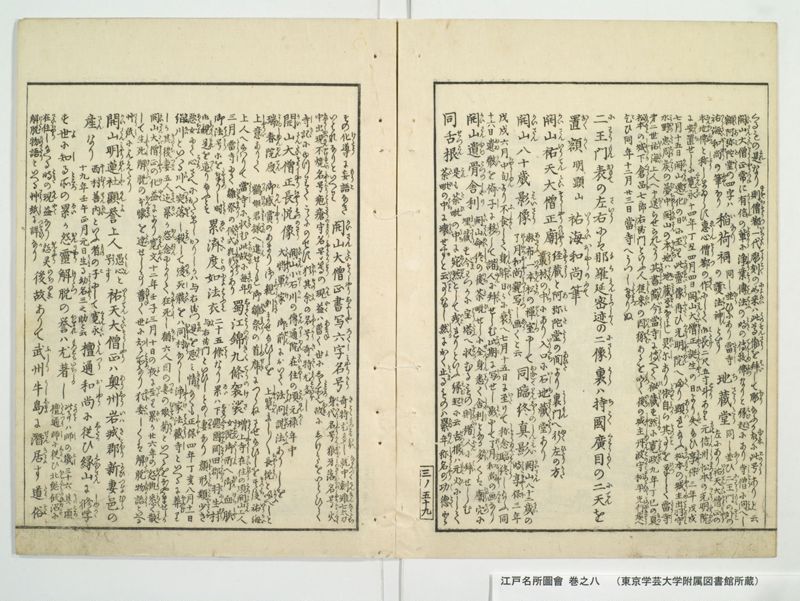
翻刻
【右丁】
《割書:くるもの是(これ)なり則(すなはち)僧都(そうつ)一代(いちたい)彫刻(てうこく)の如来(によらい)は此(この)尊像(そんさう)を拜(はい)して彫(ほり)給ふか故(ゆゑ)に此号(このかう)ありと云|開山(かいさん)大僧正(たいそうしやう)常(つね)に有信(うしん)の軰(ともから)に浄業(しやうこう)傳法(てんはふ)の時(とき)の傳授佛(てんしゆふつ)なりと縁起(えむき)にあり寺僧(しそう)に問(とふ)へし》
《割書:額(かく)阿弥陀堂(あみたたう)の四字は|祐海和尚(いうかいおしやう)の筆(ふて)なり》稲荷(いなり)祠《割書:同し並(なら)ひにあり當寺(とうし)|の護法神(こはふしん)とす》地蔵堂(ちさうたう)《割書:同し並(なら)ひ二王門(にわうもん)の外(そと)の|左にあり祐天大僧正(いうてんたいそうしやう)の》
《割書:本地佛(ほんちふつ)と称(しよう)しまゐらす恵心僧都(ゑしんそうつ)の作(さく)にして御長(みたけ)二尺五寸 斗(はかり)あり元(もと)信州(しんしう)松本(まつもと)の光明院(くわうみやうゐん)|に安置(あんち)せしに寛永(くわんえい)十四年丁丑四月四日 開山(かいさん)大僧正(たいそうしやう)誕生(たんしやう)の日(ひ)より失(うせ)給ひ享保(きやうほ)三年戊戌》
《割書:七月十五日 開山(かいさん)遷化(せんけ)の日(ひ)に至(いた)り此(この)靈像(れいさう)再(ふたゝ)ひ光明院(くわうみやうゐん)へ帰(かへ)り顕(あらは)れ給ふ松本(まつもと)の城主(しやうしゆ)出羽守(てはのかみ)|水野忠周矦(みつのたゝちかこう)の夢中(むちゆう)開山(かいさん)の本地(ほんち)は地蔵尊(ちさうそん)なるよし灵尓(れいし)あり依(よつて)自(みつか)ら其事(そのこと)を筆(ひつ)して當寺(たうし)》
《割書:第二世 祐海(いうかい)上人へ申 送(おく)らせられたり其(その)書簡(しよかん)今(いま)當寺(たうし)に傳(つた)へて秘蔵(ひさう)す然(しかる)に寛政(くわんせい)九年丁巳の夏(なつ)|松本(まつもと)の城下(しやうか)倉品(くらしな)七郎右衛門といふ人 従来(じうらい)の因縁(いんえむ)あるを以(もつ)て後(のち)の城主(しやうしゆ)丹波守(たんはのかみ)松平光行矦(まつたひらみつゆきこう)へ》
《割書:乞(こ)ひ同年十二月廿三日 當寺(たうし)へうつし奉(たてまつ)りぬ|》
二王門(にわうもん)表(おもて)の左右(さいう)には那羅延密迹(ならえんみつしやく)の二像(にさう)裏(うら)は持國(ちこく)廣目(くわうもく)の二天(にてん)を
置(おく)額(かく)《割書:明顕山|》祐海和尚筆(いうかいおしやうのふて)
開山祐天大僧正廟(かいさんいうてんたいそうしやうのひやう)《割書:経蔵(きやうさう)と阿弥陀堂(あみたたう)の間(あひた)より裏門(うらもん)へ行(ゆく)左(ひたり)の方(かた)|叢林(さうりん)の中(うち)にあり入口(いりくち)に石地蔵堂(いしちさうたう)あり》
開山(かいさん)八十歳 影像(えいさう)《割書:麻布一本松(あさふいつほんまつ)の禪室(せんしつ)にして|了月和尚(れうけつおしやう)親写(みつからうつ)し画(ゑか)くと云》同(おなしく)臨終真影(りんしうのしんえい)《割書:開山(かいさん)八十二 歳(さい)の|時(とき)享保(きやうほ)三年》
《割書:戊戌六月 中旬(ちゆうしゆん)より不食(ふしよく)して身躰(しんたい)日々(ひゝ)に衰(おとろ)へ七月十五日に至(いた)りて称念(しようねん)臨終(りんしう)し給ふ同|十六日 遺骸(ゆゐかい)を倚子(いし)に移(うつ)して諸人(しよにん)に拜(はい)せしむ此期(このこ)に写(うつ)せし影(えい)にして了月和尚(れうけつおしやう)の画(くわ)なり》
開山遺骨舎利(かいさんゆゐこつのしやり)《割書:開山(かいさん)命終(めいしう)の後(のち)荼毗(たひ)せしに全身(せんしん)悉(こと〳〵)く舎利(しやり)となる多(おほ)くは廟穴(ひやうけつ)に|埋蔵(まいさう)す今(いま)わつかに宝塔(はうたふ)へ収(をさ)むるもの則(すなはち)諸人(しよにん)に拜(はい)せしむ》
同 舌根(せつこん)《割書:是(これ)も荼毗(たひ)の中(うち)に宛然(ゑんせん)として残(のこ)れりといふ縁起(えむき)に云 舌根(せつこん)は元(もと)火(ひ)にして|荼毗(たひ)の中(うち)に壊(くわい)せすと云事(いふこと)なし然(しかる)にかく止(とゝま)るものは纍年(るゐねん)称名(しようみやう)の功德(くとく)と》
【左丁】
《割書:その化導(けたう)に妄語(もうこ)なき|いはれなりといへり》開山大僧正書写六字名号(かいさんたいそうしやうしよしやろくしみやうかう)《割書:奇特(きとく)尤(もつとも)多(おほ)し就中(なかんつく)劍難七太刀(けんなんなゝたち)|身代名号(みかはりみやうかう)狼牙落名号(おほかみのきはおちのみやうかう)火(くわ)》
《割書:中出現不焼名号(ちゆうしゆつけんやけすのみやうかう)疱瘡守名号(ほうさうのまもりみやうかう)等(とう)の現益(けんやく)は普(あまね)く世(よ)にしる所(ところ)也 故(ゆゑ)にしけきをいとひて|寺記(しき)にゆつりてこゝにのせす猶(なほ)其余(そのよ)の名号(みやうかう)奇特(きとく)尤(もつとも)多(おほ)し》
開山大僧正長悦像(かいさんたいそうしやうちやうえつのさう)《割書:開山(かいさん)小石川(こいしかは)の傳通院(てんつうゐん)在住(さいちゆう)の頃(ころ)元禄(けんろく)年中|大将軍家(たいしやうくんけ) 御前(こせん)において法問(はふもん)説法(せつはふ)ありしを》
《割書:瑞春院殿(すゐしゆんゐんてん) 御感賞(こかんしやう)のあまり御 親(みつから)刻(きさ)ませ給ひしを 上覧(しやうらん)まし〳〵長悦(ちやうえつ)と呼(よふ)へしと|上意(しやうい)ありて 鶴姫君様(つるひめきみさま)へ進(しん)せられ御 雛祭(ひなまつり)の首席(しゆせき)につらねさせ給ひしを其後(そのゝち)祐海(いうかい)》
《割書:上人へ給はりて當寺(たうし)に収(をさ)む此故(このゆゑ)に毎年(まいねん)|三月 當寺(たうし)にて雛祭(ひなまつり)の儀式(きしき)执行(しゆきやう)事あり》蜀江錦九條袈裟(しよくこうのにしきくてうのけさ)《割書:増上寺(そうしやうし)在住(さいちゆう)の頃(ころ)開山(かいさん)上人|女院(によゐん)御町(こしよ)へ御血脈(おんけちみやく)》
《割書:御 法号(はふかう)等を奉(たてまつ)りし時(とき)|御 親(みつから)是(これ)を造(つく)り給ふとそ》累済度如法衣(るいさいとのによはふえ)《割書:二十五 條(てう)なり累(るい)は下總國(しもつふさのくに)岡田郡(をかたこほり)羽生村(はにふむら)|与(よ)右衛門といひしものゝ妻(つま)なり顔形(かほかたち)類少(たくひすくな)き》
《割書:悪女(あくちよ)にて心(こゝろ)さへにかたましかりしかは与右衛門 是(これ)を悪(にく)み情(なさけ)なくも正保(しやうほ)四年丁亥八月十一日|《振り仮名:𥿻川|きぬかは》といへる川(かは)へ突落(つきおと)し殺(ころ)して後(のち)死骸(しかい)をは同村(おなしむら)なりし浄家(しやうけ)法蔵寺(はふさうし)といへるに葬(ほふむ)り》
《割書:しか其後(そのゝち)妻(つま)五人 迠(まて)累(るい)か怨念(おんねん)によりて狂死(きやうし)し猶(なほ)六人目の妻(つま)の娘(むすめ)菊(きく)といへるをなやませしか|開山(かいさん)大僧正(たいそうしやう)の化益(けやく)により寛文(くわんふん)十二年壬子三月十日の夜(よ)に至(いた)り累(るい)か廿六年の怨執(おんしう)悉(こと〳〵)く散(さん)》
《割書:して生死(しやうし)解脱(けたつ)の本懐(ほんくわい)を達(たつ)せし事 普(あまね)く世(よ)に知(し)る所(ところ)なり猶(なほ)委(くは)しくは解脱物語(けたつものかたり)といへる|艸紙(さうし)に見えたり》
開山明蓮社顯誉(かいさんみやうれんしやけんよ)上人《割書:愚心(くしん)と|号(かう)す》祐天大僧正(いうてんたいそうしやう)は奥州(あうしう)岩城郡(いはきこほり)新妻邑(にひつまむら)の
産(さん)なり《割書:西村善内(にしむらせんない)といふ者(もの)の子(こ)にして寛永(くわんえい)|十九年壬午正月元日 生(うま)る幼名(ようみやう)三之助と云》檀通和尚(たんつうおしやう)に従(したか)ひ縁山(えむさん)に修学(しゆかく)
す世(よ)に知(し)る所の累(るい)か怨靈(おんりやう)解脱(けたつ)の誉(ほまれ)は尤(もつとも)著(いちしる)し《割書:此事(このこと)は師(し)の歳(とし)三十六 其頃(そのころ)|檀通師(たんつうし)に従(したか)ひ北総(ほくさう)飯沼(いひぬま)に》
《割書:在住(さいちゆう)し給へる時(とき)の現益(けんやく)なり怨灵(おんりやう)|解脱物語(けたつものかたり)といへる艸紙(さうし)に詳(つまひらか)なり》後(のち)故(ゆゑ)ありて武州(ふしう)牛島(うししま)に潛居(せんきよ)す道俗(たうそく)
現代語訳
【右丁】
《割書:来るものはこれなり。すなわち僧都一代彫刻の如来は、この尊像を拝して彫り給うが故に、この号ありと云う。開山大僧正常に有信の輩に浄業伝法の時の伝授仏なりと縁起にあり。寺僧に問うべし》
《割書:額「阿弥陀堂」の四字は祐海和尚の筆なり》稲荷祠《割書:同じく並びにあり。当寺の護法神とす》地蔵堂《割書:同じく並び、仁王門の外の左にあり。祐天大僧正の》
《割書:本地仏と称し奉る。恵心僧都の作にして御丈二尺五寸ばかりあり。元は信州松本の光明院に安置せしに、寛永十四年丁丑四月四日開山大僧正誕生の日より失せ給い、享保三年戊戌》
《割書:七月十五日開山遷化の日に至り、この霊像再び光明院へ帰り現れ給う。松本の城主出羽守水野忠周公の夢中、開山の本地は地蔵尊なる由霊示あり。依って自ら其事を筆して当寺》
《割書:第二世祐海上人へ申し送らせられたり。その書簡今当寺に伝えて秘蔵す。然るに寛政九年丁巳の夏、松本の城下倉品七郎右衛門という人、従来の因縁あるを以って、後の城主丹波守松平光行公へ》
《割書:乞い、同年十二月廿三日当寺へ移し奉りぬ》
仁王門表の左右には那羅延密迹の二像、裏は持国広目の二天を置く。額《割書:明顕山》祐海和尚筆
開山祐天大僧正廟《割書:経蔵と阿弥陀堂の間より裏門へ行く左の方、叢林の中にあり。入口に石地蔵堂あり》
開山八十歳影像《割書:麻布一本松の禅室にして、了月和尚親ら写し画くと云う》同じく臨終真影《割書:開山八十二歳の時、享保三年》
《割書:戊戌六月中旬より不食して身体日々に衰え、七月十五日に至りて称念臨終し給う。同十六日遺骸を椅子に移して諸人に拝せしむ。この期に写せし影にして了月和尚の画なり》
開山遺骨舎利《割書:開山命終の後荼毗せしに、全身悉く舎利となる。多くは廟穴に埋蔵す。今僅かに宝塔へ収むるもの、すなわち諸人に拝せしむ》
同舌根《割書:これも荼毗の中に宛然として残れりという。縁起に云う、舌根は元より火にして荼毗の中に壊せずと云う事なし。然るにかく留まるものは累年称名の功徳と》
【左丁】
《割書:その化導に妄語なき謂れなりと云えり》開山大僧正書写六字名号《割書:奇特最も多し。就中剣難七太刀身代名号、狼牙落名号、火》
《割書:中出現不焼名号、疱瘡守名号等の現益は普く世に知る所なり。故に繁きを厭いて寺記に譲りてここに載せず。猶その余の名号奇特最も多し》
開山大僧正長悦像《割書:開山小石川の伝通院在住の頃、元禄年中大将軍家御前において法問説法ありしを》
《割書:瑞春院殿御感賞の余り、御親ら刻ませ給いしを上覧ましまし、長悦と呼ぶべしと上意ありて鶴姫君様へ進せられ、御雛祭りの首席に列ねさせ給いしを、その後祐海》
《割書:上人へ給わりて当寺に収む。この故に毎年三月当寺にて雛祭りの儀式執行事あり》蜀江錦九条袈裟《割書:増上寺在住の頃、開山上人女院御所へ御血脈》
《割書:御法号等を奉りし時、御親らこれを造り給うとぞ》累済度如法衣《割書:二十五条なり。累は下総国岡田郡羽生村与右衛門といいしものの妻なり。顔形類少なき》
《割書:悪女にて心さえ憎たましかりしかば、与右衛門これを憎み、情なくも正保四年丁亥八月十一日絹川といえる川へ突き落とし殺して後、死骸をば同村なりし浄家法蔵寺といえるに葬り》
《割書:しかその後妻五人まで累が怨念によりて狂死し、猶六人目の妻の娘菊といえるを悩ませしが、開山大僧正の化益により寛文十二年壬子三月十日の夜に至り、累が二十六年の怨執悉く散》
《割書:して生死解脱の本懐を達せし事、普く世に知る所なり。猶委しくは解脱物語といえる草紙に見えたり》
開山明蓮社顕誉《割書:愚心と号す》祐天大僧正は奥州岩城郡新妻邑の産なり《割書:西村善内という者の子にして寛永十九年壬午正月元日生まる。幼名三之助と云う》檀通和尚に従い縁山に修学す。世に知る所の累が怨霊解脱の誉は最も著し《割書:この事は師の歳三十六、その頃檀通師に従い北総飯沼に》
《割書:在住し給える時の現益なり。怨霊解脱物語といえる草紙に詳らかなり》後故ありて武州牛島に潜居す。道俗
英語訳
【Right Page】
《Small text: What comes is this. The Nyorai (Buddha) sculptures that the High Priest carved throughout his lifetime were all carved after worshipping this sacred image, which is why it bears this name. According to the temple origins, this was the transmission Buddha used by the founding Great High Priest when teaching pure practice and transmitting the dharma to believers. This should be confirmed with the temple monks.》
《Small text: The four characters "Amida Hall" on the plaque were written by High Priest Yūkai》Inari Shrine 《Small text: Located alongside the same. Serves as the protective deity of this temple》Jizō Hall 《Small text: Located alongside the same, to the left outside the Niō Gate. Of Great High Priest Yūten》
《Small text: Called the honchi Buddha (original ground Buddha). Created by High Priest Eshin, approximately 2 shaku 5 sun in height. Originally enshrined at Kōmyōin Temple in Matsumoto, Shinano Province, but disappeared from the 4th day of the 4th month of Kanei 14 (1637), the birthday of the founding Great High Priest, until Kyōhō 3 (1718)》
《Small text: Until the 15th day of the 7th month, the day of the founder's passing, this sacred image returned and appeared again at Kōmyōin Temple. In a dream of Lord Mizuno Tadachika, Governor of Dewa and lord of Matsumoto Castle, there was a divine revelation that the founder's original nature was Jizō. Therefore, he personally wrote about this matter and sent it to our temple》
《Small text: To the second-generation Yūkai. That letter is still preserved as a treasure at our temple. However, in the summer of Kansei 9 (1797), a person named Kurashina Shichirōemon from Matsumoto castle town, due to past karmic connections, petitioned the later castle lord, Governor of Tanba, Lord Matsudaira Mitsuyuki》
《Small text: And on the 23rd day of the 12th month of the same year, it was transferred to our temple》
On the left and right of the front of the Niō Gate are two images of Naraen and Misshaku, and on the back are the two heavenly kings Jikoku and Kōmoku. Plaque 《Small text: Meiken-zan》 Written by High Priest Yūkai
Mausoleum of Founding Great High Priest Yūten 《Small text: Located in the grove to the left when going from between the Sutra Hall and Amida Hall toward the back gate. There is a stone Jizō hall at the entrance》
Portrait of the founder at age 80 《Small text: From the meditation room at Azabu Ipponmatsu, painted personally by High Priest Ryōgetsu》 Also, deathbed portrait 《Small text: When the founder was 82 years old, Kyōhō 3》
《Small text: From mid-6th month of 1718, he stopped eating and his body weakened daily, passing away while chanting the nembutsu on the 15th day of the 7th month. On the 16th, his remains were moved to a chair for people to worship. This portrait was painted at that time by High Priest Ryōgetsu》
Founder's bone relics 《Small text: After the founder's death, when his body was cremated, it all became relics. Most are buried in the mausoleum pit. What is now kept in the treasure pagoda is what people worship》
Same, tongue root 《Small text: This also remained intact during cremation. According to the temple origins, there is no precedent for a tongue root not being destroyed by fire during cremation. That it remained thus is due to the merit of years of chanting the nembutsu and》
【Left Page】
《Small text: The reason being that there were no false words in his teachings》Six-character Name of Amida written by founding Great High Priest 《Small text: Miraculous benefits are most numerous. Among them, the seven-sword ordeal protective name, wolf fang protective name, fire》
《Small text: Emergence from fire unburned name, smallpox protection name, and other present benefits are widely known throughout the world. Therefore, avoiding repetition, we refer to the temple records and do not include them here. Still, the miraculous benefits of other names are most numerous》
Chōetsu image of founding Great High Priest 《Small text: When the founder was residing at Dentsūin in Koishikawa, during the Genroku years, there were dharma discussions and sermons before the Shogun》
《Small text: Lady Zuishunin was so impressed that she personally had it carved. When viewed by the Shogun, there was an imperial command that it should be called Chōetsu, and it was presented to Princess Tsuru and placed at the head seat of the Doll Festival. Later it was given to》
《Small text: High Priest Yūkai and kept at our temple. For this reason, every year in the third month, there is a Doll Festival ceremony at our temple》 Shu River Brocade Nine-panel Kesa 《Small text: When residing at Zōjōji Temple, the founding high priest offered blood lineage certificates to the Empress's palace》
《Small text: When presenting dharma names, etc., she personally made this》 Rui's salvation dharma robe 《Small text: Twenty-five panels. Rui was the wife of a man called Yoemon from Hanyū village in Okada district, Shimōsa Province. Her appearance was exceptionally》
《Small text: She was an evil woman with a most hateful heart, so Yoemon despised her and heartlessly pushed her into the river called Kinugawa on the 11th day of the 8th month of Shōhō 4 (1647), killing her. Afterward, he buried her body at a Pure Land temple called Hōzōji in the same village》
《Small text: However, afterward five wives died mad deaths due to Rui's vengeful spirit, and she even tormented the daughter Kiku of the sixth wife. Through the spiritual benefit of founding Great High Priest, on the night of the 10th day of the 3rd month of Kanbun 12 (1672), Rui's 26 years of vengeful attachment completely dispersed》
《Small text: And she achieved her original desire for liberation from life and death, which is widely known throughout the world. For more details, see the text called "Tale of Liberation"》
Founding Myōrensha Kenyo 《Small text: Also called Gushin》 Great High Priest Yūten was born in Niitsuma village, Iwaki district, Ōshū Province 《Small text: Son of a man called Nishimura Zenuchi, born on New Year's Day of Kanei 19 (1642). His childhood name was Sannosuke》 He followed High Priest Dantsū and studied at Mt. En. The fame of liberating Rui's vengeful spirit, known throughout the world, is most notable 《Small text: This happened when the master was 36 years old, at that time following Master Dantsū and residing at Iinuma in northern Sōshū》
《Small text: This was a present benefit during his residence there. It is detailed in a text called "Tale of Vengeful Spirit Liberation"》 Later, for certain reasons, he lived in seclusion at Ushijima in Musashi Province. Clergy and laypeople