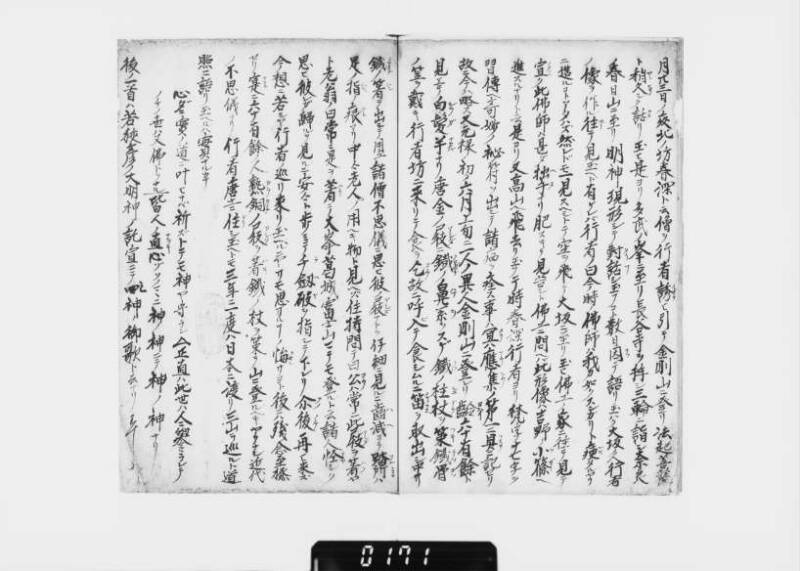
翻刻
【コマ10】
【右丁】
月廿三日ノ夜北ノ坊春深ト云僧ヲ行者 誘(イザナ)ヒ引テ金剛山ニ登リ法起菩薩
ト稍久(ヤヽヒサ)シク話(カタ)リ玉ヒ是ヨリ多武ノ峯ニ至リ長谷寺ヲ拜シ三輪ニ詣シ奈良
ノ春日山ニ至リ明神現形シテ對話(タイワ)シ玉フコト數日 因(ヨツ)テ語リ玉ハク大坂ノ人行者
ノ像ヲ作ル往(ユイ)テ見玉ヘト有ケレバ行者ノ曰今時ノ佛師ハ我カ如クスンガリト痩(ヤセ)タルヤウ
ニ造ルコトアタハズ然レドモ一見スヘシトテ空ヲ飛テ大坂ニ至リ玉ヒ佛工ノ家ニ往テ見テ
宣(ノタマハ)ク此佛師ハ甚ダ拙手(ヘタ)ナリ肥スキテ見苦シト佛工ニ問ヘバ此形像ハ吉野ノ小篠(ヲザヽ)ヘ
進スルナリト云是ヨリ又高山ヘ飛去リ玉フテ時春深行者ヨリ梵字十七字ヲ
習傳ヘ奇妙ノ秘符ヲ出シテ諸病ヲ痊ス事ハ冥應集(メウアウシウ)ノ第一ニ《振り仮名:具󠄁|ツス#1サ》ニ記セリ
故ニ今ハ略ス又元禄ノ初メ六月上旬ニ一人ノ異人金剛山ニ登レリ齢(ヨハイ)六十有餘ト
見エテ白髪(シラガ)半(ナカバ)ナリ唐金ノ屐(アシダ)ニ鐡(クロガネ)ノ鼻系(ハナヲ)ヲスゲ鐡(テツ)ノ柱杖(シユデウ)ヲ策(ツキ)鐡骨(テツコツ)
ノ笠ヲ戴キ行者坊ニ來リテ食ヲ乞(コウ)故ニ呼 ̄ビ入テ食シムルニ笛(タケノフヱ)ヲ取出シ中ヨリ
【左丁】
鐡(クロカネ)ノ箸(ハシ)ヲ出シテ用ユ諸僧不思儀ニ思ヒ彼ノ屐(アシダ)ナトヲ仔細ニ見ルニ齒(ハ)減(ヘ)リテ踏所(フムトコロ)ハ
足ノ指(ユヒ)ノ痕(アト)アリ中々老人ノ用ヘキ物ト見ヘズ住持問テ曰 公(コウ)ハ常ニ此屐( アシダ)ヲ著(ハク)ヤ
ト老翁ノ曰常ニ是ヲ著(ハイ)テ大峯葛󠄀城富士山マテモ登ルト云諸人 怪(アヤ)シク
思ヒ彼レガ歸ルヲ見ルニ安々ト歩ミテ千劔破(チハヤ)ヲ指シテ下レリ尒後(ソノノチ)再ヒ來ズ
今想ニ若シヤ行者ノ巡リ來リ玉ヘルニヤサモ思サルヿノ悔(クヤシ)サヨト後ニハ殘念至■#2
セリ寔(マコト)ニ六十有餘ノ人 熟銅(カラカネ)ノ屐(アシタ)ヲ著(ハキ)鐡ノ杖ヲ策テ山ニ登ルヘキヤウナシ近代
ノ不思儀ナリ行者唐土ニ住(ヂウ)シ玉ヘトモ三年ニ一度ハ日本ニ渡リ三山ヲ巡ルト道
照ニ語リ玉ヘルハ實ナルカナ
心ダニ實ノ道ニ叶ヒナバ祈ズトテモ神ヤ守ラン△正眞󠄀此世ハ人ニ譽ラレテ
ノチノ世ハ又佛トソナル│皆人ノ直(ナヲキ)心ゾソノマヽニ神ノ神ニテ神ノ神ナリ
後ノ一首ハ若狹彥ノ大明神ノ託宣ニテ四神(シ )ノ御歌ト云ナリ畢
現代語訳
【右丁】
(前頁より続く)……六月二十三日の夜、北の坊・春深という僧を行者が誘い引いて金剛山に登り、法起菩薩としばらくの間話し給い、それより多武の峯に至り、長谷寺を拝し、三輪に詣で、奈良の春日山に至れば、明神が現形して対話し給うこと数日。よって語り給わく、「大坂の人が行者の像を作る。往いて見給え」とあったので、行者が曰く、「今時の仏師はわが如くすんがりと痩せたるように造ることができない。しかれども一見すべし」とて、空を飛んで大坂に至り給い、仏工の家に往いて見て宣わく、「この仏師は甚だ拙手(へた)なり。肥えすぎて見苦しい」と。仏工に問えば、「この形像は吉野の小篠へ進ずるなり」と云う。これより又高山へ飛び去り給う。
さて、春深は行者より梵字十七字を習い伝え、奇妙の秘符を出して諸病を癒すことは、『冥応集』の第一に詳しく記せり。故に今は略す。
又、元禄の初め六月上旬に、一人の異人が金剛山に登れり。齢六十有余と見えて、白髪が半ばなり。唐金の屐(あしだ)に鉄の鼻緒を挿げ、鉄の柱杖を策き、鉄骨の笠を戴き、行者坊に来たりて食を乞う。故に呼び入れて食せしむるに、竹の笛を取り出し、中より
【左丁】
鉄の箸を出して用ゆ。諸僧、不思議に思い、彼の屐などを仔細に見るに、歯が減りて踏む所には足の指の痕あり。中々老人の用うべき物と見えず。住持が問うて曰く、「公は常にこの屐を着くや」と。老翁が曰く、「常にこれを履いて大峯・葛城・富士山までも登る」と云う。諸人、怪しく思い、彼が帰るを見るに、安々と歩みて千剣破(ちはや)を指して下れり。その後、再び来ず。
今想うに、若しや行者の巡り来り給えるにや、さも思さるることの悔しさよと、後には残念至極せり。まことに、六十有余の人が唐金の屐を履き、鉄の杖を策いて山に登るべき様なし。近代の不思議なり。行者、唐土に住し給えども、三年に一度は日本に渡り、三山を巡ると道照に語り給えるは、まことなるかな。
心だに誠の道に叶ひなば 祈らずとても神や守らん
△正真にこの世は人に誉められて のちの世はまた仏とぞなる
皆人の直き心ぞそのままに 神の神にて神の神なり
後の一首は、若狭彦の大明神の託宣にて、四神の御歌と云うなり。
(了)
英語訳
【Right folio】
(Continued from previous page) …On the night of the twenty-third day of the sixth month, the ascetic invited and led a monk called Shunjin of the Northern Bō (Kita-no-Bō) up Mount Kongō, where he conversed at length with the Bodhisattva Hōki. From there they proceeded to Tōnomi-no-mine (Tonomine), paid reverence at Hase-dera temple, made a pilgrimage to Miwa, and traveled to Kasuga-yama in Nara, where the Myōjin (divine presence) manifested in physical form and engaged in dialogue with them for several days. The deity spoke, saying: "A person in Ōsaka is making an image of the ascetic. Go and have a look." At this, the ascetic said: "Sculptors of this day cannot carve a figure as lean and gaunt as I truly am. Nevertheless, let us go and see." Thereupon he flew through the air to Ōsaka, went to the house of the sculptor, and upon seeing the work, declared: "This sculptor is most unskilled — the figure is too fat and unsightly." When asked about the image, the sculptor replied: "This statue is to be dedicated to Ozasa in Yoshino." From there, the ascetic again flew off to the high mountains.
As for Shunjin: he received transmission of seventeen Sanskrit characters from the ascetic, and the details of how he produced wondrous secret talismans and cured all manner of illness are recorded fully in the first volume of the *Myōō-shū* (Collection of Numinous Responses). Therefore, it is omitted here.
Also, in early June of the beginning of the Genroku era, a strange person ascended Mount Kongō. He appeared to be over sixty years of age, with hair that was half-white. He wore bronze clogs (ashida) fitted with iron thong-straps, leaned upon an iron staff, bore an iron-boned hat upon his head, and came to the ascetic's lodging (gyōja-bō) to beg for food. He was invited in and given a meal, whereupon he produced a bamboo flute and from within it
【Left folio】
drew out iron chopsticks, which he used to eat. The assembled monks found this most extraordinary. Examining his clogs in detail, they found that the wooden teeth were worn down and that the impressions of toe-prints remained where he had trodden — clearly not something that an ordinary old man would use. The abbot asked: "Do you always wear these clogs?" The old man replied: "I always wear these and climb even as far as Ōmine, Katsuragi, and Mount Fuji." All present found this deeply suspicious. Watching him as he departed, he walked with ease, descending in the direction of Chihayaburu (Chihaya). After that, he never came again.
Reflecting on this now: could it be that the ascetic had come around on his rounds? How regrettable it is that one could think so — those present were filled with lasting regret afterward. Truly, there is no way that a man of over sixty could put on bronze clogs, take up an iron staff, and climb mountains in such a manner. This is a wonder of recent times. The ascetic told Dōshō that, though he dwells in Tang China, he crosses to Japan once every three years to make the rounds of the three sacred mountains — and indeed, this must be true.
> *Kokoro dani / makoto no michi ni / kanainaba / inorazu tote mo / kami ya mamorān*
> "If only one's heart is in accord with the True Way, even without prayer, will not the gods protect one?"
> △ *Shōshin ni / kono yo wa hito ni / homerarete / nochi no yo wa mata / hotoke to zo naru*
> "Truly, in this world one is praised by others, and in the next world one becomes a Buddha."
> *Mina hito no / naoki kokoro zo / sono mama ni / kami no kami nite / kami no kami nari*
> "The upright heart of every person — just as it is — is the divine among the divine, the very essence of the gods."
The last poem is an oracle of the Great Deity of Wakasa-hiko, and is said to be the sacred verse of the Four Deities.
*[End]*