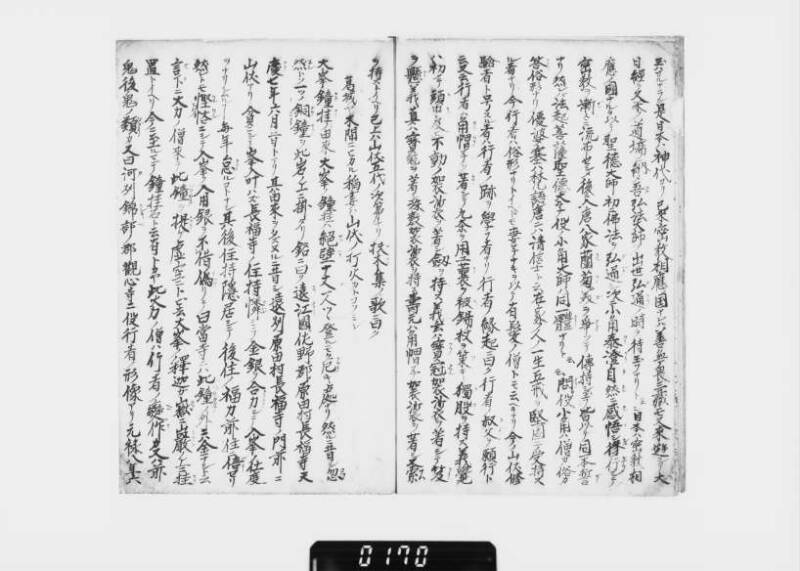
翻刻
【コマ9】
【右丁】
玉ハサルナラン是日本ハ神代ヨリ已來密山敎相應 ̄ノ国ナレハ善無𠂽三藏モ又來遊シテ大
日經ヲ久米ノ道塲ニ納メ吾(ワガ)弘法大師ノ出世 弘通(グツウ)ノ時ヲ待玉フナリト《割書:云々》日本ハ密敎《送り仮名:■■#1》相
應ノ國ナルヲ以テ聖德大師#2初ニ佛法ヲ弘通(グヅウ)シ次ニ小角 泰澄(タイテウ)自然(ヂネシ)ニ感悟(カンゴ)シ修行(シユギヤウ)シテ
密教ヲ漸々(ゼン )ニ流布セシメ後ニ入唐八家 蘭菊(ランキク)。美(ビ)ヲ爭(アラソ)ツテ傳持シ玉フ皆以テ同一 本誓( ゼイ)
ナリ然レバ法起菩薩聖德太子役ノ小角󠄀大師ハ同一體( タイ)ナリト《割書:云云》問(タウ)。役小角󠄀ハ僧カ俗カ
答(コタウ)俗形ナリ優婆塞ハ梵語。唐ニハ清信士ト云在家ノ人ノ一生五戒ヲ堅固ニ受持ス
ル者ナリ今行者ハ俗形ナリトイヘドモ妻子ナキヲ以テ有髪ノ僧トモ云ヘキナリ今ノ山伏修
驗者ト号スル者ハ行者ノ跡ヲ學フ者ナリ行者ノ縁起ニ曰ク行者ノ叔父(ヲヂ)ヲ願行ト
云又云行者ハ《振り仮名:角󠄀帽子|スミバウシ》ヲ著(チヤク)シテ九条ヲ用ユ蘘(ミノ)ヲ被(キ)錫杖ヲ策(ツ)キ獨股(トコ)ヲ持ス義覺
ハ初メテ頭巾(トキン)及ヒ不動ノ袈裟ヲ著シ劔ヲ持ス義玄ハ寳冠(ハウクワン)袈裟ヲ著シテ笈(ヲイ)
ヲ懸(クケ)義真ハ寳冠ヲ著シ珠數袈裟ヲ持ス壽元ハ角󠄀帽子袈裟ヲ著シ又 索(ナハ)
【左丁】
ヲ持ストイヘリ已上ハ山伏五代ノ次第ナリ扶木集(フボク )#3ノ歌ニ曰ク
葛城ヤ木間ニヒカル稲妻ハ山伏ノ打火カトコソミレ
大峯 鐘挂(カネカケ)ノ由來大峯ノ鐘挂ハ絕壁(セツヘキ)十丈一人ツヽ登ルモ危(アヤウ)キ處ナリ然ルニ昔シ忽(コツ)
然(ネン)ト𬼀一ツノ銅鐘(ダウセウ|ツリカネ )ヲ此岩ノ上ニ掛タリ銘ニ曰ク遠江国(トヲタウミノ )。佐野郡。原田村長福寺天
慶(ケウ)七年六月二日トアリ其由來ヲタズヌルニ昔シ遠州原田村長福寺ノ門前ニ
山伏アリ貧ニシテ峯入叶ハズ長福寺ノ住持 憐(アハレ)ミテ金銀ヲ合力(カウリヨク)シテ入峯ノ仕度
ヲナサシムルヿ毎年 怠(ヲコタ)ルコトナシ其後住持隱居シテ後住ノ福力前住ニ倍(バイ)セリ
然レトモ堅悟(ケンリン|シハク )ニシテ入峯ノ入用銀ヲ不_レ借 僞(イツワ)リテ曰當寺ニハ此 鐘(ツリガネ)ノ外ニハ金ナシト云
言下(ゴンカ)ニ大力ノ僧來テ此 鐘(ツリカチ)ヲ提(ヒツサ)ケ虚空ニトビ去大峯ノ《振り仮名:釈迦ガ嶽| タケ》ニ巖(イワヲ)ノ上ニ挂(カケ)
置トイヘリ今ニ至ルマデ鐘挂石ト云有トカヤ此大力ノ僧ハ行者ノ變作(ヘンサ)カ又ハ前
鬼後鬼ノ類(タグイ)カ又曰 河州(カ )錦部(ニシキベ)ノ郡觀心寺ニ役行者ノ形像アリ元祿八年六
現代語訳
【右丁】
(前頁より続く)……語り給わざるのであろう。これ、日本は神代より以来、密教相応の国であるから、善無畏三蔵もまた来遊して、大日経を久米の道場に納め、わが弘法大師の出世・弘通の時を待ち給うのであると、いうことである。
日本が密教相応の国であることをもって、聖徳大師がまず初めに仏法を弘通し、次いで(役の)小角・泰澄がおのずから感悟し修行して密教を次第に流布せしめ、後に入唐八家が蘭と菊のように美を競いて伝持し給えり。皆もって同一の本誓なり。されば、法起菩薩・聖徳太子・役の小角大師は同一体なりと、いうことである。
問い:役の小角は僧か俗か。
答え:俗形なり。優婆塞とは梵語にして、唐には清信士と云う。在家の人にして一生の間、五戒を堅固に受持する者なり。今、行者は俗形なりといえども、妻子なきをもって、有髪の僧とも云うべきなり。今の山伏・修験者と号する者は、行者の跡を学ぶ者なり。行者の縁起に曰く、行者の叔父を願行と云う。又云う、行者は角帽子を著して九条を用い、蓑を被り錫杖を策き、独鈷を持す。義覚は初めて頭巾および不動の袈裟を著し、剣を持す。義玄は宝冠袈裟を著して笈を懸く。義真は宝冠を著し、珠数袈裟を持す。寿元は角帽子袈裟を著し、また索を……
【左丁】
……持すと云えり。以上は山伏五代の次第なり。扶木集の歌に曰く、
葛城や 木間にひかる 稲妻は 山伏の打火かとこそみれ
大峯・鐘掛の由来
大峯の鐘掛は、絶壁十丈、一人ずつ登るも危うき所なり。しかるに、昔し忽然と一つの銅鐘をこの岩の上に掛けたり。銘に曰く、「遠江国、佐野郡、原田村、長福寺、天慶七年六月二日」とあり。その由来を尋ねるに、昔し遠州原田村長福寺の門前に山伏あり。貧にして峯入り叶わず。長福寺の住持、憐れみて金銀を合力して入峯の仕度をなさしめること、毎年怠ることなし。その後、住持が隠居して、後住の福力、前住に倍せり。しかれども堅悟にして(すなわち吝嗇にして)、入峯の入用銀を貸さず、偽りて曰く、「当寺にはこの鐘の外には金なし」と云う。言下に大力の僧来たりて、この鐘を提げ、虚空に飛び去り、大峯の釈迦ヶ嶽の巌の上に掛け置いたと云えり。今に至るまで鐘掛石と云うがあるとのことや。この大力の僧は行者の変作か、また前鬼・後鬼の類か。
又曰く、河州錦部郡観心寺に役行者の形像あり。元禄八年六……(次頁へ続く)
英語訳
【Right folio】
(Continued from previous page) …he refrained from stating it plainly. This is because Japan, since the Age of the Gods, has been a country suited to Esoteric Buddhism; and so the Tripiṭaka Master Śubhākarasiṃha also came to travel here, deposited the Mahāvairocana Sūtra (Dainichi-kyō) at the training ground of Kume, and awaited the time of the appearance and propagation of our Great Master Kūkai — or so it is said.
Because Japan is a country suited to Esoteric Buddhism, the Great Master Shōtoku first propagated the Buddhist teachings; thereafter, (En-no) Ozunu and Taichō, through spontaneous spiritual awakening and austerities, gradually spread the Esoteric teachings; and later, the Eight Masters Who Went to Tang vied with one another — like orchids and chrysanthemums competing in beauty — to transmit and uphold it. All of this arose from one and the same fundamental vow. Thus, it is said that the Bodhisattva Hōki, Prince Shōtoku, and the Great Master En-no-Ozunu are of one and the same essence.
**Question:** Is En-no-Ozunu a monk or a layman?
**Answer:** He is of lay appearance. "Upāsaka" is a Sanskrit term; in Chinese it is rendered as *qingxinshi* (清信士, "pure faithful gentleman"). It refers to a lay person who firmly upholds the five precepts throughout one's lifetime. Although the ascetic maintained lay appearance, because he had neither wife nor children, he might also be called a "monk with hair." Today's yamabushi and those who call themselves Shugenja are those who follow in the ascetic's footsteps. According to the founding legend of the ascetic, his uncle was called Gangyō. It is also recorded: the ascetic wore a square cap (sumibōshi) and used the nine-strip robe; he donned a straw raincoat, leaned upon a tin staff (shakujō), and carried a single-pronged vajra (tokkō). Gikaku was the first to wear a hood (tōkin) and the robe of Fudō, and to carry a sword. Gigen wore the robe with a jeweled crown (hōkan) and carried a backpack-basket (oi). Gishin wore a jeweled crown and held prayer beads with a robe. Juen wore a square cap and robe, and also carried a rope…
【Left folio】
…it is said he carried. The above is the sequence of the five generations of the yamabushi. A poem from the *Fuboku (Waka) Collection* reads:
> *Katsuragi ya / koma ni hikaru / inazuma wa / yamabushi no uchubi ka to koso mire*
> "At Katsuragi — the lightning that flashes through the treetops — might it be the fire-striking sparks of a mountain ascetic?"
**The Origin of the Kanekake (Bell-Hanging Rock) of Ōmine**
The Kanekake of Ōmine is a sheer cliff of ten jō, a place so perilous that even one person at a time climbing it is dangerous. Nevertheless, in ancient times, a single bronze bell suddenly appeared, hung upon this rock. The inscription read: "Tōtōmi Province, Sano District, Harada Village, Chōfuku-ji temple, the second day of the sixth month of the seventh year of Tengyō." Upon inquiring into its origins, it is told that long ago there was a yamabushi who lived before the gate of Chōfuku-ji temple in Harada Village of Tōtōmi Province. He was poor and unable to undertake the peak-entry pilgrimage (mine-iri). The abbot of Chōfuku-ji took pity on him and every year, without fail, contributed gold and silver to help him make preparations for the pilgrimage. In time, the abbot retired, and the resources of the new abbot greatly exceeded those of the previous one. However, the new abbot was tightfisted and refused to lend the silver needed for the pilgrimage, falsely claiming: "In this temple, there is no money other than this bell." At those very words, a monk of great strength appeared, seized the bell, flew off through the air, and hung it upon the rocky summit of Śākyamuni Peak (Shakaga-take) of Ōmine. It is said that to this day, there is what is called the Kanekake-ishi (Bell-Hanging Stone). Whether this mighty monk was a transformation of the ascetic himself, or a being of the kind of Zenki and Goki (the fore-demon and rear-demon), is unknown.
It is also recorded: In Kanshin-ji temple of Nishikibe District in Kawachi Province, there is an image of En-no-Gyōja. In the eighth year of Genroku, on the sixth…(continues on the next page)