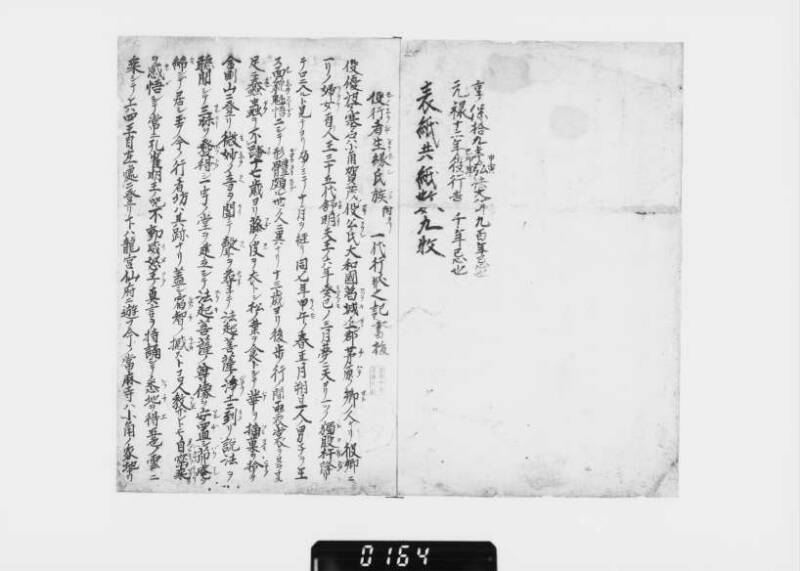
翻刻
【コマ3】
【見返し】
享保拾九年◦(甲寅)弘法大師九百年忌也
元禄十二年◦(己夘年)役行者千年忌也
表紙共紙數九牧
【左丁】
役行者生縁氏族(エンノキヤウジヤシヨウヱンシソク)《割書:附タリ》一代行狀之記書㧞【印】#1
役優婆塞名ハ小角󠄀賀茂 ̄ノ役公氏(ヱキコウシ)大和國《振り仮名:葛󠄀城|カツラキ》ノ《振り仮名:上 ̄ノ郡|カミ 》《振り仮名:茅原ノ鄕|チハラ サト》ノ人ナリ彼鄕ニ
一リノ婦女(ヲウナ)有 ̄リ人王三十五代 舒明天王(チヨメイ )ノ六年 癸巳(ミツノトノミ)ノ三月夢ニ天ヨリ一ツノ獨股杵(トコシヨ)降(クダ)リ
テ口ニ入ルト見テヨリ孕ミテ十月ヲ經テ同七年 甲午(キノヘムマ)ノ春正月朔日一人ノ男子ヲ生
ス面貌(メンミヤウ)魁悟(クハイギヨ)ニシテ形體(ギヨウタイ)頗(スコブ)ル世ノ人ニ異ナリ十三歳ヨリ後歩行ノ間雨 ̄シテ衣裳ヲヌラサス
足ニ蠢蟲(ヂユンヂウ)ヲ《振り仮名:不_レ踏| フマ》十七歳ヨリ藤(フヂ)ノ皮(カハ)ヲ衣トシ松ノ葉ヲ食トシテ華(ハナ)ヲ摘(ツミ)菓(コノミ)ヲ拾(ヒロウ)フテ
金剛山ニ登リ微妙(ミミヤウ)ノ音(コヘ)ヲ聞(キイ)テ聲(コヘ)ヲ尋(タツネ)ネテ法起菩薩ノ浄土(ジヨウ )ニ到(イタ)リ說法ヲ
聽聞シテ三昧(サンマイ)ヲ發得(ホツトク)シ一宇ノ堂ヲ建立シテ法起菩薩(ホウキ )ノ尊像ヲ安置(アンヂ)シ茆庵(バウアン|カヤノイヲリ)ヲ
締(ムス)ンデ居シ玉フ今ノ行者坊ハ其跡ナリ蓋シ宿智(シユクチ)ノ撼(ウゴカ)ストコロ人 敎(ヲシエ)ザレトモ自(ヲノヅカラ)密乘(ミツゼウ)
ヲ感悟(カンゴ)シテ常ニ孔雀明王ノ咒 不動威怒王( イヌアウ)ノ真言ヲ持誦シテ悉地(シツチ)ヲ得(エ)五色ノ雲ニ
乘シテ上ハ四王自在處ニ登リ下ハ龍宮仙府ニ遊フ今ノ當麻寺ハ小角󠄀ノ家地ナリ
現代語訳
【見返し(扉の裏)】
享保十九年(甲寅)は弘法大師九百年忌にあたる。
元禄十二年(己卯年)は役行者千年忌にあたる。
表紙を含め、紙数九枚。
【左丁】
役行者生縁氏族(附たり)一代行状之記 書き抜き
役優婆塞(えんのうばそく)、名は小角(おづぬ)、賀茂の役公氏(えきこうし)、大和国葛城上郡茅原の郷の人なり。彼の郷に一人の婦女あり。人王三十五代・舒明天皇の六年、癸巳の三月、夢に天より一つの独股杵(とこしょ)が降りて口に入ると見てより孕み、十月を経て、同七年、甲午の春正月朔日、一人の男子を生む。面貌(めんぼう)は魁悟(かいご)にして、形体はすこぶる世の人に異なり。十三歳より後、歩行の間、雨しても衣裳をぬらさず。足に蠢虫(しゅんちゅう)を踏まず。十七歳より藤の皮を衣とし、松の葉を食として、花を摘み木の実を拾いて、金剛山に登り、微妙の音を聞いて、声を尋ねて法起菩薩の浄土に到り、説法を聴聞して三昧を発得し、一宇の堂を建立して法起菩薩の尊像を安置し、茅庵(かやのいおり)を結んで居し給う。今の行者坊はその跡なり。蓋し宿智の動かすところ、人に教えられずとも、自ずから密乗(みっじょう)を感悟して、常に孔雀明王の咒・不動威怒王の真言を持誦して悉地(しっち)を得、五色の雲に乗して、上は四王自在処に登り、下は龍宮仙府に遊ぶ。今の当麻寺は小角の家地なり。
英語訳
【Endpaper (inside front cover)】
The year Kyōhō 19 (Kinoe-Tora, 1734) marks the 900th memorial anniversary of Kōbō Daishi (Kūkai).
The year Genroku 12 (Tsuchinoto-U, 1699) marks the 1,000th memorial anniversary of En no Gyōja.
Total number of pages including the cover: nine sheets.
【Left folio】
An Abridged Record of the Life and Conduct, with an Account of the Birth, Origins, and Clan Lineage of En no Gyōja
En no Ubasoku, whose personal name was Ozunu, was of the Kamo no Ekikōshi clan, and was a man of the village of Chihara, in the upper district of Katsuragi, in Yamato Province. In that village there lived a certain woman. In the third month of the sixth year of Emperor Jomei, the thirty-fifth sovereign, in the year Mizunoto-Mi (633 CE), she dreamed that a single-pronged vajra (tokoshō) descended from the heavens and entered her mouth. From the time of this dream she conceived, and after ten months, on the first day of the New Year in spring of the following seventh year, the year Kinoe-Uma (634 CE), she gave birth to a boy. His countenance was noble and commanding, and his physical form was remarkably different from that of ordinary people. After the age of thirteen, even when it rained as he walked, his garments were never wetted. His feet never trod upon crawling insects. From the age of seventeen, he clothed himself in bark stripped from wisteria vines and subsisted on pine needles, picking flowers and gathering nuts, and climbed Mount Kongō. There he heard a wondrous, subtle sound, and following its voice, arrived at the Pure Land of Hōki Bosatsu (Dharmodgata Bodhisattva). He listened to the Dharma teachings, attained samādhi, constructed a hall, enshrined a sacred image of Hōki Bosatsu, and took up residence in a thatched hermitage. The place now known as Gyōja-bō is the site of this very hermitage. Truly, moved by the wisdom carried over from previous lives, without being taught by others, he spontaneously awakened to the Esoteric Vehicle (Mikkyō), and constantly recited the mantra of Kujaku Myōō (Mahāmāyūrī Vidyārājñī) and the dhāraṇī of Fudō Inu-ō (Acalanātha), thereby attaining siddhi (spiritual accomplishment). Riding upon five-colored clouds, he ascended above to the realm of the Four Heavenly Kings, and descended below to sport in the Dragon Palace and the Abode of Immortals. The present-day Taima-dera Temple occupies the former site of Ozunu's family home.