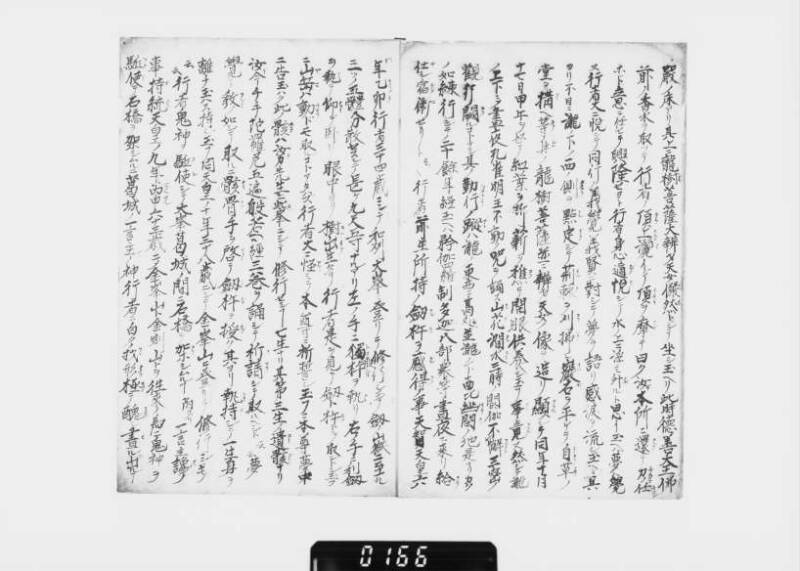
翻刻
【コマ5】
【右丁】
嚴ノ床アリ其上ニ龍樹菩薩( ジユ )大弁才天女 儼然(ゲンゼン)トシテ坐シ玉ヘリ此時徳善大王佛
前ノ香水ヲ取ツテ行者ノ頂上(テウテウ) ̄ニ灑(ソヽ)イデ頂(イタヾキ)ヲ摩(ナデ)テ曰ク汝 ̄ヂ本所ニ還(カヘリ)テ力(チカラ)ノ任(タヱン)
ホド意ニ任セテ興隆セヨト行者身心 適悦(シヤクエツ)シテ水ノ上ニ浮ミ升(ノボ)ルト思イ玉ヘバ夢ハ覺
又行者大ニ悅ンテ同行ノ義覺義賢ニ對シテ夢ヲ語リ感涙ヲ流シ玉ヘ□其
ヨリ不目ニ瀧ノ下ノ西ノ側(カタワラ)ヲ點定(テンデウ)シテ荊棘(イバラ)ヲ刈彿(カリハラ)ヒ巖石(イハホ)ヲ平ケテ自(ミツカラ)草(クサ)ノ
堂ヲ搆(カマ)ヘ等身(タクシム)ノ龍樹菩薩並ニ辨才天女ノ像ヲ造リ顯(アラハ)シテ同年十月
十七日甲午ヲ以テ紅葉ヲ折薪ヲ樵(コツ)テ開眼供養シ玉フ事(コト)竟(ヲワン)ヌ然シテ瀧
ノ上下ニ𬼀晝夜孔雀明王不動ノ咒ヲ誦ス山花(サンゲ)澗水(カンスイ)三時ノ閼伽《振り仮名:不_レ懈| ヲコタラ》三密ノ
觀行 闕(カク)ルコトナシ其ノ勤行(ヲコナイ)ノ蹤(アト)ハ瀧ノ東西ニ髙処並瀧ノ下南比#1幽閑(イウカン)ノ地是ナリカク
ノ如練行シテ二十餘年經玉ヘハ矜伽羅制多迦八部衆等晝夜ニ來リ給(キウ)
仕(ヂ)シ宿衞(シユクエ)セリト云々行者前生所持ノ劔杵(ケンシヨ)ヲ感得(カントク)ノ事天聟天皇六
【左丁】
年 乙卯(キノトノウ)行者三十四歳ニシテ和州大峯ニ登リテ修行シ玉フ劔ノ嶽ニ至ル
三ツノ五體分散セスシテ長ケ九尺五寸ナルアリ左ノ手ニ《振り仮名:獨《振り仮名:◦|◦股》杵|トコ シヨ》ヲ執(ト)リ右ノ手ニ利劔
ヲ執(トツ)テ仰(アヲイ)デ卧リ眼中ヨリ樹出生(キハヘイデ)タリ行者是ヲ見テ劔ト杵(シヨ)トヲ取ントシ玉フ
ニ山岳(ヤマ)ハ動(ウコケ)ドモ取ルコトアタハズ行者大ニ怪(アヤシ)ミテ本尊󠄁ニ祈誓シ玉フニ本尊夢中
ニ告玉ハク此ノ骸(ホネ)ハ汝《送り仮名:チ》カ先生ニ此峯ニシテ修行セシヿ七生ナリ其第三生ノ遺骸(ユイガイ)ナリ
汝 ̄ヂ今千手陀羅尼五遍般若心經三巻ヲ誦シテ祈請(キセウ)シテ取ルヘシト《割書:云云》夢
覺テ敎(ヲシエ)ノ如シテ取ルニ骸骨(カイコツ)手ヲ啓(ヒライ)テ劔杵(ケンシヨ)ヲ授(サヅ)ク其ヨリ執持(シウヂ)シテ一生身ヲ
離チ玉ハス持シ玉フ同天皇ノ十年三十八歳ニシテ金峯山ニ登リテ修行シ玉フ
《割書:云云》行者鬼神ヲ駈使(クシ)シテ大峯葛城ノ間ニ石橋ヲ架(カケ)シムルヿ《割書:附タリ》一言主 讒(ザン)ノ
事 持統天皇(ヂタウ )ノ九年 丙申(ヒノヘサル)六十三歳ニ𬼀金峯山ト金剛山トヲ往來ノ為ニ鬼神ヲ
駈使(ツカイ)テ石橋ヲ架シムルニ葛城ノ一言主ノ神行者ニ白ク我(ワレ)形(カタチ)極(キワメ)テ醜(ミニク)シ晝(ヒ)ル出ルヿ
現代語訳
【右丁】
厳かな床があり、その上に龍樹菩薩と大弁才天女が儼然として座しておられた。この時、徳善大王は仏前の香水を取って行者の頭頂に注ぎ、頂を撫でて言うには、「汝、本所に還りて、力の及ぶ限り、意に任せて興隆せよ」と。行者は身も心も喜びに満ちて、水の上に浮かびながら昇ると思ったところで夢は覚めた。
行者は大いに喜んで、同行の義覚・義賢に対して夢を語り、感涙を流し給うた。それよりほどなく、滝の下の西の側らを定めて、荊棘(いばら)を刈り払い、巌石を平らにして、自ら草の堂を構え、等身の龍樹菩薩ならびに弁才天女の像を造り顕して、同年十月十七日甲午をもって、紅葉を折り薪を樵って開眼供養し給うこと終わりぬ。そして滝の上下にて昼夜、孔雀明王・不動の咒を誦す。山花・澗水を三時の閼伽とし、怠ることなく三密の観行を欠くことなし。その勤行の跡は、滝の東西の高い処ならびに滝の下の南側の幽閑の地がこれなり。かくの如く練行して二十余年を経給えば、矜羯羅・制多迦・八部衆等が昼夜に来たり給仕し、宿衛せりと云々。
行者が前生所持の剣杵を感得したことについて。天智天皇六年、乙卯、行者三十四歳にして和州大峯に登りて修行し給う。剣の嶽に至る。
【左丁】
三つの体が分散せずして、丈が九尺五寸なるものあり。左の手に独股杵を執り、右の手に利剣を執って仰いで臥せり。眼中より樹が生え出でたり。行者これを見て、剣と杵とを取ろうとし給うに、山岳は動けども取ることあたわず。行者大いに怪しみて、本尊に祈誓し給うに、本尊は夢中に告げ給わく、「この骸は汝が先生にこの峯にて修行せしこと七生なり。その第三生の遺骸なり。汝、今、千手陀羅尼五遍・般若心経三巻を誦して祈請して取るべし」と云々。夢覚めて教えの如くして取るに、骸骨は手を開いて剣杵を授く。それより執持して一生、身を離ち給わず持し給う。
同天皇の十年、三十八歳にして金峯山に登りて修行し給う(云々)。
行者が鬼神を駆使して大峯と葛城の間に石橋を架けさせたことについて(附たり)。一言主が讒した事。持統天皇の九年、丙申、六十三歳にて金峯山と金剛山とを往来するために鬼神を駆使して石橋を架けさせるに、葛城の一言主の神が行者に申すには、「我が形は極めて醜く、昼間に出ることが……」
英語訳
**[Right Page]**
There was a magnificent dais, upon which Nāgārjuna Bodhisattva (Ryūju Bosatsu) and the Great Benzaiten were seated in solemn dignity. At this moment, the Great King Tokuzen took the sacred water before the Buddha and poured it upon the crown of the Gyōja's head, then stroked his head and said: "Return to your homeland, and to the best of your ability, promote and flourish [the teachings] as you see fit." The Gyōja, filled with deep joy in body and mind, thought he was floating up through the water and ascending — and then the dream ended.
The Gyōja rejoiced greatly and recounted his dream to his fellow practitioners Gikaku and Giken, shedding tears of deep emotion. Not long after, he selected the western side below the waterfall, cleared away the thorns and brambles, leveled the rocky ground, and built a thatched hall with his own hands. He carved and manifested life-sized images of Nāgārjuna Bodhisattva and Benzaiten, and on the seventeenth day of the tenth month of that same year — the day of Kinoe-Uma — he picked autumn leaves and chopped firewood, completing the eye-opening consecration ceremony. Thereafter, above and below the waterfall, day and night, he recited the dhāraṇī of Kujaku Myōō (the Peacock Wisdom King) and Fudō Myōō. Using mountain flowers and valley stream water as the three-time ritual offerings (arka), he practiced the three mysteries (sanmitsu) of esoteric Buddhism without ever growing slack. The traces of this ascetic practice can be found at the elevated spots to the east and west of the waterfall, and at the secluded tranquil ground to the south below the falls. After more than twenty years of such rigorous practice, Kongara, Seitaka, and the Eight Legions of divine beings came day and night to serve and stand guard over him, or so it is said.
Concerning the Gyōja's acquisition of the sword and vajra that he had possessed in a previous life: In the sixth year of Emperor Tenji's reign, the year of Kinoto-U (乙卯), when the Gyōja was thirty-four years old, he climbed Mt. Ōmine in Yamato Province and engaged in ascetic practice. He arrived at the Peak of the Sword.
**[Left Page]**
There lay a body — with its three parts undivided — measuring nine shaku and five sun in height. In its left hand it held a single-pronged vajra (tokko-sho), and in its right hand a sharp sword; it lay on its back with face upward, and from its eye sockets trees had grown. The Gyōja, upon seeing this, attempted to take the sword and the vajra, but though the very mountains shook, he could not take them. Greatly mystified, the Gyōja made a vow in prayer to his honzon (principal object of worship), and the honzon revealed in a dream: "This skeleton is the mortal remains of yourself in your previous lives — you have practiced on this peak for seven lifetimes. This is the remains of your third life. You must now recite the Thousand-Armed Dhāraṇī five times and the Heart Sūtra three times, offer prayers, and then take them." And so it was said. When he awoke from the dream and followed the instruction, the skeleton opened its hand and bestowed the sword and vajra upon him. From that time forth, he held them close throughout his entire life, never parting with them.
In the tenth year of the same Emperor's reign, when he was thirty-eight years old, he climbed Mt. Kinpusen and engaged in ascetic practice (and so on).
Concerning the Gyōja's use of demons and spirits (kishin) to construct a stone bridge between Mt. Ōmine and Mt. Katsuragi (appended). The matter of the slanderous report by the deity Hitokoto-nushi: In the ninth year of Empress Jitō's reign, the year of Hinoe-Saru (丙申), when the Gyōja was sixty-three years old, he commanded demons and spirits to build a stone bridge for travel between Mt. Kinpusen and Mt. Kongōsan. The deity Hitokoto-nushi of Katsuragi said to the Gyōja: "My appearance is exceedingly ugly, and to appear in the daytime…"